
US partnership coincides with Montana State University professor joining UOW as Scholar in Residence
A University of Wollongong cybersecurity leader will take his expertise to the United States under a prestigious Fulbright Scholar Award in 2026, as UOW simultaneously prepares to host a leading American policy scholar on campus. Distinguished Professor Willy Susilo, Director of UOW's Institute of Cybersecurity and Cryptology, will collaborate with Florida Polytechnic University on international cybersecurity research, while Professor Elizabeth Shanahan from Montana State University joins UOW as a Fulbright Scholar in Residence.
Deputy Vice-Chancellor (Research and Innovation) Professor Alan Rowan said UOW's involvement on both sides of the 2026 Fulbright exchange was a reflection of the strength and ambition of its research community.
"This is exactly the kind of globally connected, high-impact research UOW is building. Professor Susilo's work in the United States and Professor Shanahan's collaboration here in Wollongong show how strong international partnerships accelerate research excellence and help tackle complex global challenges," Professor Rowan said.
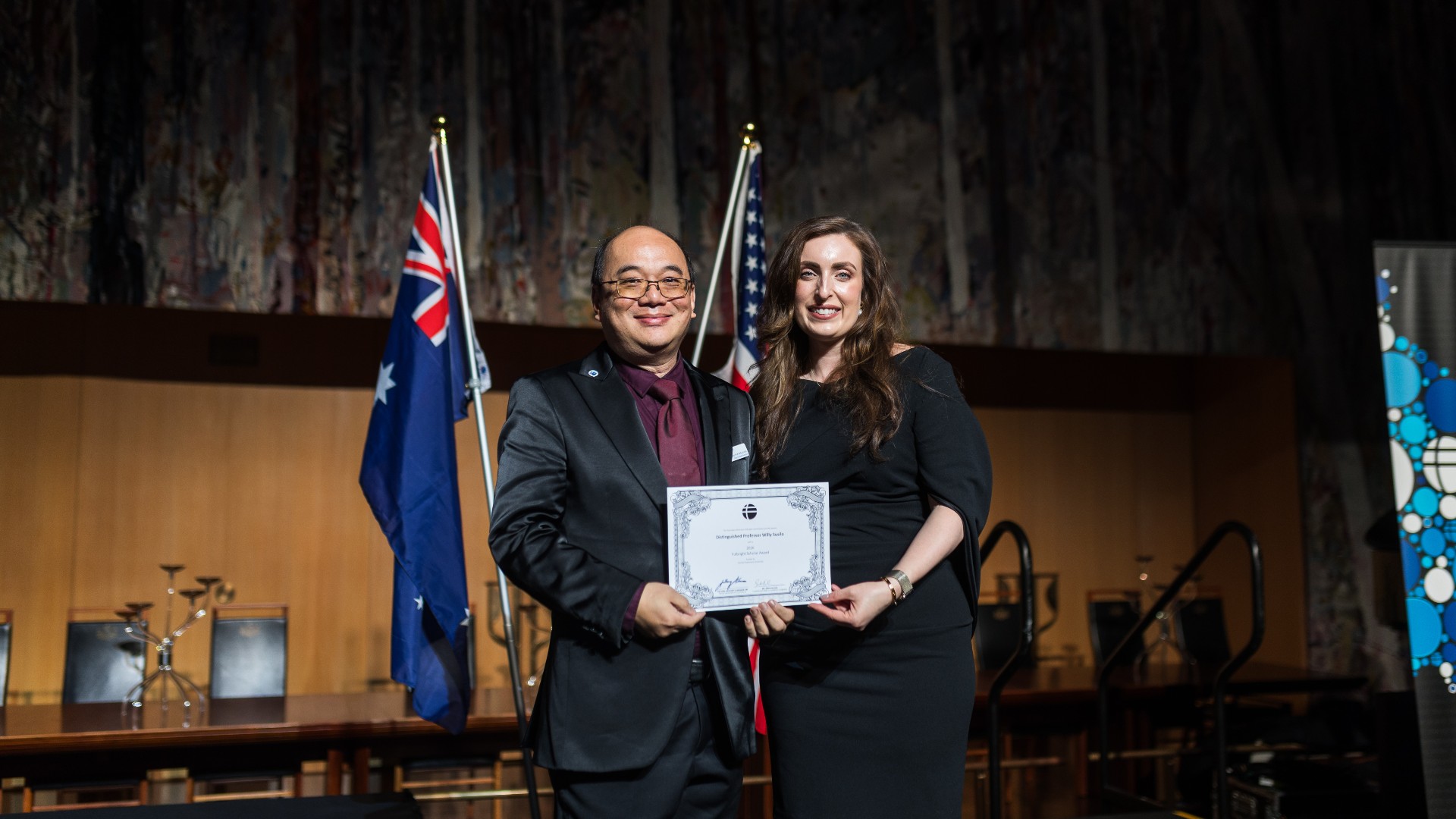
Professor Susilo's Fulbright project will strengthen research into the security of cloud computing infrastructure, improve how interoperable systems connect and share data and better align cryptographic innovation with international standards and regulatory frameworks.
"Cybersecurity challenges do not stop at national borders and international collaboration is essential in addressing these complex issues. I am proud to be part of a program that prioritises exchange, partnership and shared knowledge," Professor Susilo said.
An Australian Research Council Laureate Fellow, Professor Susilo leads research in cloud computing security, advanced cryptography and privacy-preserving technologies. In recent months, he has also secured a major NATO-funded research project to protect drones against cyber-attacks and received support through the Australian Economic Accelerator (AEA) Ignite Program to develop AI technologies that embed security directly into code generation.
Professor Shanahan is a Professor of Political Science at Montana State University. Her research is at the intersection of the use of narratives in the policy process, risk communication, and One Health, with recent applications to COVID-19 pandemic and the current H5N1 outbreak in US dairy cattle. At UOW, she is collaborating with Associate Professor Chris Degeling on a project to understand people's attitudes and underlying beliefs toward zoonotic disease prevention policies for avian influenza and Hendra virus, as well as to understand the challenges and successes of implementing One Health policies in Australia.
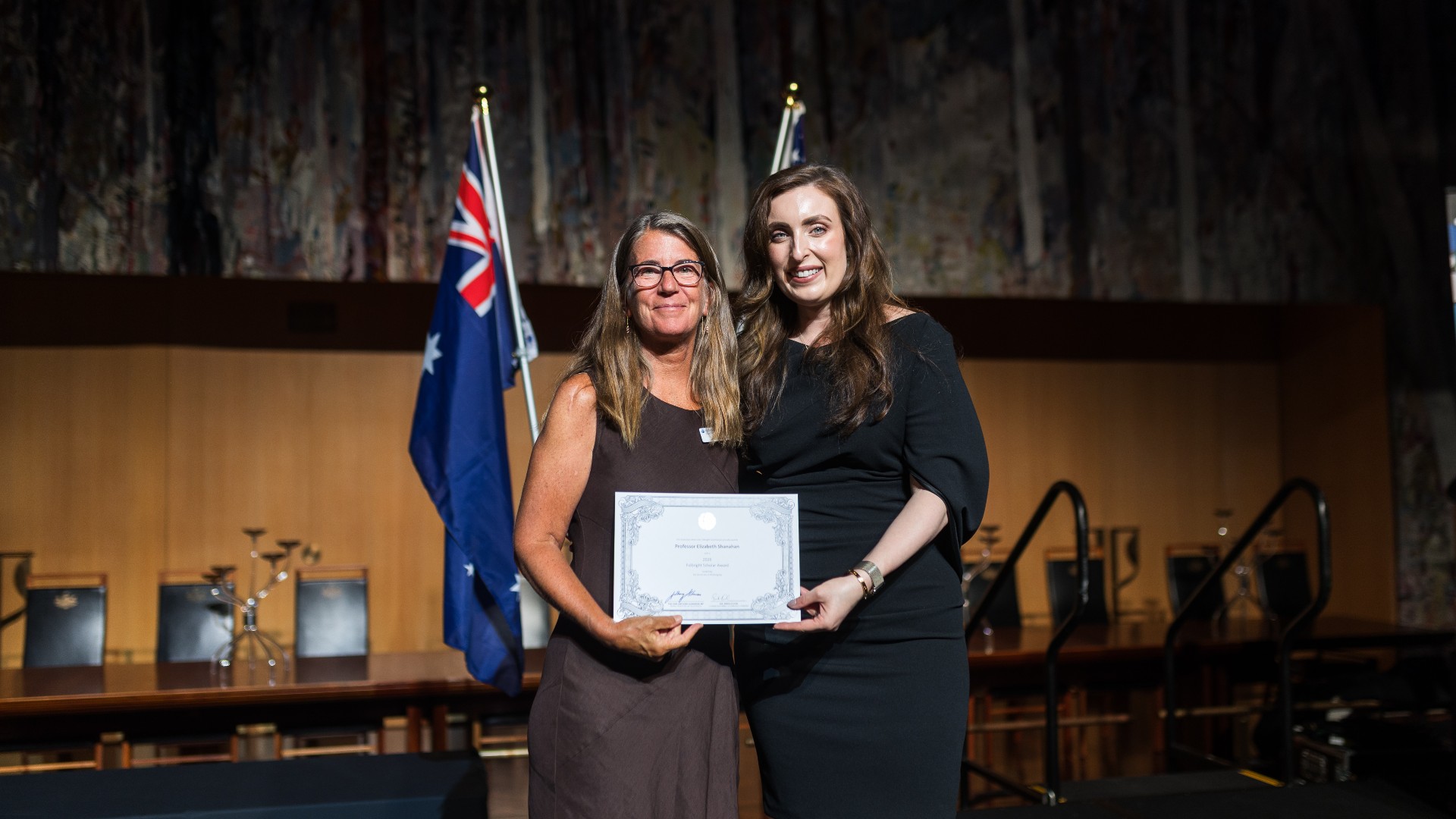
Professor Elizabeth Shanahan with ECA Chief of Staff Victoria Roberts
"The COVID-19 pandemic has underscored our global vulnerability to emerging infectious diseases (EIDs), and Australia is leading the way in rethinking its approach to these threats by incorporating the globally recognized One Health framework in the creation of its inaugural Center for Disease Control. This Fulbright collaboration will allow for an innovative convergence of social science methods to understand this novel and emergent situation of the governmental establishment and public acceptance of a One Health approach to EIDs in Australia," Professor Shanahan said.
Established in 1946, the Fulbright Program is one of the world's most respected international scholarship exchange programs, and supports academic research collaboration between Australia and the United States. The 2026 Fulbright cohort were formally recognised at a ceremony at Parliament House, Canberra.


