

< (From left) KAIST Professor Hoi-Jun Yoo and PhD candidate Seongyon Hong >
While Large Language Models (LLMs) like ChatGPT are adept at answering countless questions, they often remain unaware of a user's minor habits or previous conversational contexts. This is why AI, despite being deeply integrated into our daily lives, can still feel like a "stranger." Overcoming these limitations, researchers at KAIST have developed the world's first AI semiconductor, dubbed "SoulMate," which learns and adapts to a user's speech style, preferences, and emotions in real-time—becoming a true "digital soulmate."
KAIST announced on March 17th that a research team led by Professor Hoi-Jun Yoo from the Graduate School of AI Semiconductors has developed SoulMate, a personalized LLM accelerator that evolves according to the specific characteristics of the user.This technology is being hailed as a core semiconductor breakthrough that will accelerate the era of "Hyper-Personalized AI"—moving beyond "AI for everyone" to an AI that learns and responds to an individual's unique conversational style and preferences.
The core of SoulMate lies in On-Device AI technology, which processes data directly on the device without going through external servers (the cloud). The team directly implemented Retrieval-Augmented Generation (RAG), which generates customized answers based on remembered conversations, and Low-Rank Adaptation (LoRA), which immediately reflects and learns from user feedback, within the semiconductor itself.
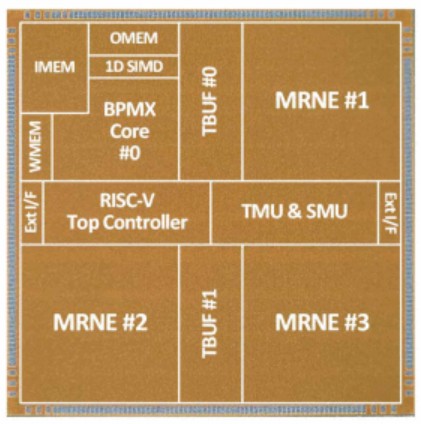
< SoulMate AI Semiconductor Chip >
Through this, SoulMate has realized a real-time personalized AI system that responds to the user at a staggering speed of 0.2 seconds (216.4 ms) while simultaneously performing learning tasks.

< SoulMate Application Demo >
Furthermore, the team applied a Mixed-Rank architecture that optimizes processing methods based on the importance of information, drastically reducing power consumption. The semiconductor operates at an ultra-low power of just 9.8 milliwatts (mW)—approximately 1/500th of a typical smartphone processor's power consumption—allowing it to handle complex learning and inference simultaneously on mobile devices without battery concerns.
In particular, SoulMate features a "Security-Complete AI" structure where all personal data is processed internally within the device rather than being transmitted to external servers, fundamentally blocking any risk of personal information leaks. The research team expects this technology to pair with next-generation platforms such as smartphones, wearables, and personal AI devices to open a true era of personalized AI services.

< SoulMate Demo Screen >
"This research mimics the process of people building friendships, providing the technical foundation for AI to evolve into a true companion for the user," said Professor Hoi-Jun Yoo. "Future AI will move beyond being a mere tool to become a 'Best Friend' that understands me best anytime, anywhere, while perfectly protecting personal privacy."
The study, with PhD student Seongyon Hong as the first author, was selected as a "Highlight Paper" at the International Solid-State Circuits Conference (ISSCC) held in San Francisco this past February, garnering significant attention from the global academic community.
Paper Title: SoulMate: A 9.8mW Mobile Intelligence System-on-Chip with Mixed-Rank Architecture for On-Device LLM Personalization Authors: Seongyon Hong, Jiwon Choi, Jeonggyu So, Nayeong Lee, Wooyoung Jo, Zhamaliddin Kalzhan Link: https://ieeexplore.ieee.org/document/11409048
At the conference, the research team successfully demonstrated how the AI's response style changes in real-time according to user reactions using the actual semiconductor chip, proving the excellence of Korean AI semiconductor technology. The SoulMate AI semiconductor is planned for commercialization around 2027 through the faculty-led startup "OnNeuro AI."

< SoulMate Demonstration Photo >
This research was conducted with support from the Information and Communication Broadcast Innovation Talent Cultivation Program of the Ministry of Science and ICT and the Institute of Information & Communications Technology Planning & Evaluation (IITP).


