
Stills here: https://dams.wwf.org.au/resourcespace?c=6661&k=8a498478dd
A new WWF report details how New South Wales logging rules are failing threatened species by focusing on protecting individual trees, nests and burrows rather than the connected habitat at-risk wildlife needs to survive.
How Australia's nature law reforms respond to these flaws will be a crucial, early test of their effectiveness.
For more than 25 years, state forest logging has been - controversially - exempt from the scrutiny of federal environment laws.
Under Regional Forestry Agreements, state government management of forests is deemed to comply with the federal Environment Protection and Biodiversity Conservation Act.
But logging's exclusion from federal oversight ends next July as part of the EPBC reforms. However, there is uncertainty over how those reforms will be applied to RFA areas.
"If the EPBC reforms simply rubber stamp existing state systems without addressing their weaknesses it will be devastating for threatened species. NSW logging rules must be reformed according to the best available science and delivered in partnership with First Nations rights-holders, drawing on Indigenous Knowledge," said report author Dr Kita Ashman from the World Wide Fund for Nature Australia.
"Ultimately, saving threatened species requires transitioning from native forest logging to sustainable plantations. Strengthened logging rules, overseen by a reformed EPBC, can limit harm during that transition," she said.
In NSW State Forests along the east coast, protections for threatened species are contained in the Coastal Integrated Forestry Operations Approvals (CIFOA) - the regulatory framework that governs timber harvesting.
Dr Ashman's report uses case studies of greater gliders, threatened frogs, small forest birds, glossy black-cockatoos and wombats to expose why threatened species continue to decline even when the CIFOA is followed.
By selecting individual features to protect in isolation - such as nests, den trees, hollows and burrows - it allows the landscape-scale habitat that species depend on to be fragmented, degraded and destroyed.
Protections are often only triggered when a nest or specific feature is directly observed in use, according to strict definitions. For nocturnal or secretive species, this is an unrealistic requirement. In addition, species records are treated inconsistently, depending on who collected them. The pictures below demonstrate the issue.
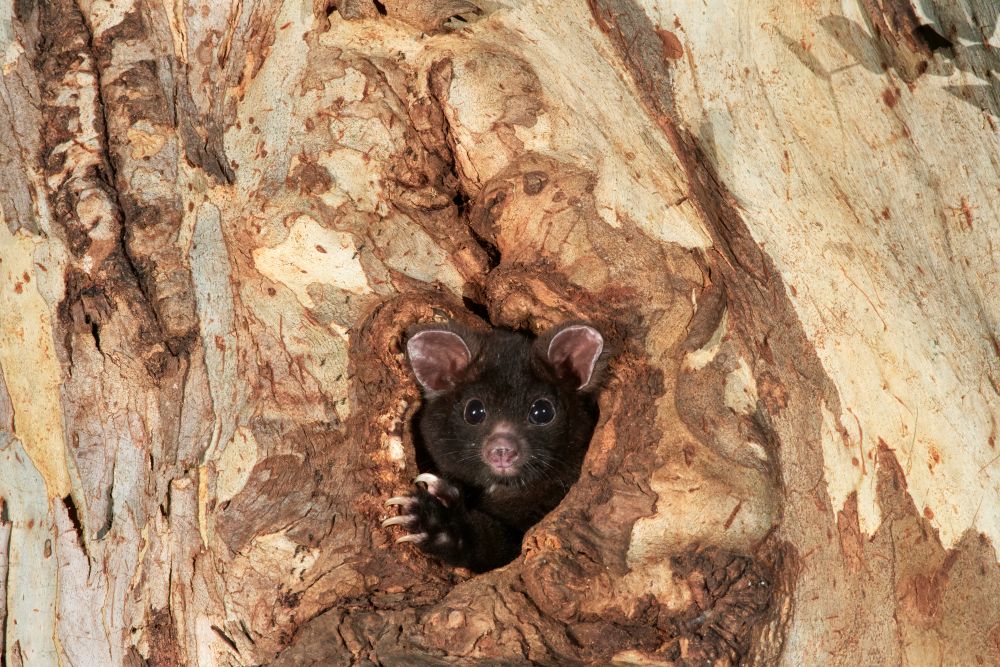
Greater gliders
In the image above a greater glider looks out from its hollow. In the below image, a citizen scientist, flying a drone, has videoed a greater glider on the edge of what is clearly an occupied hollow: reflective eyeshine indicates a further two individuals remain in the hollow.
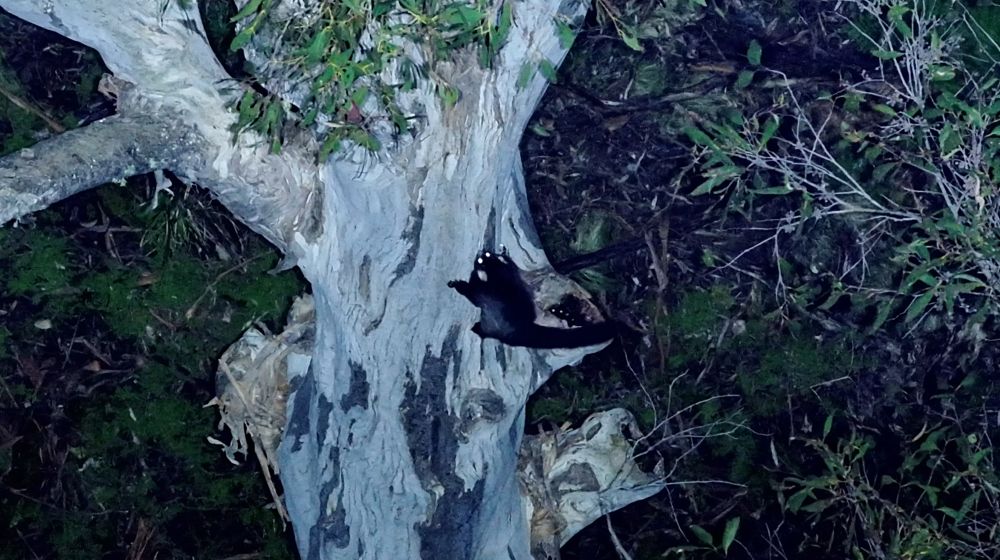
A drone videoed a greater glider moments after it emerged from a hollow. Another two sets of eyes are seen in the hollow © Nathan Browne
Both examples do not count as den trees and therefore do not trigger 50 metre exclusion zones. To qualify as a den tree, a greater glider must be seen entering or leaving a hollow.
However, if a Forestry Corp contractor had reported these sightings of greater gliders in trees it would have resulted in 25 metre exclusion zones. The rules accept citizen scientist records of den trees but do not accept citizen scientists' sightings of gliders out of hollows. A blatant inconsistency in how records are treated that has never been explained.
Scarlet robins and flame robins (small forest birds)
Under the CIFOA, small forest birds are primarily protected by a small exclusion buffer around an active nest. That is if nests are found during pre-logging surveys. Protection can only be triggered during breeding season. For the rest of the year, habitat the birds rely on for food, shelter and connectivity can be logged. The rules focus on isolated features rather than whole habitats.
Retained patches are often small and fragmented leading to reduced breeding success and long-term population decline.
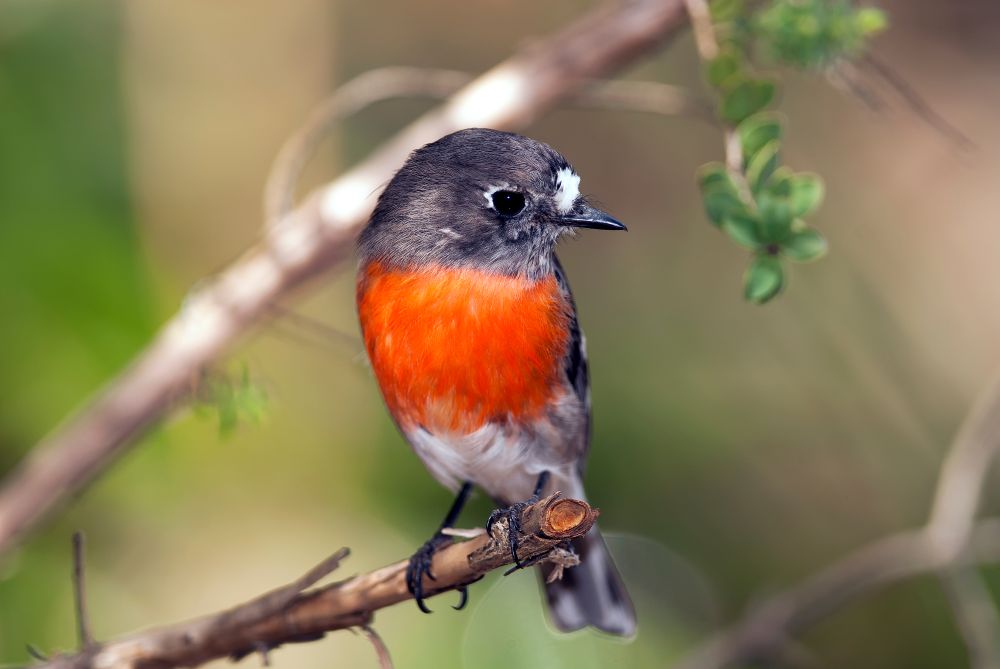
A flame robin © anne-tipodees / Shutterstock / WWF-Australia
Glossy black-cockatoos
Protection for glossy black cockatoos depends on finding specific features such as nests or hollows, or recently used feed trees in pre-logging surveys and placing small buffer zones around them.
Nest sites are difficult to detect even during breeding season. A tree may be an important food source but if no recent feeding evidence is found it might not be saved. By targeting individual trees rather than the broader forest matrix, glossies can lose the extensive, connected foraging landscapes they depend on.
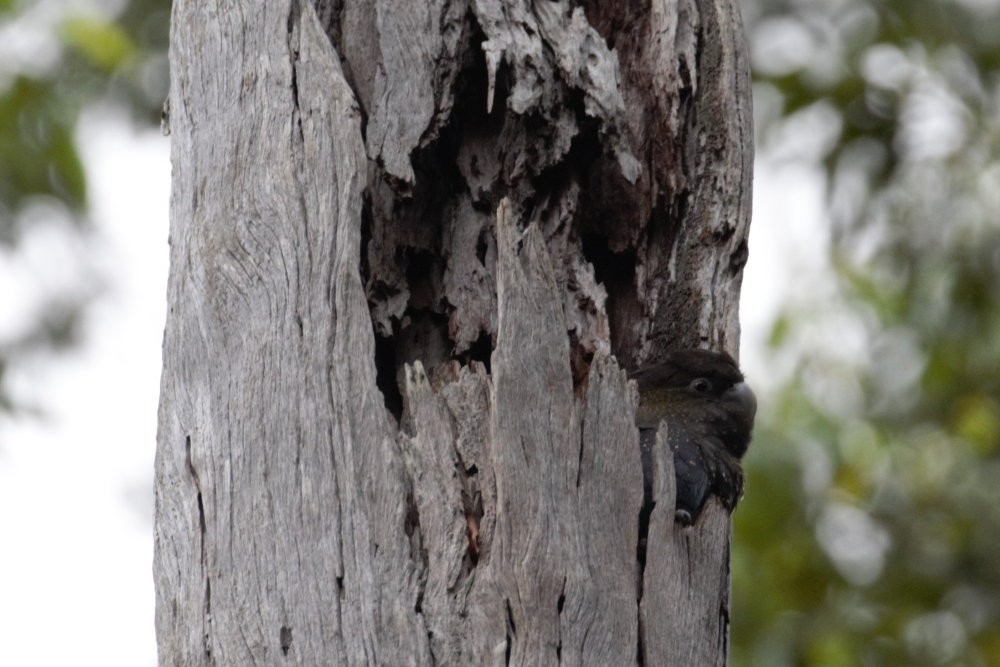
A glossy chick in a nest hollow © Daniella Teixeira
Wombats
Protections for wombats are only triggered when wombat burrows are detected and recorded within the narrow Northern Population Management Area. Occupied burrows can be missed. There are no protections for burrow networks or habitat outside the Northern Population Management Area. In practice, logging machinery, tree felling and site disturbance can collapse burrows, burying wombats alive.
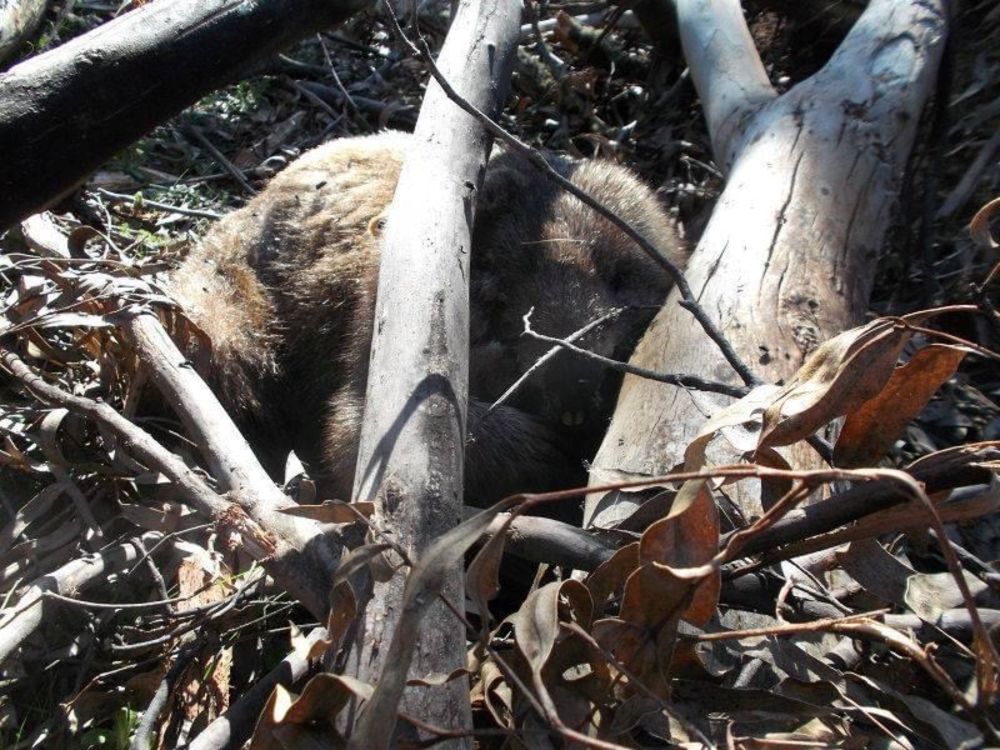
A wombat killed during logging © Jarake Wildlife Sanctuary
Frogs (northern corroboree and Philoria species)
Frog protections rely heavily on seasonal survey requirements. Surveys for the northern corroboree frog must be carried out between 14 February and 15 March, when they are actively calling. Detections result in 30 metre exclusion zones. After breeding adults can travel over 300 metres into nearby woodland to shelter under leaf litter, logs or rocks.
Corroboree frogs, the size of a paper clip, can only be reliably detected under the CIFOA process for one month. But logging can occur year round. The rules allow for the destruction of habitat even if critically endangered frogs are present but unseen. This situation could be avoided by using eDNA to detect the species.
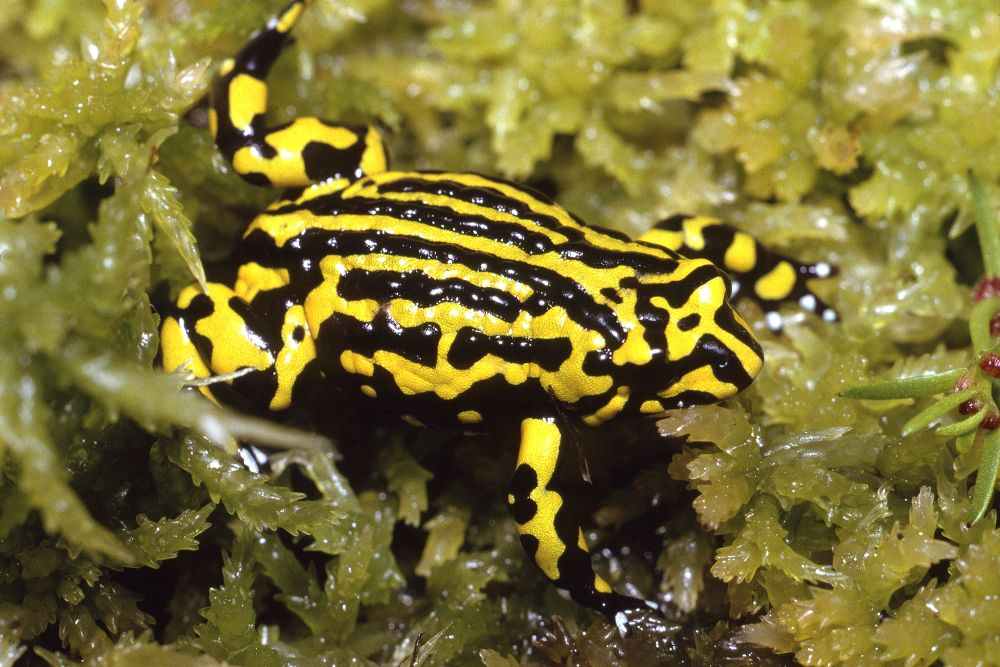
A northern corroboree frog © Shutterstock / Ken Griffiths / WWF
Compliance issues
The CIFOA's limited protections depend on the rules being followed. Weak compliance amplifies the shortcomings of an already inadequate system. Since 2019, Forestry Corp has racked up penalties of more than more than $4 million, after breaches in 30 locations with some big cases like Tallaganda still pending.
Illusion of protection
"The current framework creates an illusion of protection by safeguarding individual features while failing to maintain the habitat species need to persist. Saving a single tree while the forest around it is logged will not stop species decline," Dr Ashman said.
"Lasting outcomes depend on conservation designed and delivered through First Nations leadership, Indigenous Knowledge, science and community voices, in partnership with local communities," she said.
WWF is calling on the Commonwealth Government to withhold accreditation of NSW's forestry arrangements under the reformed EPBC Act unless they meet national environmental standards, protect critical and irreplaceable habitat, address cumulative impacts, and are backed by transparent, independent and enforceable compliance.
WWF is calling on the NSW Government to reform the CIFOA during the transition period so that protection is precautionary, habitat-based, and capable of maintaining ecological function across connected landscapes - rather than relying on narrow detection triggers and isolated feature-based safeguards.


