
A popular narrative goes that young people in Africa are rejecting agriculture as a career. However, many young Kenyans do not reject agriculture itself, but rather the version they have often seen. One that is unpredictable, labour-intensive, poorly connected to markets and, in some schools, associated with punishments like slashing grass, weeding, or working on the school farm.
On the other hand, modern, strategic, innovative, and profitable agriculture is an incredibly attractive prospect.
It's what led Ms Victoria Nzilani to build a poultry house so large that villagers mistook it for a church.
And it has inspired Mr Benard Kikwao to build a Black Soldier Fly (BSF) unit with little outside support.
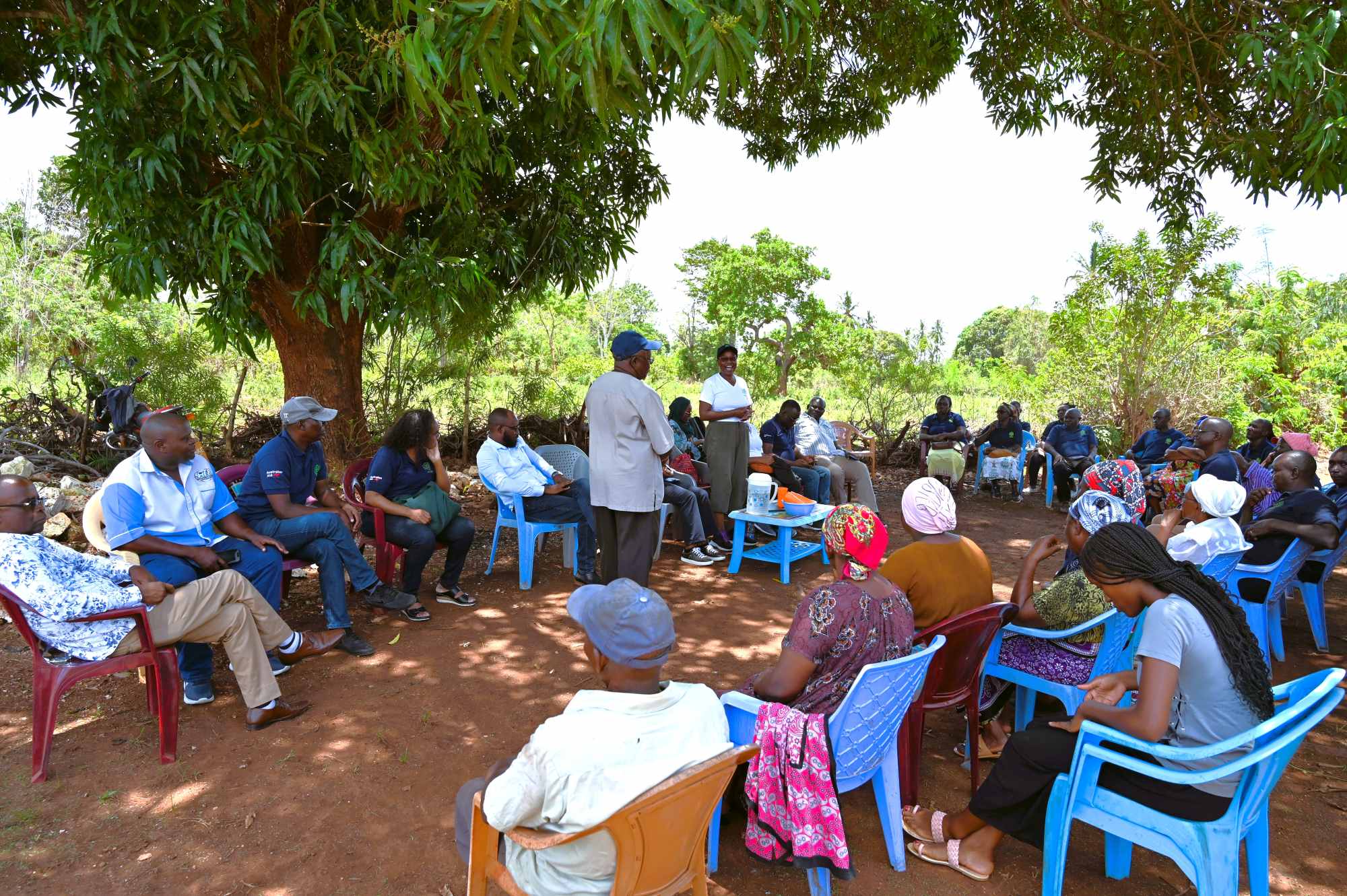
Supporting young people with the right knowledge
With funding from ACIAR, Ms Nzilani, Mr Kikwao, and eight other young farmers travelled to the International Centre of Insect Physiology and Ecology (icipe) for a knowledge exchange visit focused on BSF production. There, they saw how BSF can convert organic waste into protein-rich feed, fertiliser and new income streams. They witnessed young graduates running agricultural enterprises and imagined agriculture in a whole new way.
The exchange built on the ACIAR-supported Strengthening Productivity through Research in Kwale (SPARK) project. SPARK trained 266 farmers and reached more than 1,000 others through peer learning, helping communities explore resilient livelihoods following the closure of mining operations in Kwale.
Building a bigger vision of agribusiness
Although not a direct SPARK beneficiary, Victoria's father chaired one of the project's farmer groups. Her interest in poultry began after a road accident left her with some compensation money. Rather than spend her money on immediate comforts or fashion items, she asked what could genuinely change her life.
And she chose chickens.
Seeing that households, traders and institutions travel considerable distances to obtain eggs, (with supplies sometimes coming from 552 kms away, when closer villages cannot meet demand), she saw a gap in the market for egg production. She also established that local competitors were quite small. So Victoria thought big.
She invested her compensation in a substantial effort to improve indigenous bird varieties. The structure was so imposing that villagers assumed a church sanctuary was being built. With all her money spent on the birds and infrastructure, feed soon became the pressure point for her new business. But through her visit to icipe, Victoria began to see BSF larvae - a protein-rich stock feed ingredient - as a solution. She was also inspired by seeing icipe graduates running insect-based enterprises.
'I wanted a corporate job, but I now see agribusiness as a viable option too,' she said.
Victoria is enthusiastic about integrating BSF into her business, but disciplined. Her birds must start laying and generating income before she launches another enterprise.
But the market has already responded. Even before the birds begin laying, her first season of eggs is effectively booked by a nearby trader who is ready to purchase her eggs.
She then plans to establish a BSF unit, reduce feed costs, explore feed formulations, sell frass and expand into broilers.
Invention and innovation are just the beginning
Benard, chair of the Upendo Mweo Youth Group, received chicks through the SPARK project.
After seeing farmers lose chicks to cold, disease and expensive heating, he developed fireless brooders for his birds from locally available materials. These are long-lasting and reduce reliance on electricity and charcoal. Through repeated improvements, Benard and his group have advanced the design across nine iterations. After selling more than 250 units so far, they are working on a 10th design that is customised for people with disabilities.
Before the icipe visit, he was already experimenting with insect feeds without understanding the science or the difference between ordinary maggots and BSF larvae. But the training introduced him to a structured production system.
Bernard threw himself into establishing a BSF enterprise. Without significant capital to start, he used knowledge, local materials, curiosity and an eye for gaps. He ordered shade netting through contacts made during the visit, built a BSF structure and followed the training steps to begin production. When recommended plastic jerrycans proved costly, he made wooden troughs lined with polythene. By observing how the larvae moved through the waste, he adapted the troughs to simplify separation, reducing costs and labour.
Like Victoria, Benard is intentional about creating demand. In a community where insects as animal feed are still unfamiliar, he is building a market. Whenever he delivers a brooder, he brings wet larvae and feeds them to the client's chicks. Farmers see how eagerly the birds eat them before he explains their nutritional value and production process.
Within two months, Benard has completed several BSF cycles, sold two 15-kilogram batches of wet larvae, trained one client in BSF rearing and secured a booking to build another production unit.
Benard already sees opportunities in waste collection, frass fertiliser, poultry, pigs and supplying beach hotels that currently source chicken and pork from outside Kwale.
Rewriting agriculture for the next generation
Victoria and Benard represent two valid and vibrant examples of youth-led agribusiness.
One is investing at scale, protecting that investment and then diversifying. The other is beginning with fewer resources but rapidly testing, adapting and creating demand.
Their stories challenge a narrow definition of professional success, showing that 'business' need not look like hands typing on a laptop at an office desk. It can also be the mindset of someone who researches a market, redesigns a brooder, calculates feed costs, turns waste into value and creates work for others.
Learn more about ACIAR's Agribusiness Program here.


