
Young people working on promoting peace in some of the world's most fragile and polarized places say financial support remains essential, but money alone will not sustain their efforts to organize youth to participate in peacebuilding.
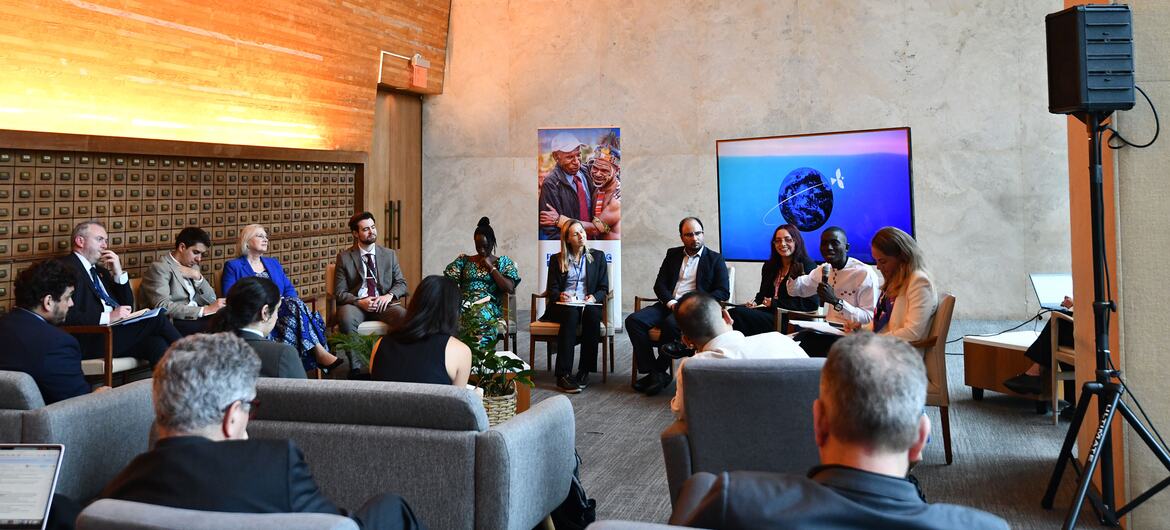
As conflicts around the world continue to proliferate, a group of young UN peacebuilders met at UN Headquarters on the margins of the first ever UN Peacebuilding Week to reflect on what actions they can take to promote peace.
From Afghanistan to Ghana, and Canada to Côte d'Ivoire, they told UN News how a lack of funds, limited trust in youth leadership, the increasing suppression of civil society and a lack of protection for youth who speak out can all impede their work.
Jenn Hernandez (Global Network of Women Peacebuilders, USA, Guatemala): We spoke to a lot of women in the Middle East and North Africa and South Asia regions, who told us they want to partner with the private sector and learn more technical skills.
We need durable, collaborative and intergenerational partnerships, that will help our youth get to the next step and have the knowledge to teach the next generation.
Issah Toha Shamsoo (African Students for Interfaith Tolerance, Ghana): Young people aren't waiting. We're not waiting because in 2019 when I watched the news, and I saw that there was this attack on people in New Zealand, I thought, "Why is this happening in the world?"
I brought different people together to have a dialogue and to build relations. I was doing all of that without knowing it was peacebuilding.
Linda Dempah (Laboratoires Adeba - biocosmetics company, Côte d'Ivoire): We don't really realize how important peace is until we don't have it. In Côte d'Ivoire we have a very tumultuous history of coups, civil war and periods of instability.
Having a business actually helps create a stable environment, because people who have good jobs and who feel good about where they are in life tend not to want to engage in things that will disrupt that, like conflicts or being recruited by armed groups.
Yahya Qanie (National Youth Consensus for Peace, Afghanistan): When I started working on youth empowerment and youth peacebuilding in Afghanistan, we were constantly told, "You don't have enough experience." There was also a very high bar for securing funding. At one point, we weren't able to access more than $700.
Today, Afghanistan is in a completely different situation to what it was before 2021 (when the Taliban became the de facto authority in the country.)
The dominant issue used to be framed around women's participation, but now it's become an issue affecting young people as a whole.
Youth civic spaces have been closed completely under the Taliban. Young voices face repercussions. Young boys are facing radicalization in schools.
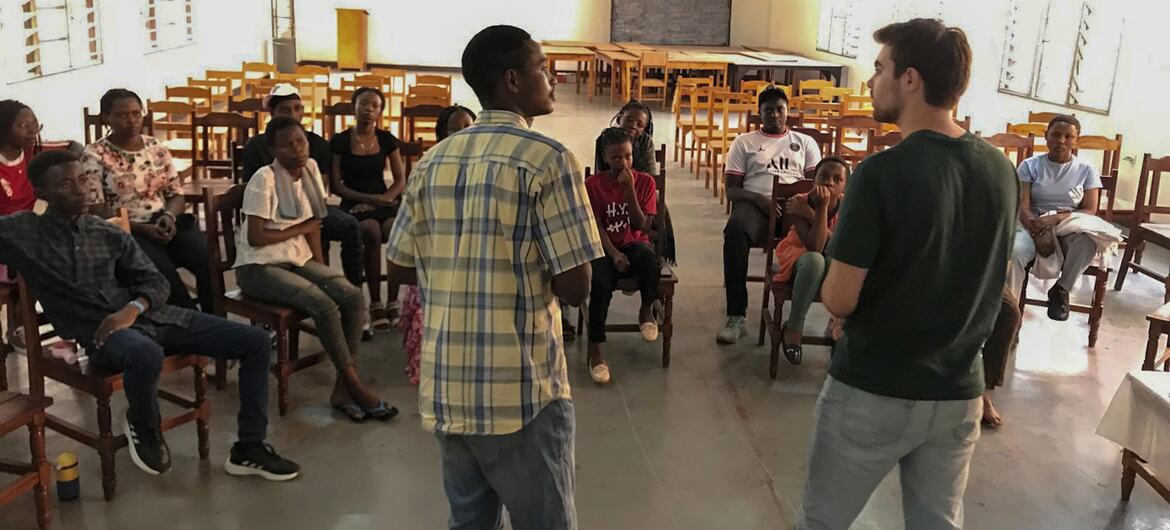
John Koester (International Association of Youth and Students for Peace, USA): What we're also stressing is the need to fund the ecosystem, not just individual projects. You spend easily upwards of 40 per cent of your time on activities that are unfundable.
This includes building trust, maintaining relationships, networking, looking for peer support, learning and taking time to recover.
The view from the UN
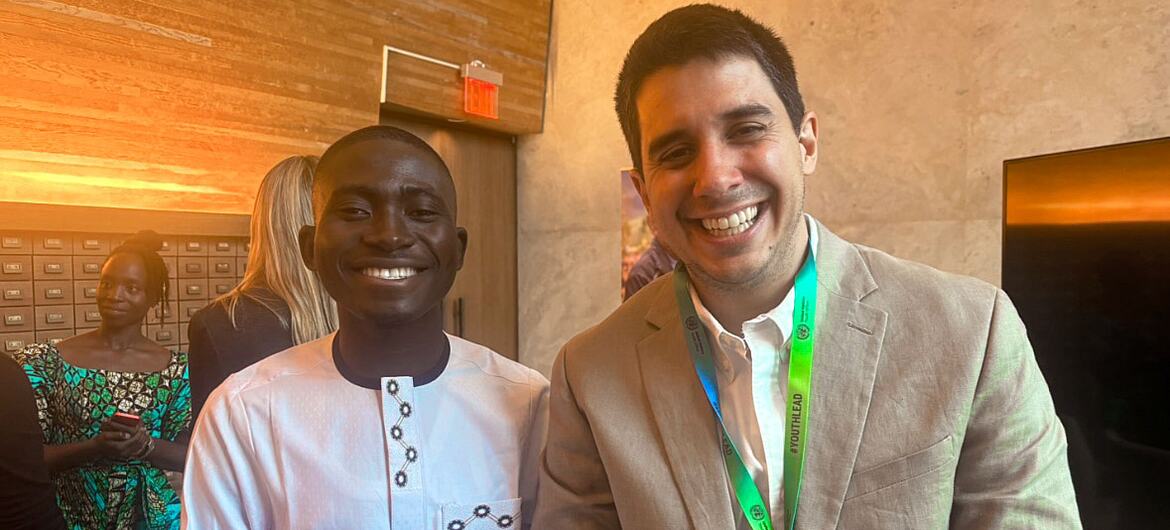
Felipe Paullier (UN Assistant Secretary-General for Youth Affairs): There are a series of principles that need to be embedded in financing structures to be responsive to youth and which need to consider young people as real partners.
My hope is that these principles are included in at least one of the global UN financing mechanisms.
Pio Smith ( UNFPA interim Deputy Executive Director): I see a lot of work around national action plans which are great on vision, but low on budget and resource mobilization, low in terms of supporting and financing an agenda that is implemented over a course of many years.
These things take time, and this is where we need to also work with our Member States.


