
Just over two years after its launch, Australian Forest and Wood Innovations (AFWI) has backed 39 research and innovation projects worth more than $67 million across Australia's forest and wood products sector.
The national institute, supported by a $100 million Australian Government investment, has brought together more than 100 industry and research partners and over 300 people across Australia, including growers, processors, manufacturers, Indigenous enterprises, government agencies and researchers.
Its progress is detailed in the AFWI Highlights Report 2024-2026, launched by the Minister for Agriculture, Fisheries and Forestry, the Hon Julie Collins MP, at the Australian Forest Products Association's National Forestry Day event at Parliament House.
Since its official launch in March 2024, AFWI has invested about $29 million in research and innovation projects, supported by a further $38 million in partner contributions.
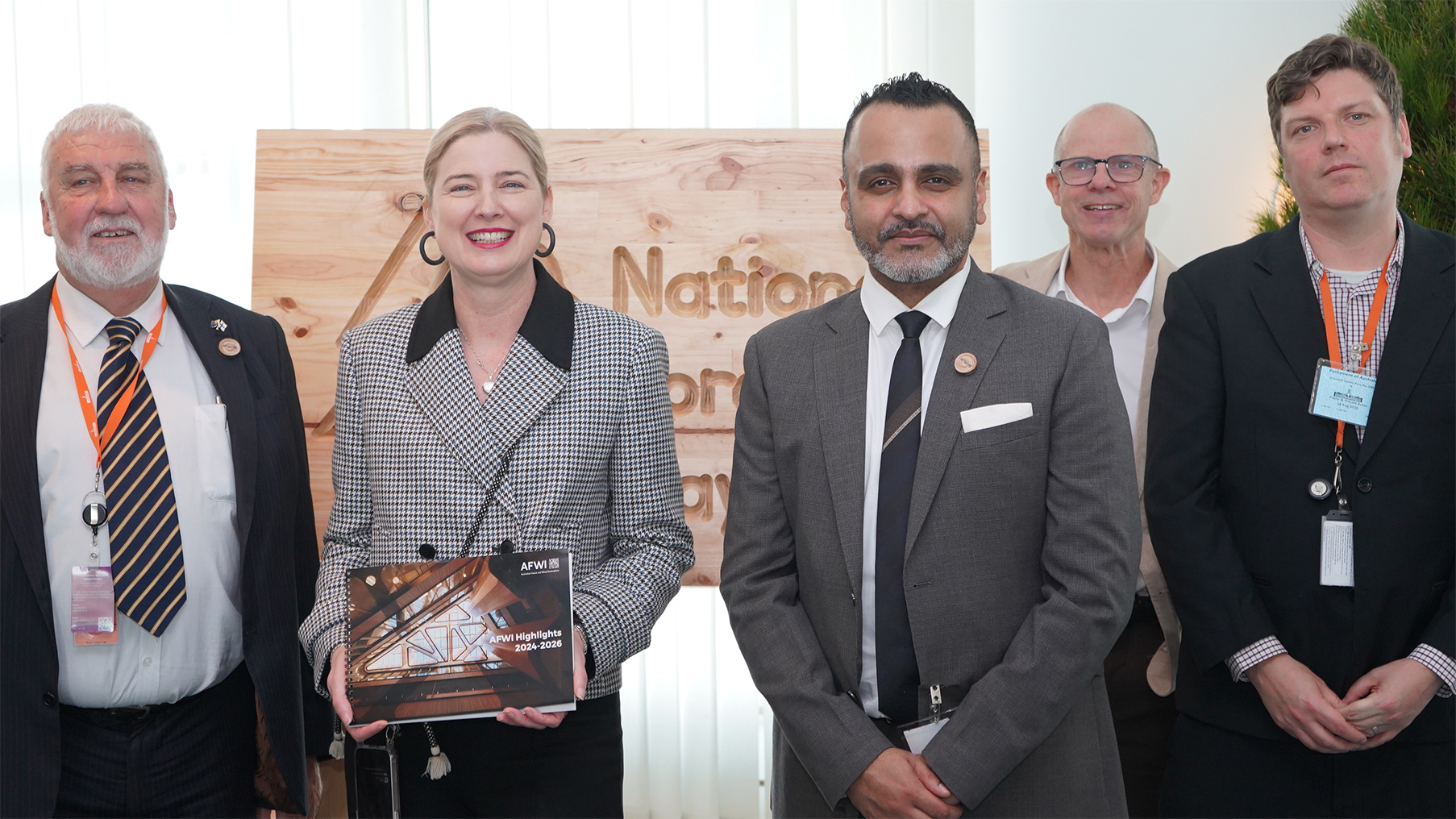
Minister Collins said AFWI had made strong progress in its first two years.
"AFWI has made strong progress in just over two years, with its investments already translating into practical outcomes across Australia's forest and wood products sector," Minister Collins said.
"I congratulate everyone involved and look forward to hearing more about the impacts being delivered and the further opportunities this national capability can unlock for industry, regions and communities."
AFWI CEO and Executive Director Dr Joseph Lawrence said the report showed how quickly AFWI had grown from a new initiative into a national research and innovation network.
"In just over two years, AFWI has grown from a new national initiative into a substantial industry-led innovation network operating across Australia," Dr Lawrence said.
"We are bringing together industry, research and government to tackle key challenges: healthier and more productive forests, getting more value from Australian fibre, developing new bioeconomy opportunities and helping unlock manufactured timber housing at scale."
AFWI's work is structured around four pillars: Healthier Forests, Maximising Fibre, Climate Solutions and Housing Innovation.
Projects span forest productivity and resilience, biosecurity and climate adaptation, low-carbon fuels and bioproducts, engineered timber products, advanced manufacturing and new approaches to timber construction.
AFWI is also rebuilding Australia's long-term forest and wood products research capability through three Research Centres, hosted by the University of Melbourne, the University of the Sunshine Coast and the University of Tasmania.
Across the portfolio, more than 90 early-career researchers are developing expertise while working directly with industry on practical challenges and pathways to adoption.
Moving research into industry
A major focus for AFWI's next phase will be helping research move into industry, including through advanced timber manufacturing, manufactured housing and new bioeconomy opportunities.
AFWI's The Precinct initiative, led by IndustryEdge, is bringing together industry, research and government partners to develop new engineered wood products, prefabricated dwellings and bio-based co-products at scale.
The initiative is designed to grow domestic manufacturing capability, reduce exports of lower-value fibre and substitute imported engineered wood products with higher-value Australian-made products.
AFWI also provided technical support to the John Curtin Research Centre's report, Manufacturing Homes: A National Strategy for Solving Australia's Housing Crisis, which sets out a national strategy for expanding modular and offsite construction capacity in Australia.
The report calls for AFWI's proposed National Demonstration of Australian Manufactured Timber Housing as an early proof point.
The proposed $300 million-scale demonstration would involve 600 manufactured timber dwellings across six to ten sites, showing how Australian timber, advanced manufacturing and modern construction methods could contribute to housing delivery at scale.
Dr Lawrence said these initiatives reflected the type of practical, large-scale work AFWI was established to support.
"The next phase is about taking the capability and partnerships we have built and turning them into larger-scale outcomes, from healthier and more productive forests and new bioeconomy industries through to advanced timber manufacturing and manufactured housing," Dr Lawrence said.
"Australia has an opportunity to turn more of our renewable timber fibre into higher-value products here at home, strengthening regional economies and sovereign manufacturing capability while contributing practical solutions to Australia's housing challenge."
AFWI's focus will increasingly be on helping research move into commercial pathways, standards, investment opportunities, new technologies and practical industry adoption.
"The foundations are now firmly in place. Our focus is on ensuring research moves into industry, investment and implementation, and delivers tangible benefits for Australian businesses, regional communities and the nation," Dr Lawrence said.
AFWI acknowledged the Australian Government and the Department of Agriculture, Fisheries and Forestry for their investment and support, the University of Tasmania as AFWI's host institution, and the industry, research, government, Indigenous and regional partners contributing to its work.
AFWI also acknowledged the Australian Forest Products Association for hosting the launch as part of National Forestry Day.
The AFWI Highlights Report 2024-2026 is available at afwi.au/afwi-highlights-report-2024-2026/ .


