
Many activities are currently progressing across the accelerator chain as the complex moves steadily towards full operation. In the injectors, beam commissioning is advancing well, with the highlights being the start of the physics programme at ELENA on 20 February and the ongoing scrubbing run in the SPS.
The SPS has just completed its first week of beam commissioning. Physics delivery beams have been set up in the SPS ring and low-intensity beams have been prepared for both fast and slow extraction to serve the downstream machines and experimental facilities. The machine has now entered the intensity ramp-up phase during the so-called scrubbing run. This is a crucial commissioning step, required whenever the beam pipe has been opened to air for interventions or routine maintenance, during which surfaces inevitably become contaminated through atmospheric exposure. Although mitigation measures are implemented during these interventions, subsequent surface conditioning with beam is almost always necessary.
As beams circulate in the machine, they induce electromagnetic fields in the surrounding vacuum chambers and equipment. This can lead to local heating and outgassing. In addition, secondary electron emission from insufficiently conditioned surfaces may generate local concentrations of electrons. These electrons are accelerated by the passing beam and bounce off the chamber walls, releasing further electrons in a process known as multipacting. The resulting electron clouds can further degrade the vacuum. If the pressure rises excessively, sensitive equipment may be at risk. For this reason, the beam is injected and stored in a carefully controlled manner, ensuring that the vacuum remains at acceptable levels, below interlock thresholds, while efficiently conditioning the surfaces. Typically, about one week of scrubbing is required before the maximum beam intensities can be reached. For LHC Injectors Upgrade (LIU)-type beams, which will ultimately serve the High-Luminosity LHC (HL-LHC), this corresponds to 288 bunches at 2.3×10¹¹ protons per bunch.
Meanwhile, in the LHC, the final steps before beam injection are under way. First beam had initially been scheduled for 21 February. However, on 11 February a vacuum leak was detected on an edge-welded bellow of a tertiary collimator at Point 2. This type of vacuum bellow is known to represent a structural weak point under certain operating conditions and a dedicated task force was launched in 2025 to study mitigation strategies in view of HL-LHC operation. The leak could not be repaired in situ and the collimator had to be replaced.
The duration of such an intervention is largely dictated by the bake-out of the affected vacuum sector to restore ultra-high vacuum conditions. The vacuum sector concerned is one of the largest in the LHC, making the operation particularly delicate and time-consuming. Given that the intervention was unavoidable and that the second tertiary collimator in the same sector (one horizontal and one vertical) had accumulated a similar number of operational cycles - and therefore presented a comparable risk profile - it was decided to replace both units during the same stop.
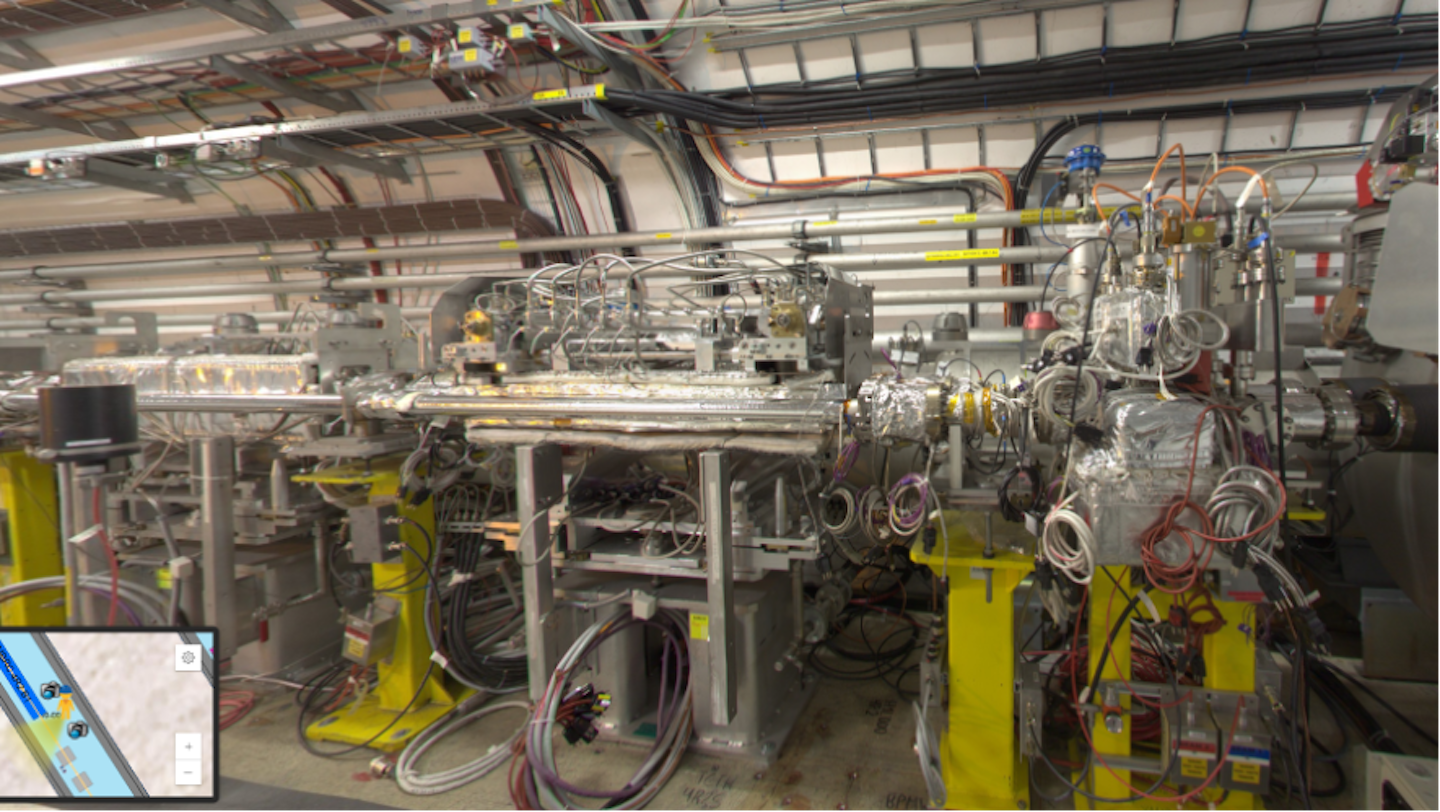
The intervention was carried out in a precise and efficient manner, with close coordination between the many groups involved, including vacuum, collimation, transport, beam instrumentation and cryogenics. The activities are expected to be completed on 26 February, after which the machine will be handed back for the final preparations. Hardware commissioning and machine checkout will be finalised in parallel. As a consequence, first beam injection into the LHC is now scheduled for 27 February, approximately six days later than originally planned.
Once beam is circulating, an intensive nine-day commissioning period will begin. During this phase, the accelerator will be progressively set up for physics operation. This includes orbit correction, optics measurements, collimator alignment, verification of machine protection systems and numerous other checks required to ensure safe and reliable operation at high energy. Only after this comprehensive commissioning phase will the LHC be ready to deliver stable beams for physics and the gradual intensity ramp-up begin.
With Run 3 entering its final stretch and Long Shutdown 3 (LS3) on the horizon, every commissioning step is both a preparation for the present and an investment in the future. The coming days will be decisive as beam returns to the LHC and commissioning moves into its most intense phase.


