
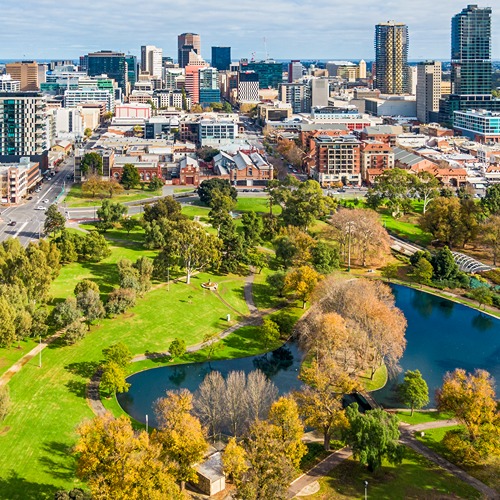
 Urban green spaces (UGS) play a crucial role in climate regulation, biodiversity and liveability, yet new research from the University of South Australia shows several ecological factors in Adelaide fall below the standard needed to support long term sustainability.
UGS help cool cities, support habitat and biodiversity, reduce pollution, and improve recreational value, making them essential for sustainable urban environments.
Led by Dr Rosa Teimouri from UniSA's Urban and Regional Planning team and published in Urban Science, the study examines the ecological performance of green spaces across six Adelaide suburbs. It determines how ecological criteria can enhance sustainability in the metropolitan area and provides a framework to guide future policy and design.
"While we know green spaces deliver multiple benefits, there was a gap in identifying which planning criteria are the most important and measurable in an Australian context," Dr Teimouri says.
The research identified ten key ecological criteria, including biodiversity, vegetation, ecological networks, water resources, landscape and design, protection and conservation. Research showed three criteria scored below the standard average: reviving ecological networks, improving water resource management and the protection of existing green space.
"These areas need targeted policy and action," Dr Teimouri says. "Urbanisation, development pressure and declining rainfall all challenge the protection of green cover. Sustainable water sources such as recycled water and rainwater harvesting are still underused, and restoring ecological connectivity requires coordinated planning across different levels of government."
The study found that landscape and design had the strongest overall impact on ecological sustainability, with design, biodiversity and vegetation particularly influential for a healthy and functional UGS network. These effects were particularly notable in suburbs Plympton and Unley.
The research recommends practical strategies to strengthen ecological sustainability, including wastewater recycling, planting drought tolerant species, restoring green corridors and introducing long term conservation planning.
"Stronger stewardship and cross agency collaboration is important," Dr Teimouri says. "Long term conservation programs and green space master plans will be essential for securing Adelaide's green cover."
The study provides place-based evidence and a measurable set of planning criteria tailored for Australian conditions, offering guidance that is locally relevant. Dr Teimouri hopes the research will inform future planning and state policy.
"The research provides an evidence-based council-level framework that helps planners prioritise interventions, understand where ecological investments will have the greatest local effect and strengthen green space strategies for a more resilient Adelaide," she says.
The study identifies opportunities for broader research, including applying the framework to other Australian cities, integrating ecological modelling with spatial tools and combining ecological, social and economic criteria for a more holistic sustainability assessment.


