An AI software has proven effective at planning the delivery of life-saving radiotherapy for cervical cancer and prostate cancer, according to results from a large international trial.
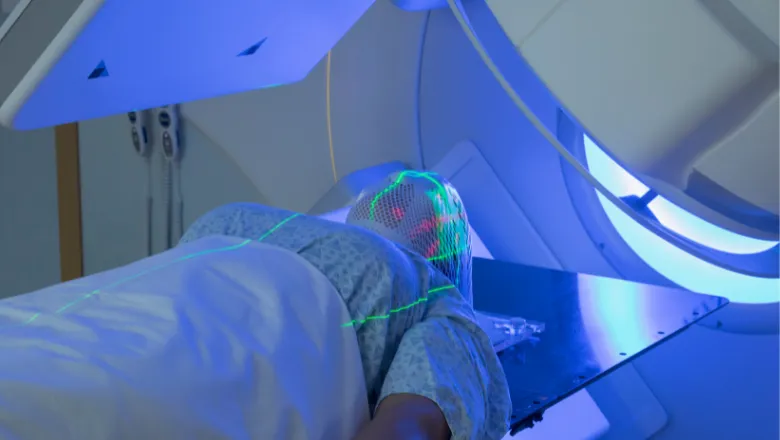
The ARCHERY trial investigated the effectiveness of the Radiotherapy Planning Assistant (RPA), an AI-driven technology developed by the MD Anderson Cancer Centre, which was designed to accelerate the production of high-quality radiotherapy plans.
94% of cervical cancer deaths occur in low- and middle-income countries, with 350,000 women dying from the disease in 2022. Radiotherapy is the main treatment, but currently only 10% of people who need it in low-income countries receive it - compared with 40% in middle-income nations - largely due to a shortage of skilled professionals.
Led by Professor Ajay Aggarwal, from the Institute of Cancer Policy, King's College London, the London School of Hygiene and Tropical Medicine, and Guy's & St Thomas' NHS Trust in London, the trial explored the effectiveness of the RPA in cervical, prostate, and head and neck cancer. The truly global clinical trial saw more than 1,000 patients recruited at hospitals in India, South Africa, Jordan and Malaysia.
The goal was to assess whether the RPA can achieve international best-practice radiotherapy planning, usually undertaken by oncologists and physicists, to enable its use across all resource settings, including in countries such as the UK.
Planning radiotherapy involves several complex steps, often requiring many hours of work by an oncologist to outline tumours on a CT scan, as well as areas at risk of tumour spread and areas of healthy tissue at risk of radiation damage. Expertise from a physicist is also required to determine the optimal position, size, and shape of the radiation beam. The AI-based software automatically does this by identifying target structures and determining optimal radiation beam configurations - tasks that traditionally take days, or even weeks.
The pre-publication results, presented at the European Society for Radiotherapy and Oncology (ESTRO) congress in Stockholm, found that the AI technology could plan radiotherapy to a high standard in more than 95% of cervical cancer cases.
For prostate cancer, the technology planned radiotherapy to a high standard in 85% of cases, which would still be considered suitable for routine use in the clinical setting. The results for head and neck cancer will be available later this year.
These results show that for cervical cancer, this AI technology achieves a very high standard, supporting its routine use in hospitals globally. In doing so, it can help meet the World Health Organisation's cervical cancer elimination initiative's treatment targets. It can also be used to support the delivery of prostate cancer treatments in any country setting,"
Chief investigator Professor Ajay Aggarwal
Radiotherapy is a critical cancer treatment for both cure and palliation. Yet millions of people around the world do not have access to it. If they did, we could save more than a million lives a year. This first-in-class clinical trial rigorously tested this AI technology for radiotherapy planning. This is a huge achievement. Not just for the proper evaluation of AI but also for the ability to bring together a truly international consortium to achieve this."
Professor Richard Sullivan, Director of the Institute of Cancer Policy at King's College London
The global consortium for the ARCHERY trial was coordinated by the UCL Innovative Clinical Trials Unit and included Cape Town University, Stellenbosch University, Tata Medical Centre, Kolkata, Tata Memorial Hospital, Mumbai, the University of Malaya Medical Centre, King Hussein Cancer Centre, Ghent University, the MD Anderson Cancer Centre, and the UK Radiotherapy Trials Quality Assurance Group (RTTQA).