
James Cook University senior leadership are ready to revolutionise the delivery of degree programs in remote communities, using AI to accelerate the integration of western and traditional knowledge systems.
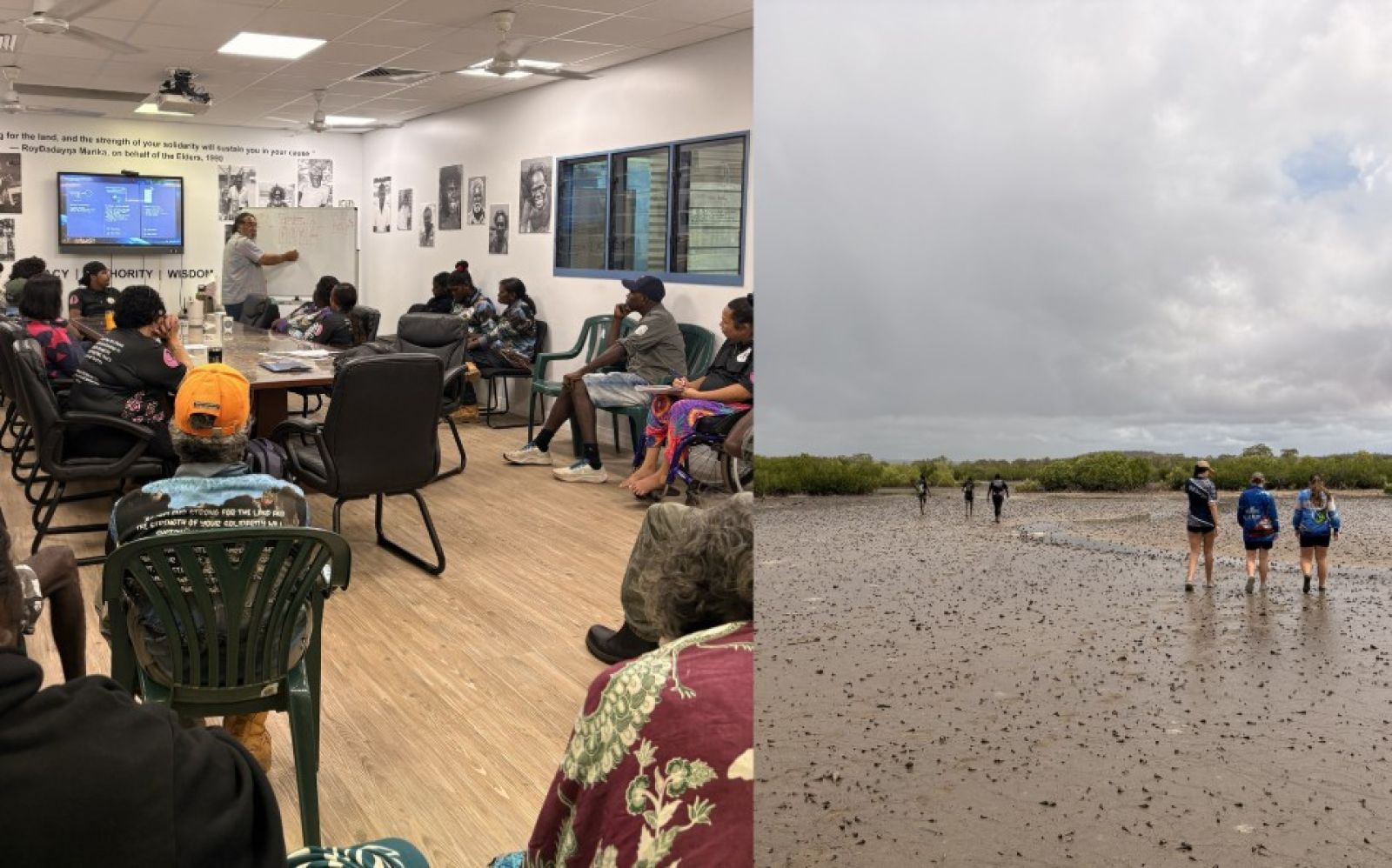
In their article published in The Australian Educational Researcher, JCU's Vice Chancellor Professor Simon Biggs and Deputy Vice-Chancellor of Indigenous Education & Strategy Professor Martin Nakata argue that new AI-integrated models of learning will value traditional knowledge, utilise traditional languages, and properly account for real-life work experience.
"The work being led by Professor Nakata is an important example of how JCU can deliver more personalised and responsive education," said Prof Biggs.
Prof Nakata's research argues that conventional approaches to Indigenous education have not worked and that new and innovative ways of learning – only made possible with the transformative power of AI - are needed.
"Here in Far North Queensland, we have more than twelve thousand Indigenous school students, but we're lucky to get 33 progressing to university," he said.
"We've spent decades looking at how to improve the education system … it's like concrete, you can't move it by continuing to do the same thing."
With big investments in coming decades into biosecurity, critical minerals and environmental protection being essential to Australia's national security and economic prosperity, the paper's first author Prof Nakata says that the capabilities of Indigenous people will be critical to investment success.
"The Federal Government has a huge interest in what they call the Northern Action Plan, with billions upon billions of dollars to be spent right across Northern Australia," he said.
"They're going to need a workforce to do this, and the only way you can do that is to improve the Indigenous education and training pipeline.
"Take the example of Indigenous Rangers … they are already effectively managing the environment, but we need to expand and build on their existing capabilities."
Underpinned by years of educational research, the authors describe a new framework for Indigenous Ranger credentialling which blends AI knowledge with traditional language, culture and national education standards, to create a personalised learning tool.
"We are trying to build an education and credentialling system that can include knowledge, experience and competencies Rangers already have, but are not easily identified through the current conventions in education," Prof Nakata said.
"We call it 'Learning Integrated Work'. There's no formal curriculum and what they do every day in their jobs becomes the basis for the curriculum … it's pretty radical compared to current approaches to education."
"This model means rangers don't have to leave their families. They don't have to leave their jobs. They can learn while they continue to earn money to support their families."
He also observed that the AI technologies were not new to Indigenous Rangers as they were already using modern drone technology in their current roles.
"Rangers are programming flight paths in traditional language and with the wisdom of elders," Prof Nakata said.
"Our challenge will be how to capture and measure that value in our degree programs, and aligning this with Tertiary Education Quality Standards.
"Microsoft Research in Seattle and Sydney want to work with us because they have a motivation to help safeguard the world's Indigenous languages."
With support from JCU's senior leadership, the new model for credentialling Indigenous Rangers will be trialed amongst the oldest Indigenous Ranger group in Australia, the Yolngu Rangers of northeast Arnhem Land at Dhimurrur.
"AI-assisted learning has enormous potential to improve access and success for learners in regional, remote and disadvantaged communities, not only in Indigenous Ranger credentialling, but across a range of JCU programs," said Prof Biggs.


