
2026 has got off to a terrible start for the Amazon rainforest. On 5 January, the Brazilian Association of Vegetable Oil Industries (ABIOVE), the industry group representing the largest soybean traders in Brazil, announced plans to withdraw from the Amazon Soy Moratorium. The move confirms the worst fears of the global movement to protect the Amazon: the world's single most successful zero-deforestation policy is hanging by a thread.
A Landmark Agreement is Fraying
The Amazon Soy Moratorium is not just another corporate pledge; it is widely considered one of the most successful zero-deforestation agreements in history.
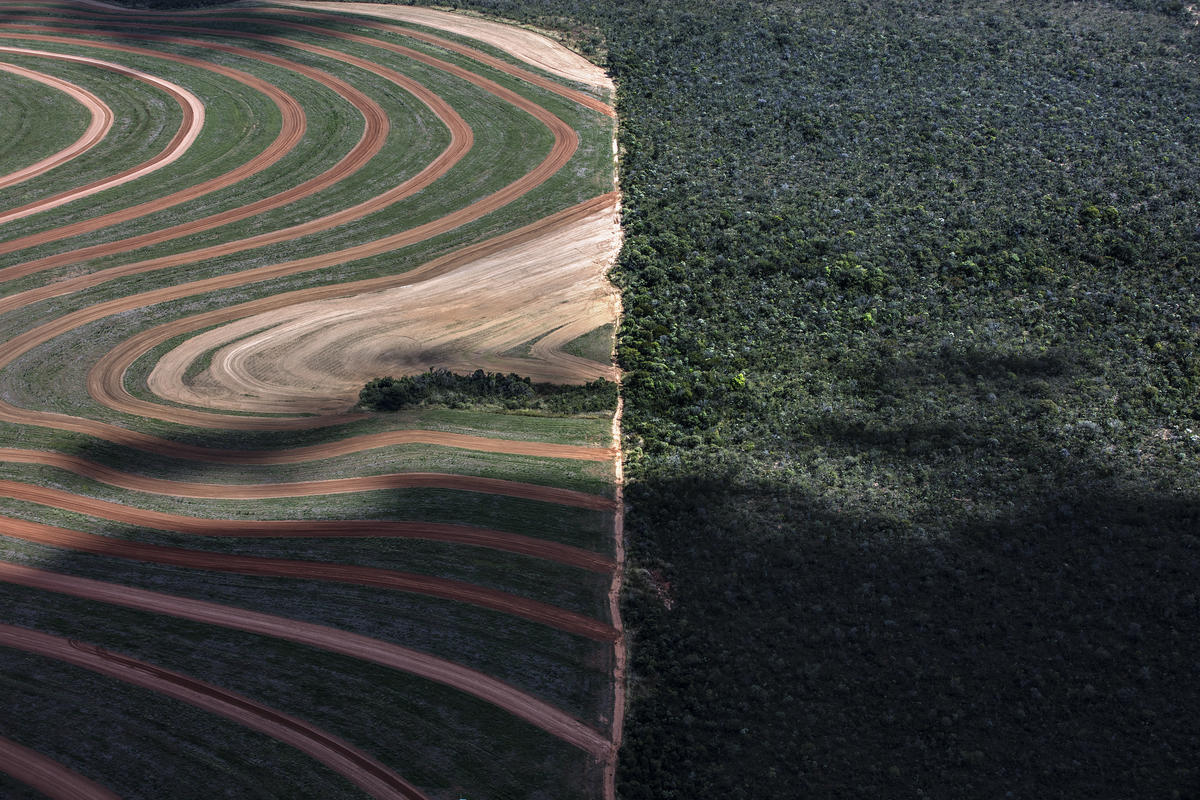
In 2006, Greenpeace International exposed how soy grown on recently deforested land was being used as animal feed – ultimately supplying major brands like McDonald's and other global fast-food and supermarket chains. The resulting global outrage led commodity traders, working with civil society groups led by Greenpeace, to establish the Soy Moratorium – a ground-breaking agreement that halted the expansion of soy onto newly deforested land in the Amazon.

Before the pact was signed, up to 30% of new soy fields in the Amazon were created by clearing primary rainforest. Today, thanks to the soy agreement, that figure has plummeted, with less than 4% of soy being planted in deforested areas as of July 2025 and has enabled Brazil to triple its soy production without torching its most vital ecosystem, proving that farming can be done in a way that does not harm our forests.
The catalyst for today's crisis is a new law introduced by the state legislature of Mato Grosso, Brazil's soybean capital, that came into force on 1 January 2026. This legislation – pushed by Brazil's powerful agribusiness lobby – strips tax benefits from any company that participates in any voluntary environmental agreement that goes beyond Brazilian environmental legislation, of which the Soy Moratorium is the most prominent example.
Although ABIOVE's statement does not make it clear which traders are following the association's decision, most of its members' logos have been removed from the agreement's official website, including industry giants and multinationals such as ADM, Bunge, Cargill and Louis Dreyfus.

By choosing to prioritise these tax breaks over their sustainability commitments, these companies are effectively hollowing out a historic shield for the Amazon. While ABIOVE claims that members will continue to monitor their supply chains individually, history shows that voluntary, individual promises rarely match the rigour or ambition of a unified, transparent moratorium.
What is at stake?
If the Moratorium collapses, the consequences will be global. Without it, producers only have to follow Brazil's Forest Code, an important piece of legislation which nonetheless allows them to clear forest from 20% of their land – or more in some cases – in the Amazon biome. If this happens, estimates suggest we could see a 30% surge in deforestation by 2045.
It would also have major implications for businesses and consumers around the world. The Soy Moratorium enabled companies to confidently promise their customers that the soy in their supply chains are free of Amazon deforestation. This is why so many major brands have supported the Soy Moratorium for decades – and why over a dozen leading European supermarket chains including Lidl, Aldi and Tesco recently urged members to publicly reaffirm their commitment to the pact.
Scientists warn that the Amazon is already reaching a "tipping point". If we lose just a few more percentage points of forest cover, the entire ecosystem could collapse into a dry, fire-prone savannah. This would release billions of tonnes of carbon, making it impossible to meet our global climate targets. There could not be more at stake.

Take Action: The World is Watching
Greenpeace Brasil is already supporting a legal challenge against the Mato Grosso law in Brazil's Supreme Court, arguing that it is unconstitutional to deny tax benefits as a way of punishing those who do more to protect forests. But we also need international pressure.
The vast majority of soy is used as animal feed: that is, it is used to produce the meat on dinner tables around the world. At a time when governments around the world are failing to protect citizens and nature from corporate exploitation, more than ever we need people to speak up. We need to raise our voices and make clear to soy traders and international brands that we won't accept products linked to the destruction of the world's largest rainforest.
The Amazon belongs to all of us, not just the agribusiness lobby. Let's make sure its best defence stays standing.
Joe Evans is a Global Comms Lead with Greenpeace UK.


