
Senior officials from ministries of labour and social affairs, leaders of employer organizations and trade unions, as well as ILO experts and specialists from across the Arab States concluded the first of its kind Tripartite Regional Workshop on International Labour Standards (ILS). Addressing some of the most pressing issues facing the world of work in the Arab region, the workshop discussed how international labour standards are applied in practice to support labour market reform and sustainable economic and social results.
Co-organized by Oman's Ministry of Labour, in partnership with the Executive Bureau of the Council of Ministers of Labour and Social Affairs in Gulf Cooperation Council States, the International Labour Organization (ILO), and the International Training Centre of the ILO (ITCILO), the training workshop was held from 15 to 17 December in the Omani capital, Muscat. It highlighted the role of international labour standards in advancing inclusive growth, effective labour governance, social stability, and sustainable labour market reform. The meeting also focused on translating labour standards into practice, meeting international obligations, strengthening social dialogue, and protecting workers' rights while supporting productive and competitive enterprises.
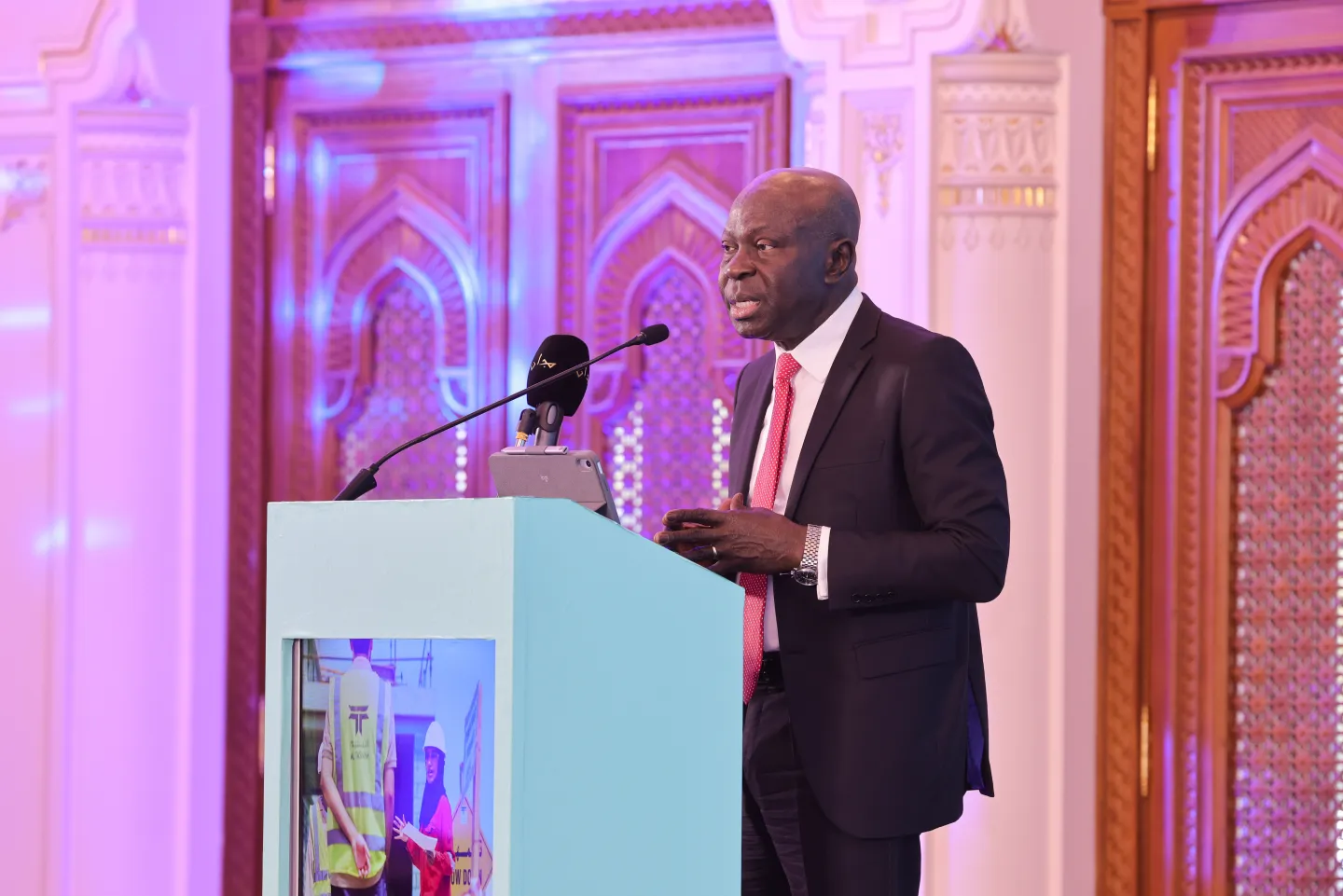
© Affan Al Mazidi/ Ministry of Labour of Oman
Speaking at the opening of the workshop during an official visit to Oman, ILO Director-General Gilbert F. Houngbo said international labour standards are not abstract norms, but instruments for managing change and promoting social cohesion.
"This first tripartite regional workshop on international labour standards marks an important step for the Arab region," Houngbo said. "International labour standards have been the backbone of social justice since the ILO's founding, and they remain essential for building trust, stability, and fairness in labour markets today. I thank the Ministry of Labour of the Sultanate of Oman and the Executive Bureau of the Gulf Cooperation Council for hosting this milestone meeting and for their commitment to strengthening labour governance and social dialogue across the region."
With many countries in the region undertaking ambitious labour and social protection reforms, participants examined how international labour standards, including those on occupational safety and health, forced labour, violence and harassment in the world of work, and fundamental principles and rights at work provide concrete guidance for managing economic and social change. Discussions highlighted how standards support balanced policy design, legal certainty, and institutional credibility, while helping prevent disputes and build trust between governments, employers, and workers.
Participants shared national experiences and good practices, examined common reporting and compliance challenges, analysed streamlined reporting requirements, and explored ways to strengthen the contribution of employer and worker organizations to standards-related consultations and national labour reform processes. The workshop also enhanced participants' ability to use ILO tools and resources, including NORMLEX, to support compliance and evidence-based policymaking.
The workshop concluded by laying the groundwork for targeted national follow-up, including technical assistance and capacity-building aligned with country reform priorities.
The ITCILO-facilitated ILS training initiative is delivered through a blended format, combining the in-person regional workshop in Muscat in the first instance, with a second phase of learning modules delivered online. This approach allows participants to deepen their technical understanding of the ILO standards system while creating a sustainable learning pathway that continues beyond the three-day workshop.


