Key points
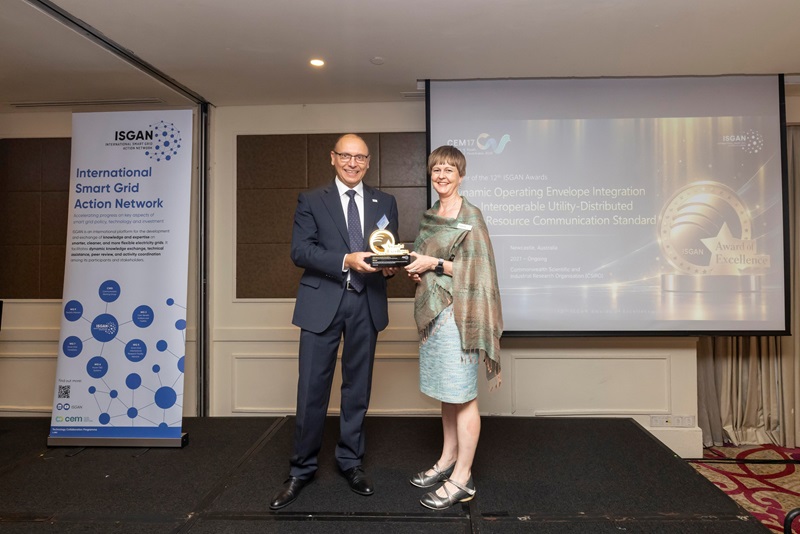
- CSIRO has been awarded the 2026 International Smart Grid Action Network (ISGAN) Award of Excellence for showcasing Australia's innovation in helping electricity networks support higher levels of rooftop solar integration.
- CSIRO's submission showcases Australia's journey in developing and adopting Dynamic Operating Envelopes (DOEs), highlighting the collective research, innovation and collaboration that have supported their transition from concept to practical implementation.
- The submission reflects years of research, trials and collaboration among a range of Australian stakeholders to unlock more renewable energy from existing electricity network infrastructure.
As countries around the world rethink how electricity systems operate, Australia's renewable energy experience offers valuable lessons on how customer-generated energy from rooftop solar can be integrated into the grid efficiently and reliably.
A case in point is the work on Dynamic Operating Envelopes which facilitate flexible export to the grid of energy from rooftop solar. Work recently recognised with the 2026 International Smart Grid Action Network (ISGAN) Award of Excellence .
"This award recognises years of collaboration to solve a common challenge as electricity systems adapt to increasing levels of distributed renewable energy," said Dr Nanduni Nimalsiri , a Senior Research Scientist at CSIRO who specialises in power systems and renewable energy integration.
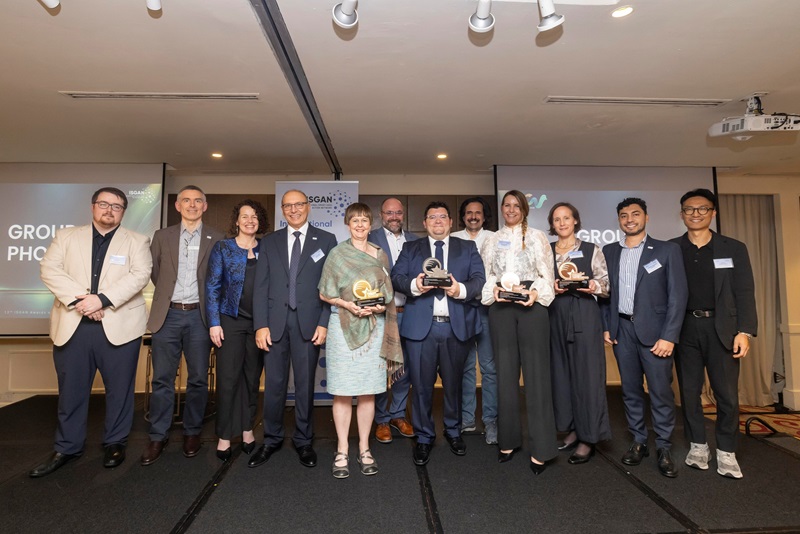
The casebook submission from CSIRO reflects a broad Australian effort involving industry, universities and research organisations. It brings together these different experiences and shares Australia's Dynamic Operating Envelope (DOE) journey with an international audience. The submission was selected for the award from a wide range of smart grid nominations representing projects from 10 different countries.
Dr Nimalsiri acknowledges the submission title is a mouthful: Dynamic Operating Envelope Integration Via An Interoperable Utility-Distributed Energy Resource Communication Standard.
"While the name is complicated and the technology behind the project sophisticated, the idea is simple," Dr Nimalsiri explained.
"Australia has one of the highest rates of rooftop solar adoption in the world. On sunny days, homes and businesses can generate more electricity than they need and export the surplus back to the grid."
But there is a catch. In some areas, local electricity networks can only accept a limited amount of solar exports at certain times.
"Traditionally, electricity networks have managed this challenge by setting fixed export limits, restricting how much solar energy customers can send back to the grid regardless of whether additional capacity might be available," Dr Nimalsiri said.
Dynamic Operating Envelopes and smart inverters
Using a technique known as a Dynamic Operating Envelope, export limits can change throughout the day in response to actual network conditions. These are also referred to as 'flexible export limits' or 'dynamic connection arrangements'.
When there is spare capacity on the network, solar customers can export more electricity. When the network is under pressure, export levels can be reduced temporarily to maintain reliability.
"Think of it as a variable speed limit for solar exports," said Dr Nimalsiri.
"Australia's experience with DOEs shows that we can get more value from the electricity network we already have while supporting the continued growth of rooftop solar.
"Rather than relying on fixed limits, we're using real-time information to better match solar exports with available network capacity. That means customers can export more clean energy when the network can accommodate it, while maintaining reliability for everyone," Dr Nimalsiri said.
DOEs are enabled by the Common Smart Inverter Profile-Australia (CSIP-AUS), a communication standard that allows electricity networks and customer-owned energy devices, such as solar inverters, to securely 'talk to each other'.
Working quietly in the background, CSIP-AUS allows electricity networks to share dynamic operating limits with customers' solar inverters and other energy devices, helping them adjust their operation according to available network capacity, without customers needing to constantly monitor or adjust their systems.
One of the pioneering demonstrations of this standards-based DOE approach was the Flexible Exports for Solar PV Trial .
CSIRO contributed to the research, modelling and technical validation underpinning DOEs and supported industry collaboration around the development and deployment of CSIP-AUS.
"Australia's experience with Dynamic Operating Envelopes shows how smarter, more transparent network operations can help unlock more value from rooftop solar," Dr Nimalsiri said.
"By making better use of available capacity, we can enable more clean energy exports without major infrastructure upgrades."
"With many countries grappling with how to integrate growing numbers of customer-owned distributed energy resources like rooftop solar, Australia's experience offers valuable lessons for the advancement of smart grids worldwide.
"As Australia's national science agency, CSIRO has helped share those lessons, including what worked, what was challenging, and how dynamic, standards-based approaches can help build a more flexible electricity system while enabling more clean energy to reach the grid."
The casebook, authored by Dr Nanduni Nimalsiri, Mr Thomas Wearne , Dr Thomas Brinsmead , Mr Michael Elliott and Ms Terijo Lovasz from CSIRO, can be found on the ISGAN website.