
Outdoor entertaining is a fixture of the Western Australian festive season - and the State's energy safety regulator is sharing key advice on using gas barbecues safely.
- Soapy water test prior to barbecue use can help detect gas leaks
- Newer gas barbecues should only be used with an LCC27 cylinder connection
- Use gas barbecues in well-ventilated outdoor areas due to carbon monoxide risks
Outdoor entertaining is a fixture of the Western Australian festive season - and the State's energy safety regulator is sharing key advice on using gas barbecues safely.
The Department of Local Government, Industry Regulation and Safety's Building and Energy division is reminding grillers to choose the correct LPG cylinder type for their barbecue and to check for gas leaks prior to cooking.
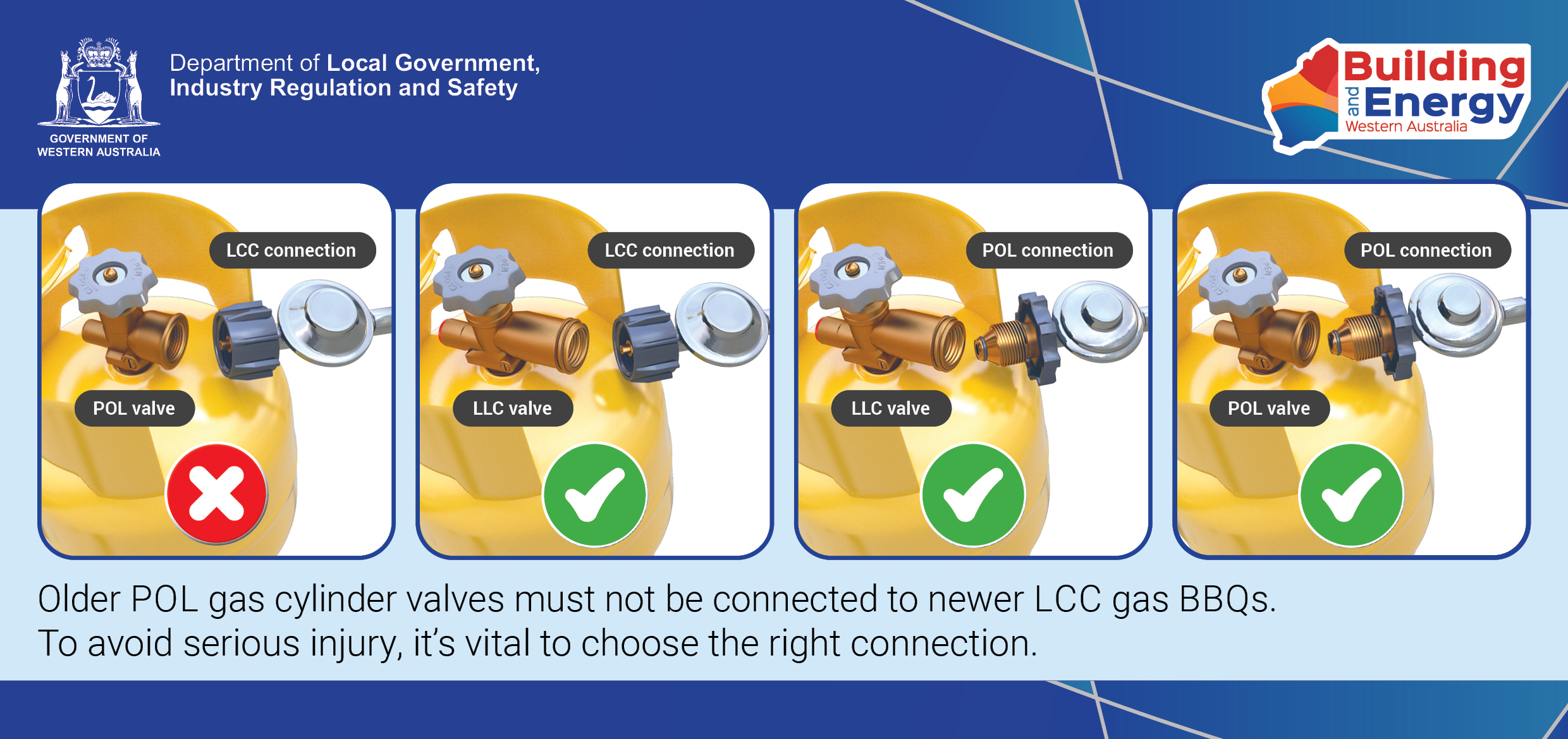
LCC27 cylinder valves, which have additional safety features, are being phased in to eventually replace traditional POL valves.
Following incidents of serious burns to Perth residents due to incorrect connections between appliances and cylinders, information about the two valve types must now be displayed by retailers and on cylinder collars to help consumers make the right connection.
Building and Energy Executive Director Daniel Kearney said newer equipment must only be used with LCC27 cylinders. Attempting to connect a newer LCC27 appliance to the older POL cylinder can cause gas to leak and ignite.
"If you've bought a new leisure gas appliance since April 2022, such as a barbecue or patio heater, it will have an LCC27 connector that only fits securely to a cylinder with an LCC27 valve," Mr Kearney said.
"You should be able to easily and securely tighten the appliance's large right-handed thread on to the cylinder. If this takes effort or the connection is loose, you probably have the wrong cylinder type. Check the signs and labels or ask the retailer if you're not sure."
Older appliances will connect safely with either LCC27 or POL cylinders.
Building and Energy's advice for safe grilling with gas:
- Follow the manufacturer's instructions, read the barbecue's safety warnings and look for an approval badge to verify it is authorised for sale in Australia.
- Check for fire bans or other restrictions on barbecue use.
- If you have a newer barbecue with an LCC27 connection, only use a cylinder with an LCC27 valve (which has both an inside and outside thread).
- Older barbecues can be used with either a POL valve (which only has an inside thread) or a newer and safer LCC27 valve.
- Never use an adaptor to try to connect an LCC27 barbecue with a POL cylinder. Building and Energy has banned these adaptors for safety reasons.
- Check the LPG cylinder for damage and ensure its most recent test date is within the past 10 years. If it has exceeded 10 years, the cylinder should be replaced.
- Check the gas hose for cracks, kinks or flaws that could result in a gas leak.
- After opening the cylinder to release gas, but before igniting the barbecue, apply soapy water to the LPG cylinder, hose and appliance connections. Bubbles or a gas smell are signs of a gas leak.
- Barbecues and other outdoor gas appliances must only be used in a well-ventilated area outdoors to avoid potentially lethal exposure to carbon monoxide.
- Clean the barbecue regularly to reduce fire risks from built-up grease and oil.
"Barbecues and other gas equipment are safe to use if they are in good condition and operated correctly," Mr Kearney said.
"If there are any concerns with your barbecue or cylinder, turn off the gas immediately and arrange for a licensed gas fitter to service the equipment."
Visit lgirs.wa.gov.au/bbqsafe for more information and a handy video.


