
UOW research finds mangrove forests suffered long-term damage from 2019-2020 bushfires, while saltmarshes recovered within a few years
Research published today reveals the varied impact of the 2019-2020 Black Summer bushfires on Australia's coastal wetlands, with some ecosystems recovering within a few years while others continue to show signs of significant damage.
Led by a team of University of Wollongong (UOW) researchers, the study combined field surveys and remote sensing across three New South Wales estuaries – the Clyde River, Candlagan Creek and Wonboyn Lake – to examine the impacts on mangroves, saltmarshes and supratidal forests during the first five years after the bushfires. Across NSW, the fires burned approximately 23 hectares of mangroves and 183 hectares of saltmarsh.
The clearest contrast in recovery patterns was seen between mangroves and rush-dominated saltmarsh.
At Wonboyn Lake, 96 per cent of saltmarsh burned during the fires but the ecosystem regained its pre-fire extent within three and a half years. At Candlagan Creek, researchers found above-ground saltmarsh in burnt areas had recovered to levels comparable with unburnt areas within 18 months.
However, mangroves suffered impacts ranging from partial loss of leaves to whole-of-forest mortality, while regeneration varied considerably between locations.
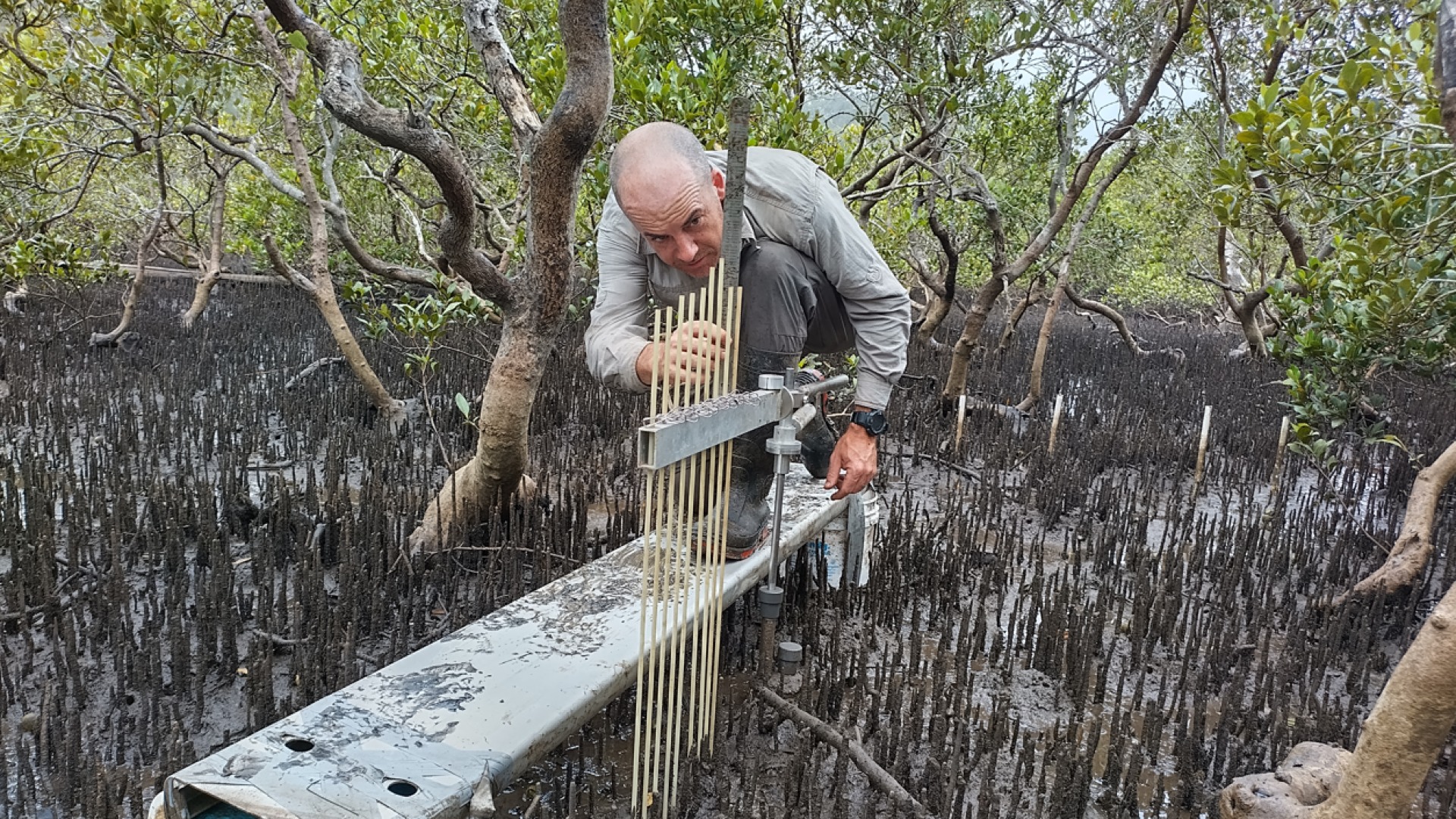
Lead researcher Dr Jeffrey Kelleway said the findings demonstrated why recovery needs to be understood at an ecosystem level rather than assuming all coastal vegetation will respond to fire in the same way.
"Whether a wetland recovers after fire depends on the type of vegetation and the severity of the fire. While some saltmarshes can bounce back quickly, for heavily impacted mangrove forests the effects of fire can persist for many years, and long-term recovery is not guaranteed. Our research suggests differences in plant structure and reproductive ecology of dominant plant species play an important role in determining the speed of post-fire recovery," Dr Kelleway said.
"Coastal wetlands support fisheries, protect shorelines and store carbon. Where recovery is slow or incomplete, there may be lasting impacts on these functions, which makes long-term recovery an important area for further research."
The findings highlight the need for bushfire management that takes into account that coastal wetlands may require different approaches. The research team is working with Batemans Marine Park and other NSW Government agencies to identify potential management actions, including prioritising fire suppression where significant coastal wetlands are threatened, investigating the use of saltmarsh areas as natural fire breaks and assisted regeneration where vegetation does not recover naturally.
The new research is released as UOW hosts the 2026 Australasian Mangrove and Saltmarsh Network Conference from Tuesday 24 to Friday 27 November at the Innovation Campus, bringing together researchers and practitioners to discuss the future management and protection of these important coastal ecosystems.
About the research:
'Variable Effects and Recovery of Coastal Wetland Vegetation in the First Five Years Following 'Black Summer' Fires', by Jeffrey J. Kelleway, Annabel Green, Miranda James, Riley Clark, Mark Quoyle, Emma F. Asbridge, Colin D. Woodroffe, Owen Price, Zacchary Larkin, Shamaram Eichmann, Norm Lenehan, and Kerrylee Rogers, was published in Ecosystems: https://doi.org/10.1007/s10021-026-01115-6


