
In one of the cities hardest hit by the earthquake that struck Colombia, hundreds of people are still waiting for news of missing relatives, friends and neighbours.
As rescuers search for signs of life beneath collapsed buildings, people across Cali have come out with water, food, tools and often just their bare hands, to help.
The UN has deployed teams and resources to support the response and meet the most urgent needs.
'Incredibly intense'
Víctor Manuel Rodríguez thought he might be living his last moments when the building where he lives began to shake.
He was on the sixth and top floor of his apartment building in Cali when the windows shattered and, looking outside, he saw nearby structures starting to collapse. He grabbed his dog and ran down the stairs.
It was really hard for all of us to feel that this could be our last day.
"It was incredibly intense," he recalls. "It was really hard for all of us to feel that this could be our last day."
Víctor spent several hours outside while structural checks were carried out. When he was finally allowed back in, he straightened up his apartment and began gathering anything that might be useful in an emergency: a flashlight, gloves, whistles and some of the gear he normally takes hiking.
Then he went back out - this time, to help others.
He headed to Capri, in southern Cali, where several buildings had collapsed. The area was familiar: the housing complex where he grew up is nearby. He also knew that a friend was still trapped beneath the rubble.
"We're waiting and hoping she's alive," he said as the search continued.
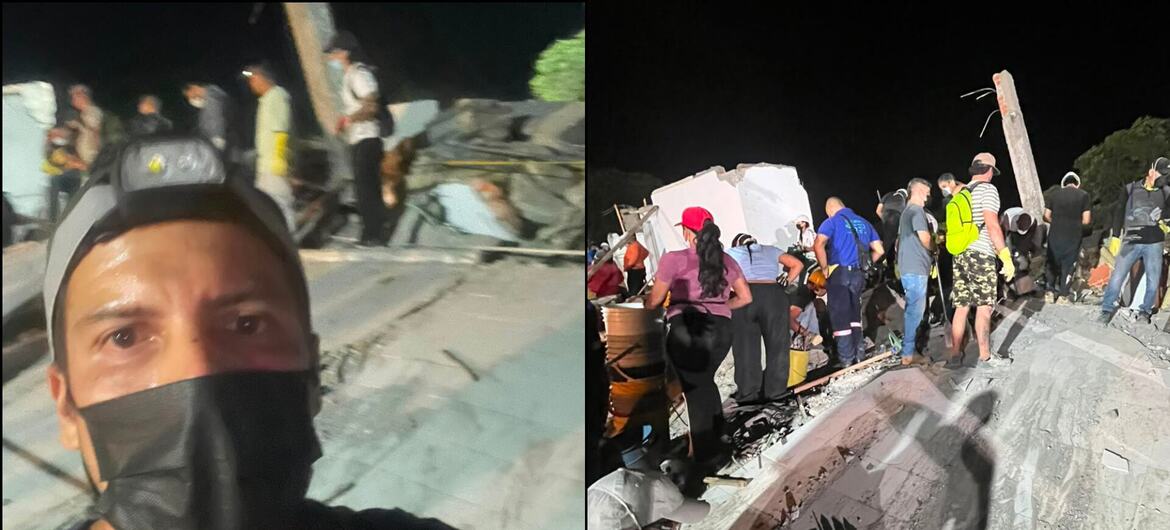
Cali, Colombia's third-largest city and the capital of Valle del Cauca, is at the centre of one of the areas hardest hit by the magnitude 7.4 earthquake on 10 August.
By the afternoon of 12 August, the department had reported 132 deaths, 238 people missing and more than 2,500 injured, according to official figures compiled by the UN aid coordination office OCHA .
Around 36,000 people have been affected across the region.
But those figures tell only part of the story. Children wait for news of their parents; neighbours ask after neighbours and friends - and families spend hour after hour hoping for any word on those still missing.
When someone is rescued alive, there is this incredible rush of energy - this overwhelming sense of humanity.
Víctor spent much of Monday afternoon and into the early hours alongside rescuers and volunteers, in a place where the mood could shift within minutes. At times, rescue teams called for silence and everyone stopped, listening for any sound from beneath the piles of broken concrete.
When there was a sign of life, hope returned to those waiting nearby. Víctor remembers arriving shortly after one person had been pulled out alive. He then saw two more people rescued. Later, three bodies were recovered. By the time he went home, he had heard that rescuers had managed to save yet another life.
"It is heartbreaking to see bodies being pulled out, but when someone is rescued alive, there is this incredible rush of energy - this overwhelming sense of humanity."
During those hours, Víctor also began to recognise faces. One belonged to a man he had spent part of the night carrying materials with. The next day, they ran into each other again at another collapsed building, both looking for somewhere they could keep helping.
Only then did they realise they still did not know each other's names.
"Yesterday we were carrying things together, and here we are again today. We don't even know each other's names," Víctor says.
For him, those hours changed the way he thought about the people around him.
"I started to feel that it wasn't just about my own family anymore. It was about everyone around us - the neighbour, someone you know, the man on the corner, the elderly person who can barely walk."
A city that came out to help
That same instinct could be seen across Cali.
José Daniel Hernández joined rescue and debris-removal efforts on the first day. When he returned to the streets the following morning, he found dozens of others doing the same: some brought supplies, others waited to help at damaged buildings and many simply asked what was needed.
José spent hours moving around the city looking for where he could be useful. Once rescue sites had enough people, he turned his attention to other needs: fuel to keep equipment running through the night, batteries, flashlights and cutting tools.
"I'd rather come here and help however I can than sit around waiting and maybe not be useful at all," he says.
Jeimmy Celemín saw the same mobilisation across neighbourhoods throughout the city. What struck her most was seeing people from very different backgrounds doing the same things: buying water and food with their own money; taking helmets, protective glasses, gloves and shovels to search sites; or spending hours at collection centres.
Young people, adults and older residents packed donations, accompanied victims' families and supported those still working among the rubble.
"People in Cali responded from the very first moment of the tragedy," Jeimmy said. "As soon as we started seeing collapsed buildings and realised the rescue teams would not be able to cope on their own, people took to the streets. That's when you see what real solidarity looks like."
Cali was also enduring temperatures close to 35 degrees Celsius. Jeimmy said bringing water and food to firefighters, rescuers and volunteers became almost as important as collecting equipment.
"They have been working under that brutal sun," she said. "We are looking out for one another. I feel like we are one, like we are a family, and we are taking care of each other."
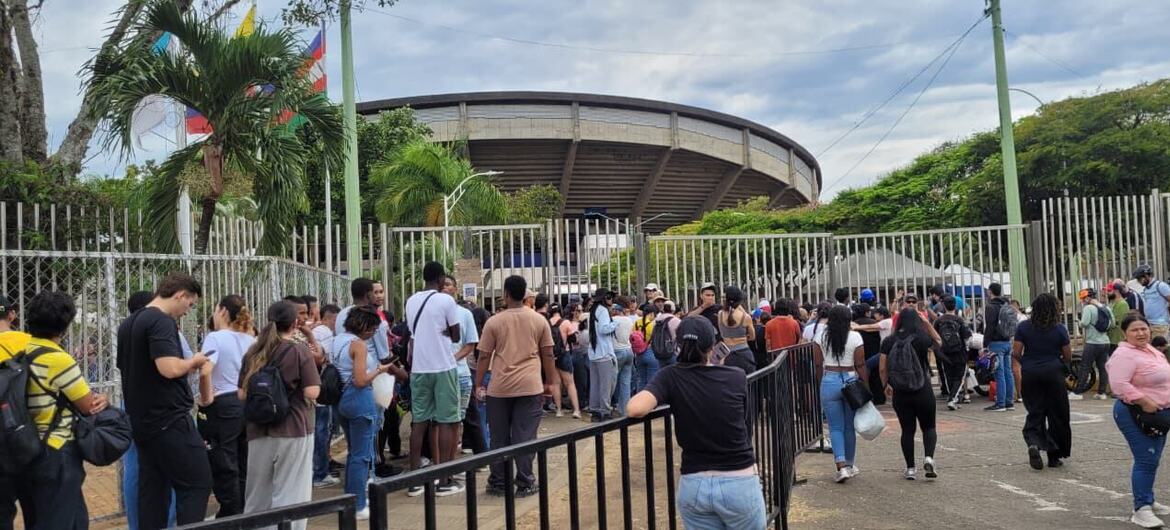
One of the spaces repurposed for donations had been prepared for one of Cali's most important cultural events. Every August, the Petronio Álvarez Pacific Music Festival brings together the music, food, crafts and traditions of Colombia's Pacific region, which is deeply tied to Cali's identity.
The festival had opened on Sunday and was meant to last a week, but Monday's earthquake brought celebrations to a halt. The Petronio Álvarez Festival grounds and spaces intended for musicians, traditional cooks and visitors are now being used to organise aid for affected communities.
The change carries particular weight because the earthquake also hit Chocó and other parts of Colombia's Pacific and western regions hard.
At some collection points in Cali, people eventually began asking donors to stop sending certain items and redirect help to places where it was more urgently needed. Jeimmy recalls seeing messages urging people not to forget Buenaventura, Pereira, Manizales and other badly affected areas, including hard-to-reach communities in northern Valle del Cauca.
"It gives me some peace of mind to know there are people out there supporting and helping," she said. "For me, cooperation has been everything in this tragedy. We also have to recognise the work of the firefighters. There aren't many of them, but they have given everything they have, and now, with support from rescue teams coming from outside, I hope those still beneath the rubble can be brought out alive."
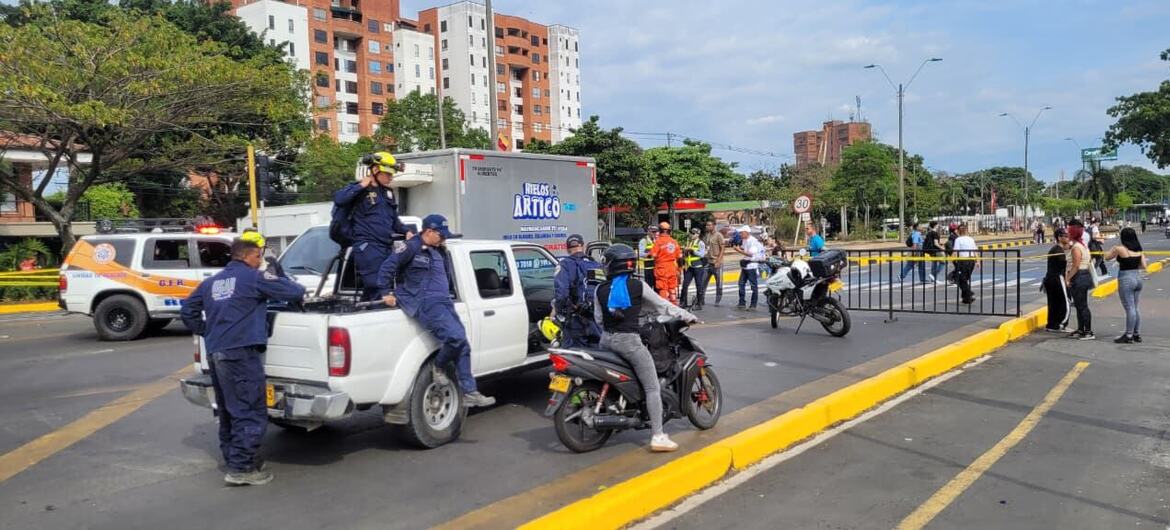
Another emergency
As teams continue searching for survivors, the scale of the emergency is widening. Thousands of families have seen their homes destroyed or damaged and now need shelter, medical care, safe drinking water, food and psychological support.
In Valle del Cauca, OCHA has identified hospital and psychosocial care, safe water and protection for children and other affected people among the priorities.
This must be an opportunity to apply the principle of building back better.
The UN system is supporting the response led by the Colombian authorities.
Humanitarian coordination mechanisms covering health, shelter, water and sanitation, food security, protection and education in emergencies have been activated, with teams and resources being mobilised primarily to Cali, Quibdó and Buenaventura.
The Pan American Health Organization has deployed specialised personnel and medical supplies, while other UN agencies are assessing the most urgent needs.
UN Emergency Relief Coordinator Tom Fletcher has also announced $5 million from the Central Emergency Response Fund , CERF , to support the immediate response.
But even as the search for survivors continues, the UN is already looking towards what comes next. For Resident Coordinator in Colombia María José Torres Macho, reconstruction cannot simply mean replacing what was lost.
"This must be an opportunity to apply the principle of building back better," she says.
Ms. Torres Macho says crises test societies, but they also reveal their ability to come together and move forward.
In Cali, that unity has been visible from the first day: in a flashlight, a bottle of water, a donated tent, hands ready to lift debris - and in a city full of people asking, again and again, "What can I do to help?"


