
Thirty-seven participants representing National Meteorological and Hydrological Services (NMHSs), disaster management agencies, regional institutions, international organizations and experts from 17 Caribbean countries gathered in Port of Spain, Trinidad and Tobago, from 26 to 29 May 2026 for the Regional Workshop on Impact-Based Forecast and Warning Services (IBFWS) and the Common Alerting Protocol (CAP).
The workshop, co-facilitated by the World Meteorological Organization (WMO) and the Caribbean Meteorological Organization (CMO), funded through the Climate Risk and Early Warning Systems (CREWS) Initiative Caribbean 2.0 Project , provided a platform to strengthen regional expertise, operational readiness, and collaboration for the implementation of IBFWS and CAP as key components of people-centered, multi-hazard early warning systems.
As Caribbean countries prepare for the 2026 North Atlantic hurricane season, the workshop focused on enhancing the delivery of warnings that not only describe the hazard but also communicate the likely impacts on people, infrastructure, livelihoods and critical services, together with the actions required to reduce risk.
Over four days, participants engaged in expert presentations, regional case studies, practical exercises, simulated forecast scenarios, field visits, and peer-to-peer exchanges. Discussions explored the integration of hazard, exposure, and vulnerability information into forecasting and warning operations, the use of CAP to support timely and consistent warning dissemination, and the importance of effective risk communication and stakeholder engagement.
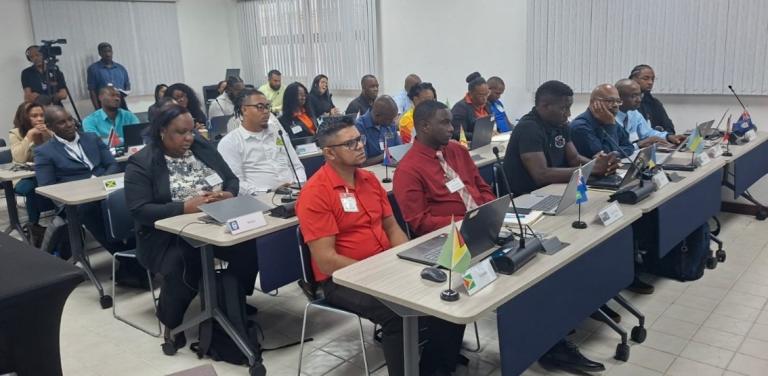
The workshop benefited from the active participation of key regional and international partners, including the United Nations Office for Disaster Risk Reduction (UNDRR), the International Telecommunication Union (ITU), the International Federation of Red Cross and Red Crescent Societies (IFRC) and the Caribbean Telecommunications Union (CTU), as well as experts from Kenya and El Salvador who shared practical experiences and lessons learned from operational implementation.
A major outcome of the workshop was the development of country-specific roadmaps to guide the implementation of IBFWS and CAP. Participants identified priority actions to strengthen operational readiness, improve coordination between meteorological and disaster management agencies, enhance warning dissemination and advance the use of impact-based approaches within national early warning systems.
To sustain momentum beyond the workshop, participants agreed to establish a Caribbean Community of Practice on IBFWS and CAP. The Community of Practice will provide a mechanism for ongoing collaboration, technical exchange, peer learning and sharing of tools, standard operating procedures and implementation experiences across the region.
The workshop concluded with a strong commitment to advancing more timely, actionable and people-centered warnings in support of the Early Warnings for All initiative. By strengthening regional cooperation and operational capabilities, Caribbean countries are taking important steps towards improving preparedness, reducing disaster risk, and protecting lives, livelihoods and critical infrastructure from the impacts of weather-, water- and climate-related hazards.


