
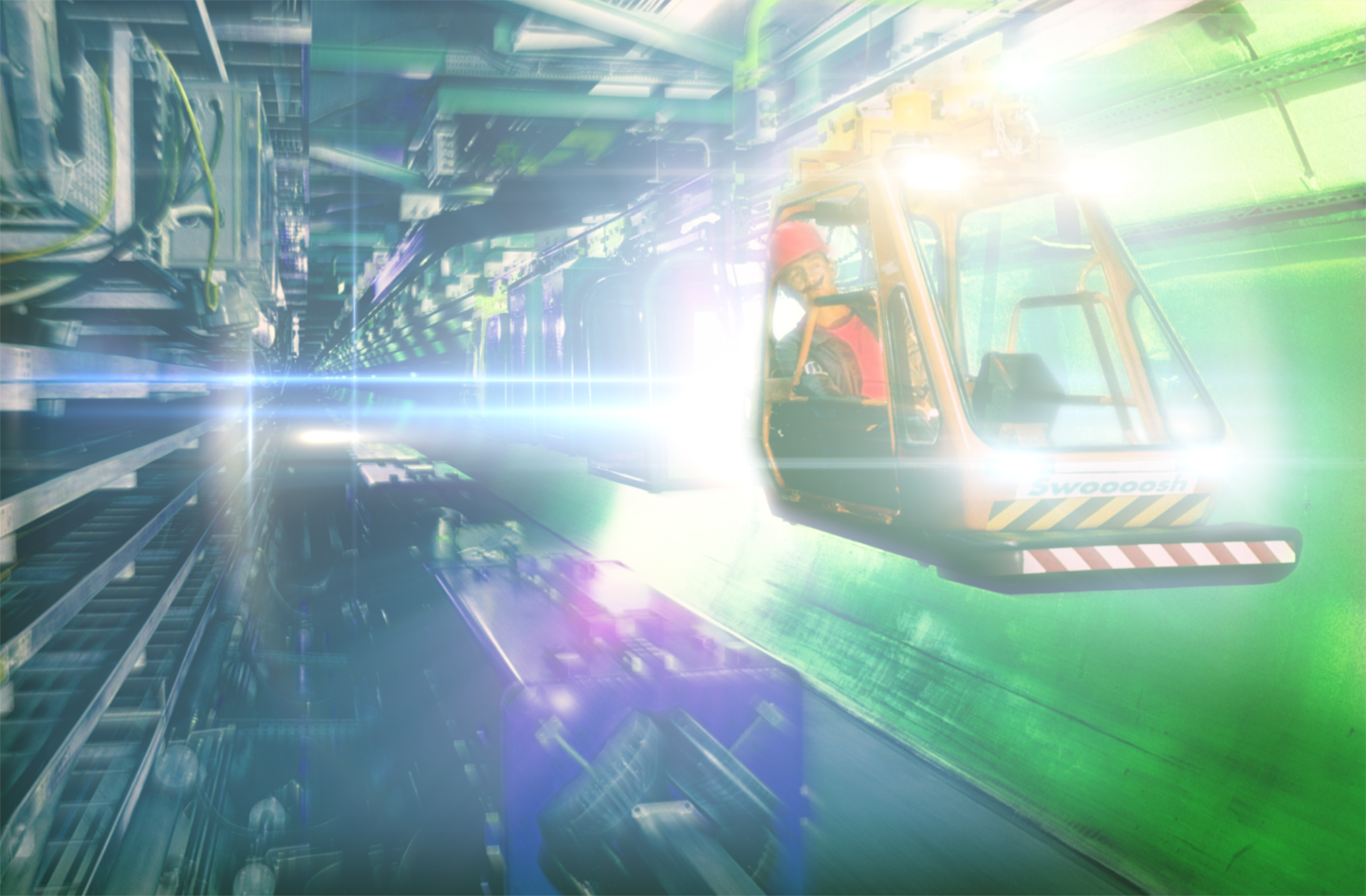
Early tests of the superconducting karts showed noticeable speed boosts. (Image: CERN)
Following on from the robotic mice, CERN engineers have now developed a super-charged kart to enable workers to race through the Large Hadron Collider (LHC) underground tunnel during the upcoming major works, starting this summer.
The karts promise a power boost to activities during this period, known as Long Shutdown 3 (LS3), which will see the LHC transformed into the High-Luminosity LHC. These vehicles will replace the bicycles that were used until now to travel through the 27-km underground tunnel, enabling engineers and technicians to speed to areas where improvements to the accelerator are required.
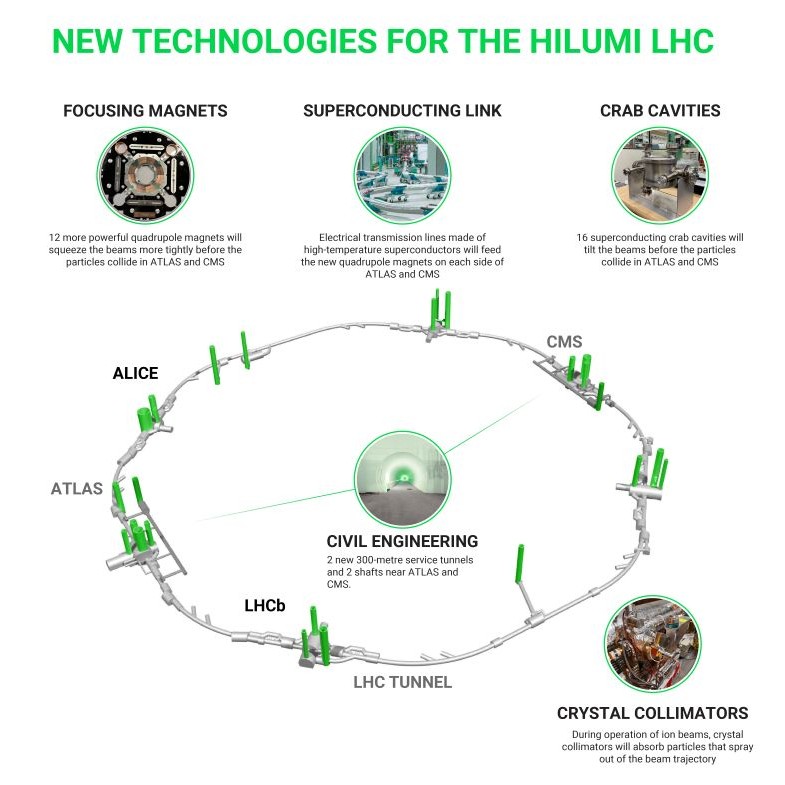
"Each kart is turbo-boosted by 64 superconducting engines," explains project leader Mario Idraulico. "When the engines are cooled to below their critical temperatures, the Meissner effect levitates the karts, allowing them to zip through the tunnels at high speeds and, mamma mia, they're super!"
Early tests have been promising, and the next steps involve testing different kart designs in an underground race. Safety coordinator Luigi Fratello has ensured that each driver will be issued with Safety and Health Equipment for Long and Limited Stays (SHELLS), although his response to drivers wanting bananas in the tunnel was "Oh no!"
These karts, although developed to support CERN's fundamental research programme, show clear applications for society. CERN's Knowledge Transfer Group has begun discussions with European startup company Quantum Mushroom to explore aerospace applications and powering for next-generation anti-gravity vehicles.
Surprisingly, the kart project began from a collaboration between CERN engineers and onsite nursery school children - one example of CERN's commitment to inspiring future generations. "We're thrilled that the children's kart designs were the inspiration for the engineered karts," exclaimed schoolteacher Yoshi Kyouryuu, mid-way through painting spots on eggs for an Easter egg hunt.
"As educators, we promote curiosity from a young age, which is why we paint question marks all over our yellow school walls," explained school director, Rosalina Pfirsich, looking up from her storybook. "With all the contributions the children have made to the upcoming High-Luminosity LHC project, we've taken to calling them Luma!"


