
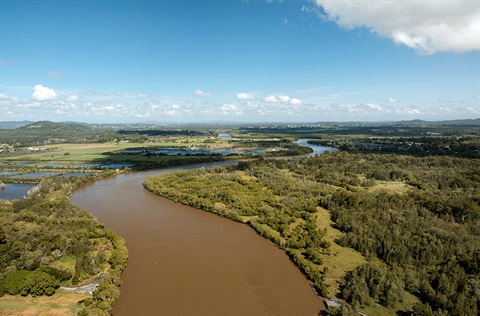
Logan City Council has released the independent review into the Logan and Albert Rivers flood study, with Councillors to consider the findings at a Special Council meeting on 27 May.
The review highlights an opportunity to improve how rare floods, including the worst-case scenario known as the Probable Maximum Flood (PMF), are used in development planning while maintaining their role in emergency planning.
Logan Mayor Jon Raven said the independent review was commissioned following community feedback during consultation on the draft Logan Plan, with residents raising concerns about flood mapping.
"This report confirms what the community told us through the Logan Plan consultation: that the inclusion of rare and extreme events in flood mapping creates alarm and isn't practical," Mayor Raven said.
"Councillors wanted this issue examined closely and independently because the community had raised concerns about how the most extreme flood scenarios are used to determine what can be done on their land. These findings validate those concerns.
"When the flood maps were commissioned, the inclusion of extreme flood scenarios was required under State Planning Policy. We will now work with the Queensland Government to advocate for a more practical approach on how flood mapping is used in planning for the benefit of Logan residents and all Queenslanders."
Any potential changes would be considered through a transparent process and clearly communicated to the community.
The independent review found the flood study was developed using accepted national standards and industry practices. It also identified two key technical factors influencing results:
- The first technical factor related to very old flood events (from 1887 and 1947 before gauged records) which were not included in the modelling. The review found that if they were included it could lead to lower modelled flood levels in some areas, noting these findings are preliminary.
- However, the review also noted that any reduction in modelled flood levels would need to be assessed in the context of more up‑to‑date climate change data, with much of the work completed before national flood guidelines were updated in 2024 (Australian Rainfall and Runoff Version 4.2).
Older floods such as these have not typically been incorporated into flood modelling in Logan due to the limited reliability of historical flood data. Measured and verifiable gauged records at key locations such as the upstream gauge at Yarrahappini are only available from 1969 onwards, and the catchment has also undergone significant urbanisation since that time.
Councillors will consider the outcomes of the review, community feedback and legislative requirements when making decisions. A dedicated webpage provides updates, timelines, FAQs and background information at: logan.qld.gov.au/Floodmaps.
Residents can subscribe for email updates as new information is added.
The Special Council meeting on Wednesday at 2.30pm is public and will be livestreamed and available to watch online at youtube.com/logancitycouncil
A second Special Council meeting will be held on 4 June at 9am to consider and decide potential changes relating to flood mapping and policy.


