The UN International Court of Justice (ICJ) on Thursday ruled that the right to strike is protected under a core International Labour Organization (ILO) convention, in a landmark advisory opinion settling a long-running dispute between workers and employers worldwide.
By 10 votes to four, the UN World Court ruled "the right to strike of workers and their organizations is protected" under the Freedom of Association and Protection of the Right to Organise Convention, 1948 (No. 87).
The Court, however, stressed that its opinion did not define the exact scope of the right to strike. Its conclusion, the judges said , "does not entail any determination on the precise content, scope or conditions for the exercise of that right."
The case was referred to the Court by the ILO 's Governing Body in November 2023, after years of disagreement among the agency's core constituents - governments, employers and workers - over whether Convention No. 87 protects the right to strike, even though the treaty does not explicitly mention strikes.
Heart of the dispute
At the heart of the dispute was whether the right to organize under Convention No. 87 includes the right of workers and their organizations to take strike action.
Employers' groups stress that the convention contains no provision whose ordinary meaning implies such a right, and that the treaty's drafting history showed no intention to include strike action.
Workers' representatives, by contrast, argue that the right to strike is inherent in freedom of association and has long been recognized by ILO supervisory bodies.
The ILO said its Governing Body is expected to consider the matter at its November session, including any follow-up.
Court's reasoning
The Court acknowledged that Convention No. 87 "does not contain an explicit reference to the right to strike," but said the absence of such a provision "does not necessarily mean that the issue is excluded" from the treaty.
The judges found that strike action could fall within the ordinary meaning of workers' organizations' "activities" under the Convention, alongside provisions protecting the right of workers and employers to form organizations and defend their interests.
Judges divided
While the Court was unanimous that it had jurisdiction and should answer the ILO's request, four judges dissented from the central conclusion.
Judge Peter Tomka argued the majority had stretched the convention beyond what States had agreed, saying it protects the "formation, autonomy and internal administration" of workers' and employers' organizations, but not specific forms of collective economic action such as strikes.
Judge Xue Hanqin criticized the ruling as reflecting "an exercise of human rights advocacy rather than treaty interpretation", arguing the Court should have focused on the convention's text and drafting history.
Advisory opinions
The case was only the second time in ILO history that a question concerning interpretation of an international labour convention had been referred, and the first such request to the ICJ since its creation in 1945.
ICJ advisory opinions are not binding judgments, but they carry significant legal and political weight, shaping debates and national and international law.
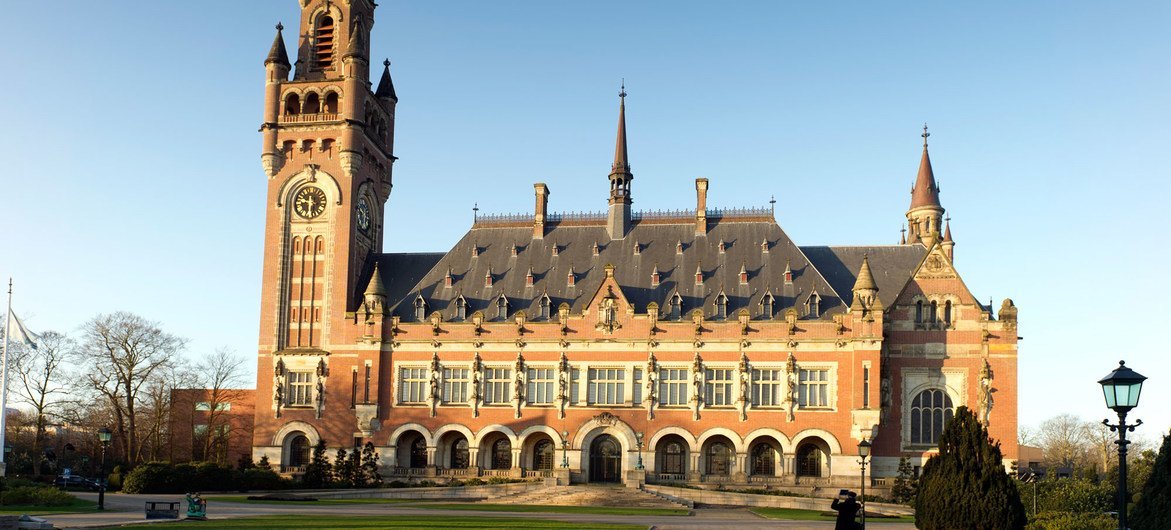
Based in The Hague, the ICJ is the United Nations' principal judicial organ and is composed of 15 judges elected by the UN General Assembly and Security Council .