
A unique facility in Melbourne containing hundreds of childhood cancer tissue samples has produced a first-of-its-kind catalog of paediatric cancers, to help identify how the immune system can target each one.
Paediatric cancer is the leading cause of disease-related death in children throughout the Western world and immunotherapy options are limited, because childhood cancers often don't respond the same way as adult cancers to the same treatments.
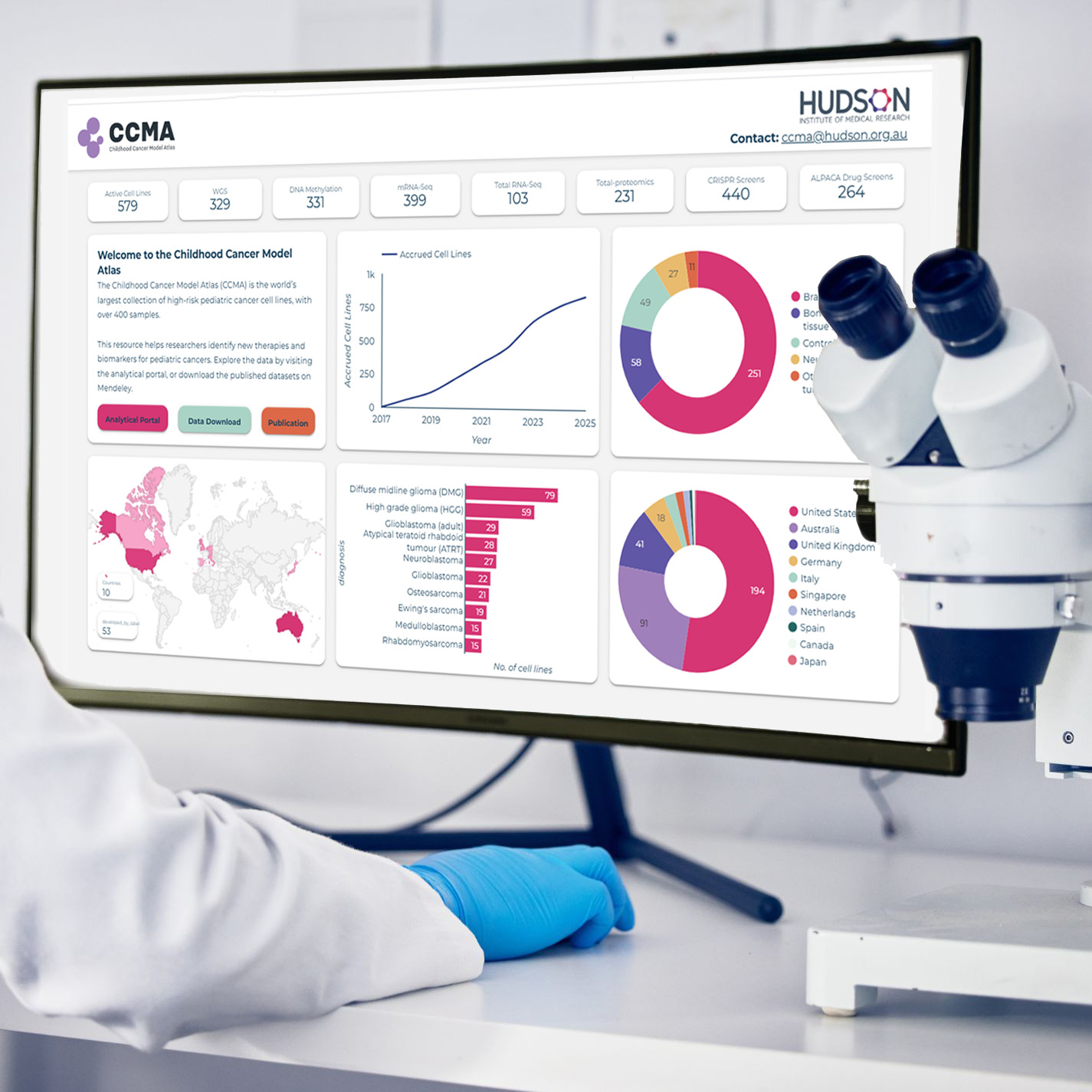
The Children's Cancer Model Atlas, or CCMA, located at Hudson Institute of Medical Research, is the world's largest collection of paediatric cancer cell lines, giving researchers the chance to test and analyse potential treatments using cutting-edge AI techniques.
Researchers have now examined more than 200 high-risk paediatric cancer cell lines in the CCMA 's collection to identify a crucial characteristic of each one, known as the HLA type and potential neoantigens it presents to the immune system.
Cancer catalog provides immunotherapy targets
Their analysis has been published in the journal iScience and senior author, Dr Claire Sun, said it represents a detailed resource of high-potential immune targets in childhood cancers.
"Human leukocyte antigens (HLA) are proteins on the surface of cells that the immune system uses to distinguish between "self" and "non-self"," Dr Sun said. "Using this information, we predicted which neoantigens each cancer model might produce and present."
"Neoantigens are small, abnormal protein pieces formed when cancer cells mutate, and different HLA types can present different neoantigens to the immune system. Knowing the HLA type helps us determine which neoantigens can actually be recognised."
The impact of his research, according to research assistant Yiwen Guan, is to help researchers identify which tumours have actionable antigens which make them good candidates for immunotherapy.
"Our research provides valuable support for the research community by guiding the development of safer, more effective immunotherapies for children," she said.


