
Chilean women create colorful textiles called arpilleras to document the history of their communities and their daily lives as a form of remembrance and resistance. Magdalena Novoa, a University of Illinois Urbana-Champaign professor of urban and regional planning, has a long-term collaboration with a community organization in Lota, Chile, that has used the textile craft to influence planning for cultural heritage preservation.

Twenty-three arpilleras created through Novoa's work in Chile are part of a Krannert Art Museum exhibition, "Memorias de la Mujer Lotina: Arpilleras, Women, and Coal in Chile." The exhibition, which opened Feb. 26 and will be on view through Sept. 5, includes a collectively made 16-foot-long arpillera representing Lota and the experiences of the women who live there.
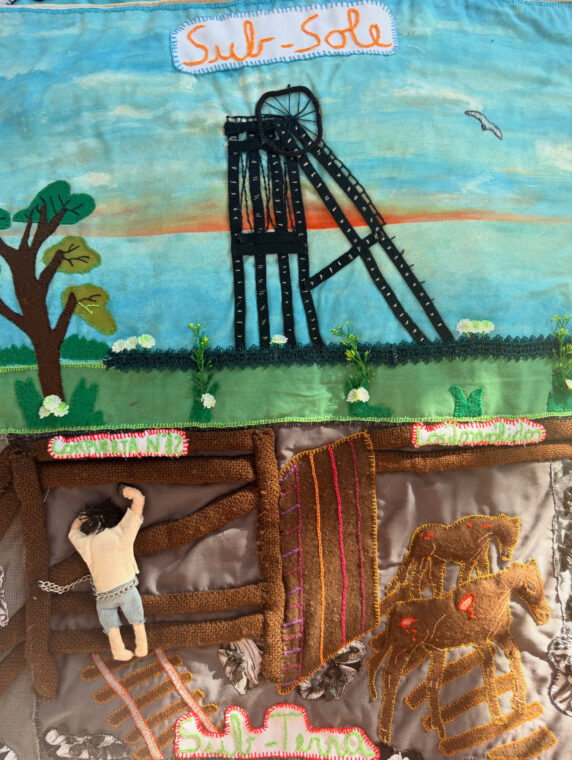
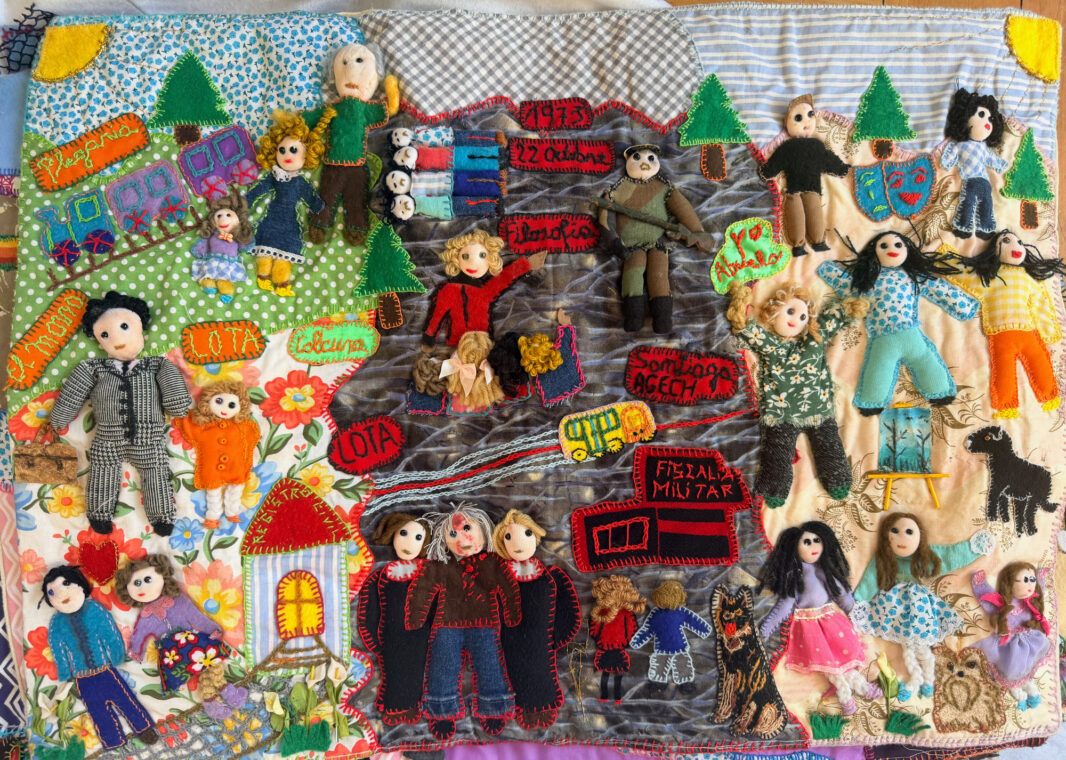
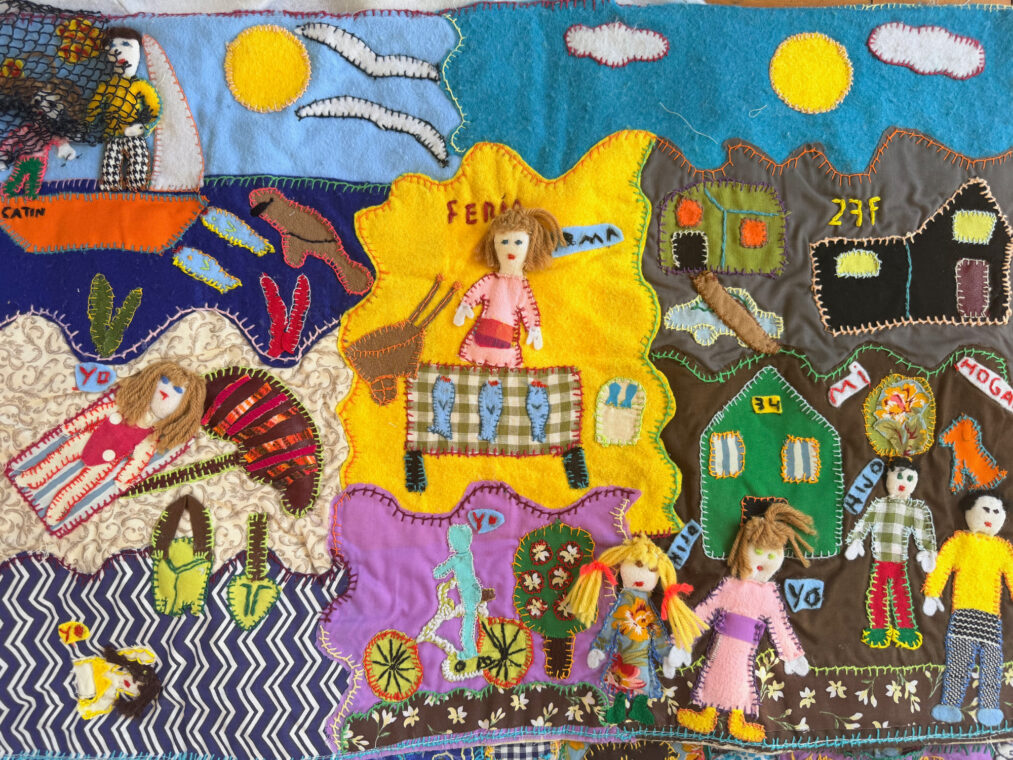
The textiles are created through stitching pieces of fabric, embroidering and adding appliques, including small dolls that are attached to the arpilleras. They became prominent during the Pinochet dictatorship of the 1970s and '80s, when women made these textiles to help them mitigate their suffering from government repression and to generate income by selling them. The textiles told stories about their daily lives, poverty, joblessness and the government detention of their husbands and sons. The arpilleras raised awareness internationally of human rights violations in Chile, Novoa said. They have continued to be a tool for activists on issues of equality, Indigenous rights and gender violence.
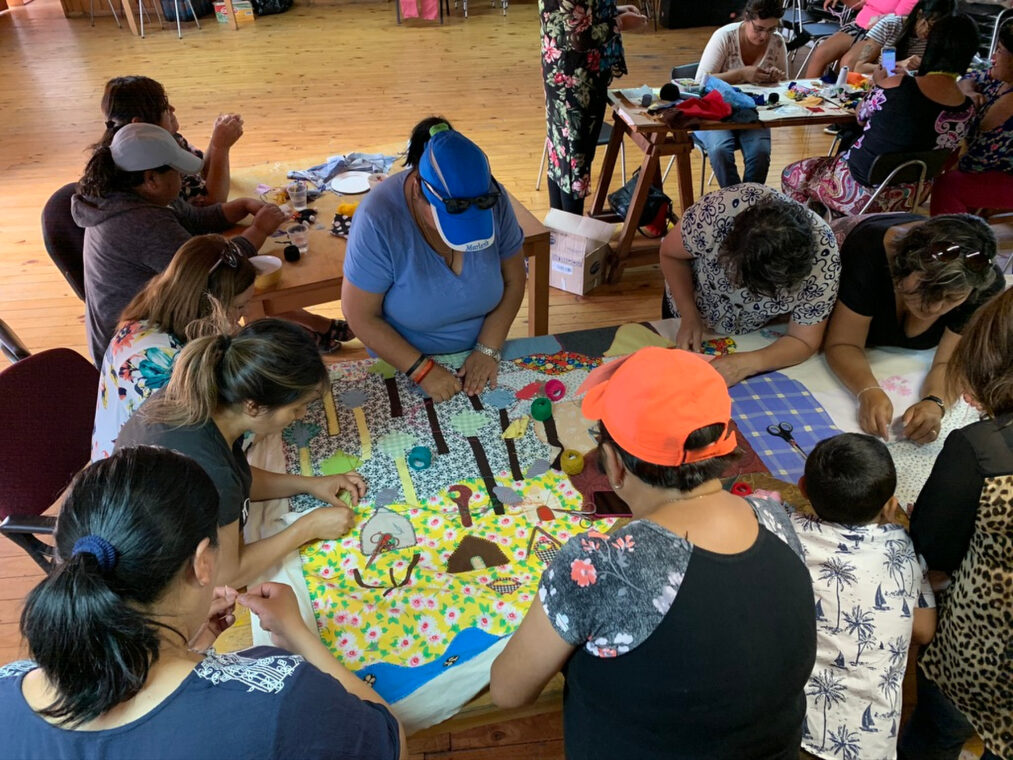
Novoa is interested in how planning decisions around historic preservation and cultural heritage integrate or segregate marginalized communities. She worked with the Lota community organization when she was the head of education and outreach for the National Monuments Council of Chile and again during her doctoral research.
Novoa proposed that the community organization of Lota women create a textile that maps the landscapes of their former coal-mining community that they considered important to their heritage and the memories connected with those landscapes.
"I learned so much from them and felt so grateful for the experience of being accepted that I wanted to produce something they could use in their goal of making themselves part of policy- and decision making," she said. The Lota community organization is seeking to have the city designated as a UNESCO World Heritage Site.
A group of 52 women, ages 14 to 92, participated in the project to create the 16-foot-long arpillera. It was made over the course of a month at a women-only community center where women would tell stories as they worked, Novoa said.
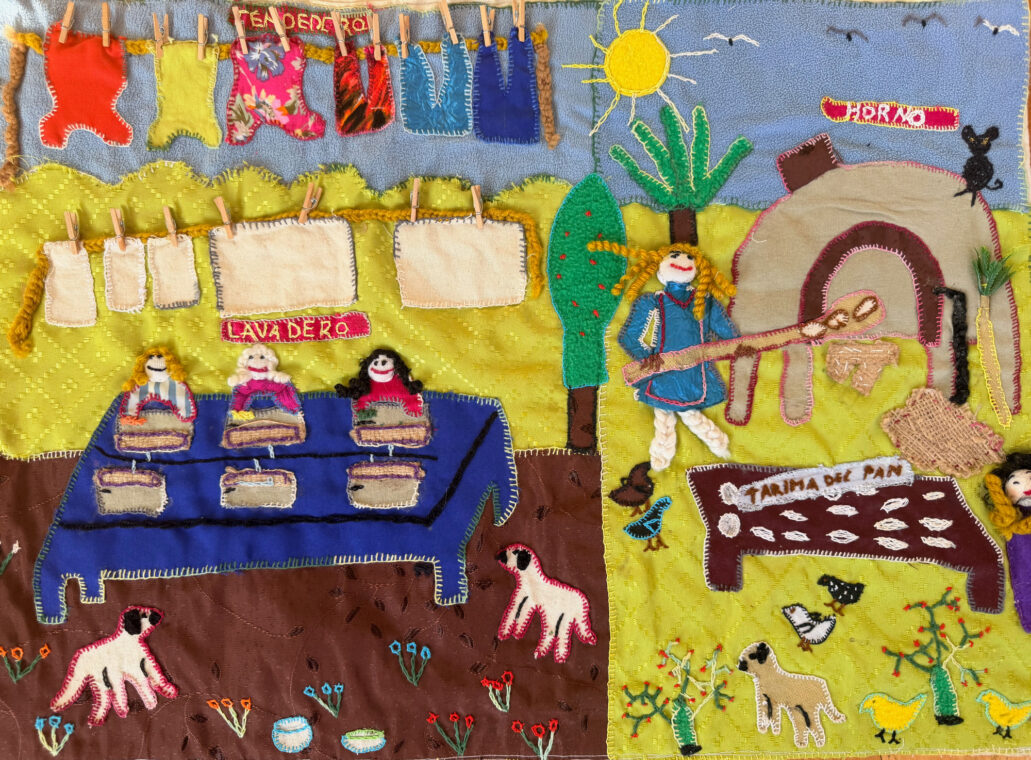
The arpillera depicts Indigenous people caring for the land; the women's daily lives of baking bread and doing laundry at communal public facilities; chinchorreras, or women and children who gather coal residue from the ocean to sell; the lives of miners and fishermen; the role of prostitution as a source of income; the prevalence of alcoholism and domestic violence; and women joining the feminist movement in Chile.
The textile was displayed at a meeting of an all-male Lota planning and preservation committee to demonstrate women's experiences in their community. The presentation of their viewpoint through the arpillera is a strategy that resonates and communicates more broadly with both experts and the public and makes the conversation more inclusive, Novoa said. Following it, the women were invited to be part of the Lota planning group.
"They are truly planners in the way that they are the ones that have pushed the vision of the way their town should be developed and the role that preservation should have in it," Novoa said.
She said the official narratives being used in the effort to redevelop the community were focused on progress, emphasizing Lota as a city of industry, part of creating the nation after independence and promoting capitalism. They also offered an idealized image of the coal miner as a male hero helping push the country into a modern version of itself.
"But women and families were nowhere to be found in the interpretation of different heritage sites or national monuments or history books," Novoa said.
The women started leading their own community tourism walks that told a different, less romanticized, story of Lota that included the harsh conditions for families and the exploitation of miners, she said.
Novoa and the Lota organization have led workshops in other former coal-mining cities in the region. The smaller textiles in the Krannert Art Museum exhibition are personal arpilleras that tell the artists' stories of places that they consider part of their heritage. The exhibition also includes a documentary film on an arpillera workshop in which the arpilleristas of Lota are teaching their textile-making practice to others as a method of resistance and remembrance. Text in the gallery is provided in English and in Spanish, including personal and heritage stories about the arpilleras.
The museum will host a residency from March 29-April 5 for 13 Chilean artists who created the arpilleras. The women will lead community workshops and meet with the Climate Job Institute's Illinois Coal Workers & Communities Listening Project, which records oral histories of Illinois coal communities where plants are closing.
The Chilean women will lead an exhibition tour at 10:30 a.m. Friday, April 3, and then participate in a panel discussion at noon at the museum that will explore the future of coal-mining regions. Both the tour and the panel discussion will be presented in Spanish and English. A reception honoring the women will follow at 2 p.m.


