
Sandia National Laboratories and Michael Thomas Coffee use thermal energy stored from the sun to roast coffee beans at the National Solar Thermal Test Facility. (Video by Ruth Frank)
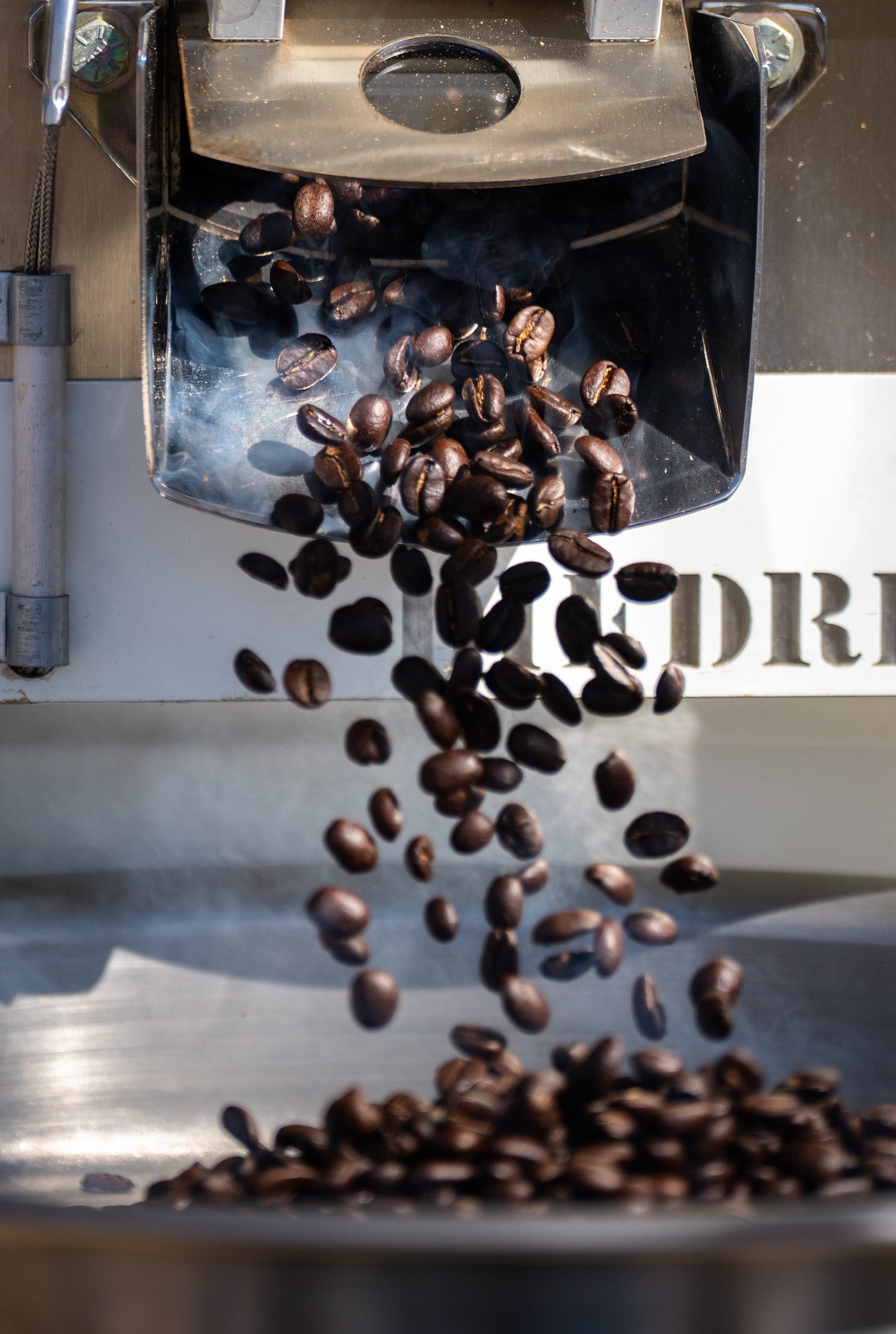
"We're on the right track. This is how coffee roasting behaves," Michael Sweeney said on a clear fall day in New Mexico as he roasted coffee beans using energy from the sun at the National Solar Thermal Test Facility at Sandia National Laboratories. "We're doing great, and we're right at temperature."
Sweeney, who owns and operates Michael Thomas Coffee in Albuquerque, has been collaborating with Sandia as part of a state-funded program to use solar energy to heat his coffee roasters.
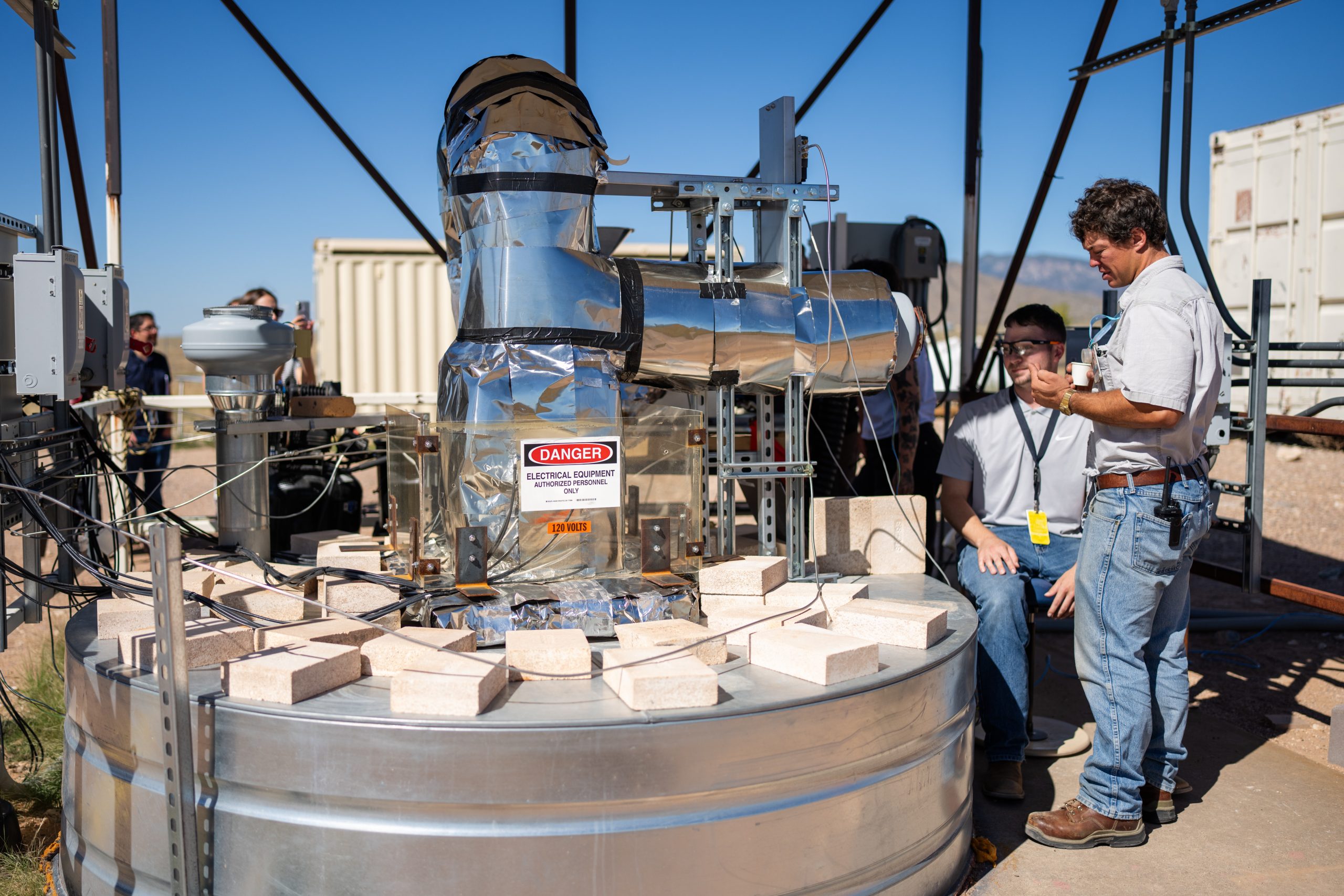
The Sandia-developed technology stores energy generated from photovoltaic panels in a bed of rocks, which then disperses the heat to power the roaster, reaching temperatures as high as 600 degrees Celsius.
"Release a little more heat," Sweeney said to Sandia mechanical engineer Luke McLaughlin during the test. Nearby, McLaughlin controlled how much heat to release from the bed of rocks.
"This is indirect solar heating because the solar energy charges heat electrothermally into a radial packed-bed energy storage system, which then discharges it into a drum to dry and roast coffee," said Sandia systems engineer Ken Armijo, who is helping lead the project.
Many benefits
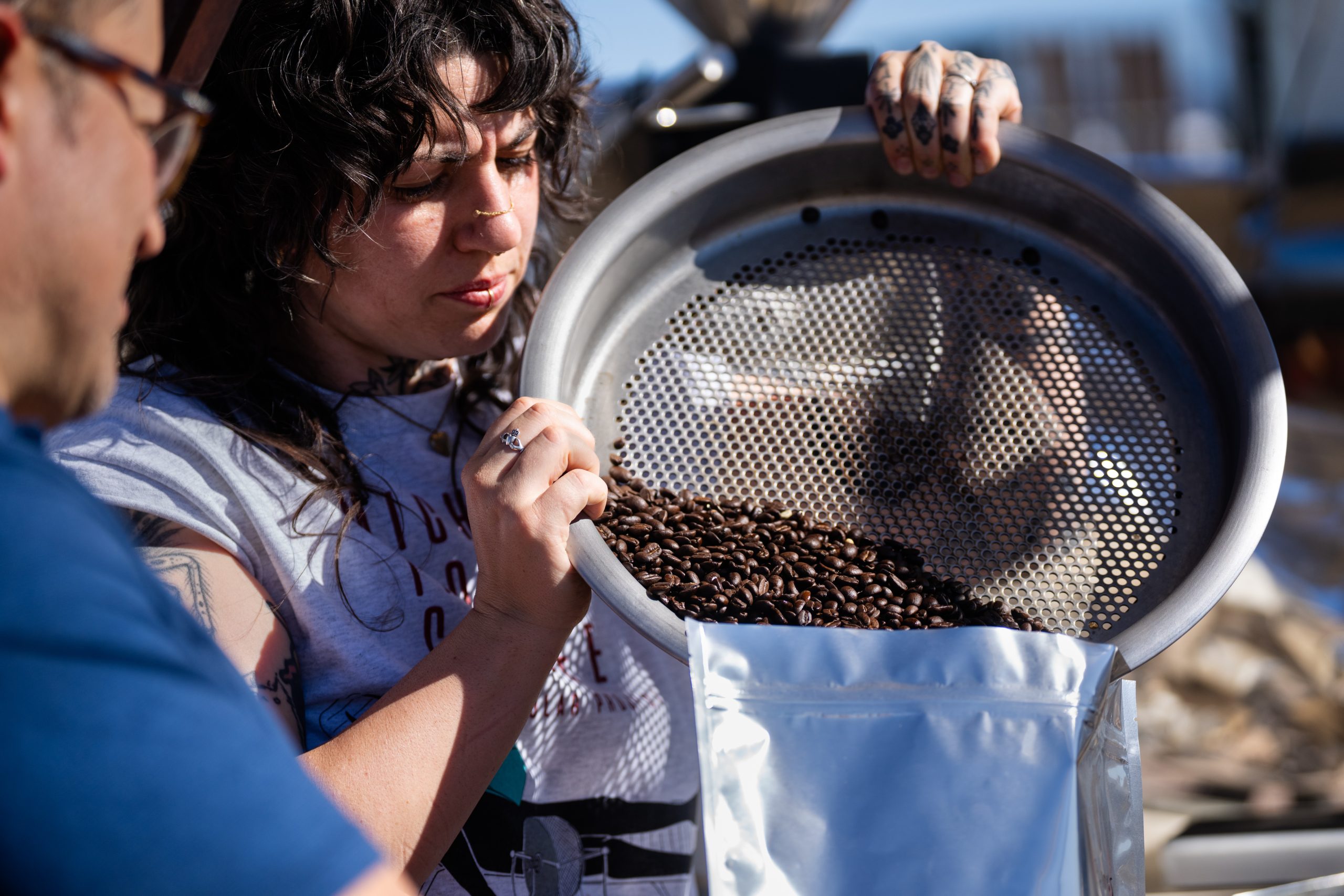
New Mexico's Technology Readiness Gross Receipts Initiative, or TRGR, is funding the work. The project aims to develop a bolt-on solution for existing natural gas-fueled roasters that allows them to use stored solar-thermal energy, with storage durations that can last for days.
"It's not learning a new roasting machine. It's working with your current roaster that you know extremely well and just adapting to a different energy source," Sweeney said, noting Albuquerque's 300 days of sunshine. "This is going to let me look at roasting literally in a different light and look at my craft from a different viewpoint."
The benefits of the project extend beyond savings compared to buying a new electric roaster.
"We want to improve efficiency, quality and productivity of their current, more traditional roasting processes," Armijo said. "Our work will allow Michael Thomas Coffee to install a near closed-loop system in their parking lot and use solar panels on top of their building to pump in hot air from the thermal energy storage system to facilitate industrial roasting."
Test time
During the experiment at the National Solar Thermal Test Facility, Sweeney and his daughters roasted coffee beans for light, medium and dark roasts.
"It cut roasting time down by a few minutes for the dark roast. That's similar to what we saw with green chile roasting. Roasting time was cut in half with solar, and the roasts were more uniform than traditional gas-fired roasting," Armijo said, referring to the 2022 experiment that replaced propane with solar energy to roast green chile.
Sweeney added that during the coffee test, the roaster could be pre-heated and cooled more quickly, which means higher throughput by starting the next roast sooner, leading to more batches in less time.
Coffee craft
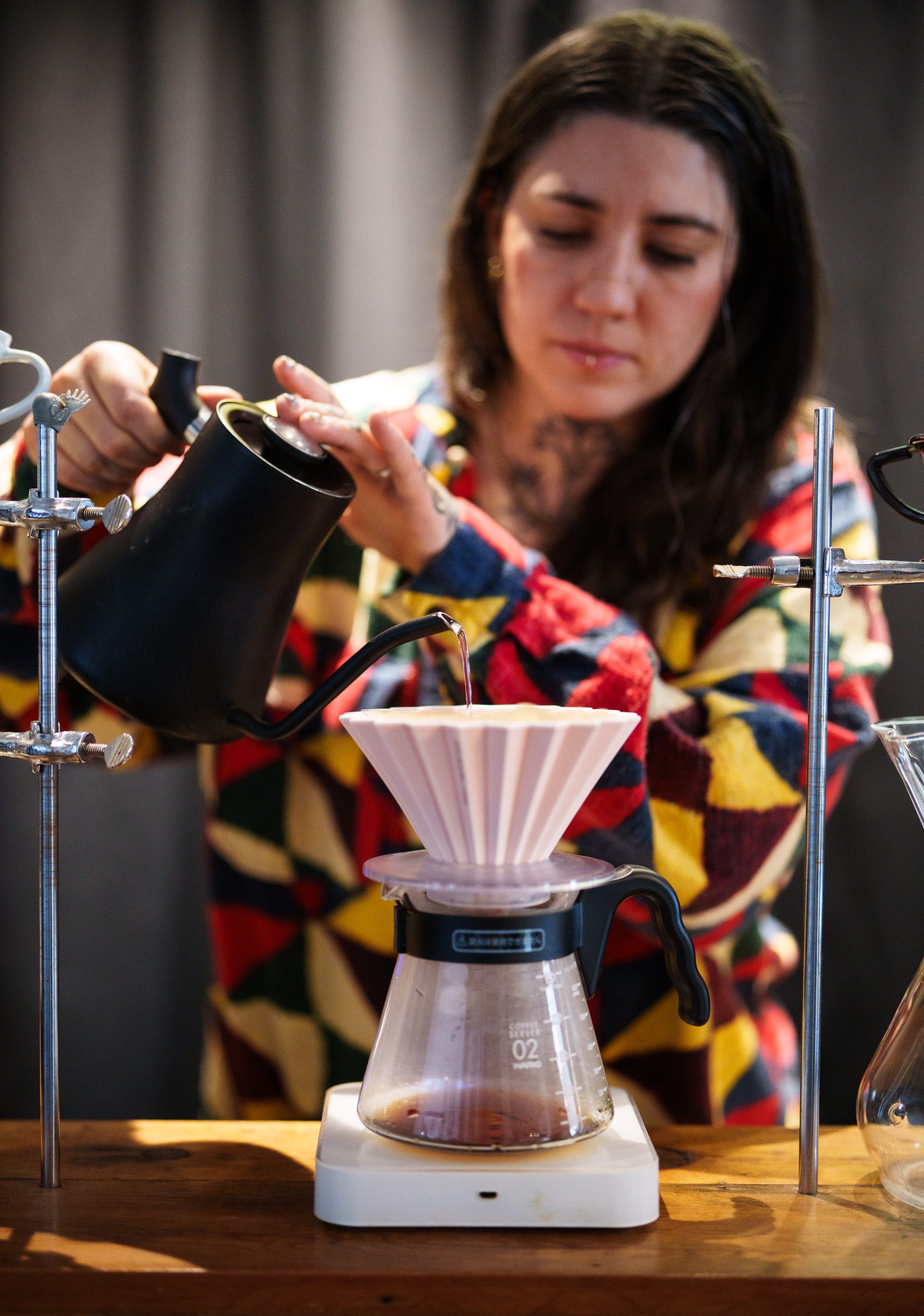
When asked what makes a great cup of coffee, Sweeney and his daughters, who help run the business, which is expanding to wholesale, agreed there are many layers and factors.
"The story of coffee is complex. It's so easy to mess it up, and so beautiful when we do it right," Kate Sweeney said. "What makes us good is that we're willing to learn, we're willing to be wrong and we're willing to grow."
The family said that for individuals, it's their personal ritual that makes coffee great. From the craft perspective, good coffee starts with sourcing quality beans and knowing where they come from. Michael Thomas sources small-batch coffee from women farmers in Guatemala and offers more than 30 varieties.
"It's also making sure we're roasting it to the best of our ability," Kate said.
The collaboration with Sandia through a Cooperative Research and Development Agreement was a natural fit for Michael Thomas Coffee. The company's values are rooted in consistency, community and quality.
"The solar project is really helping us connect in a broader sense with the larger coffee industry," Michael said.
More than coffee roasting
For Sandia, the end goal is to expand the technology to other applications and patent it so new solutions can enter the market for near-term commercial use.
That's where Bob Sleeper comes in. He's a licensing and business development specialist at Sandia.
"My goal is to get this industrial heat and energy storage system into the hands of someone who can commercialize it," Sleeper said. To make that happen, Sandia is partnering with local food processing companies and startup studios like the Department of Energy's Boost Program to find an entrepreneurial team that can make an impact. "The storage system allows you to charge the system one day and still use the heat at night or even days later."
The system, is the latest example of Sandia's ability to utilize New Mexico's natural resources in ways the benefit the community and drive business innovation.
"This project is going to push the bounds of what we can do and save businesses money, particularly in the food and beverage industry," said Armijo who comes from a deep heritage of family farming in New Mexico. "We can roast grains for beer, and we can also roast chocolate."


