
The first of April is both April Fools' Day and the start of the new financial year. In Aotearoa New Zealand, it's also the time when the support we give to people on low or no wages also changes. Pensions go up in line with wages - delivered under a deal stretching back to the New Zealand Superannuation and Retirement Income Act 2001. But other groups are not so lucky.
For example, the minimum wage is due to rise by 2% this year. The Minister for Workplace Relations, Hon Brooke Van Velden, considered a 0% increase. The trouble is that inflation is currently 3.1% and rising. Around 100,000 workers receive the minimum wage - over half are women and nearly two-thirds are working full-time. That means workers are taking a real-terms pay cut in the middle of a cost-of-living crisis.
Only that's not the first time that these low-paid workers have been asked to take a pay cut. This year will mark the third successive year in which minimum wage workers are expected to shoulder a pay cut. The Reserve Bank estimated that inflation over the past three years would be 9.6% in March 2026. The minimum wage has risen 5.5% over the same period. Just this year, that means that a full-time minimum wage worker is $37.22 a week worse off - $1,935 a year.
That's just this year. Minimum wage workers have earned thousands of dollars less in real terms over the past three years. And that is using consumer price index (CPI) inflation. Using the household living price index, which looks at real world spending, the poorest 20% of Kiwis by income have an inflation rate three times that of the highest income 20%. The 'laser-like focus' on the cost of living that the Government promised should've gone to Specsavers.
These numbers are all calculated on inflation remaining broadly static. The current Middle East conflict is likely to significantly increase inflation. Indeed, the Minister of Finance has suggested that inflation could be well above the 3.7% 'worst case scenario' previously suggested. However, the Government is doing little to help those pressed by these prices. The current package of support doesn't reach 93% of households in New Zealand and misses significant groups of people, including superannuitants, families without children, and anyone in receipt of a benefit. Groups that deliver essential services like care and midwifery get no support.
Against this backdrop, you would think that there would be a plan of action, an economic strategy to deliver the jobs and growth we need. Sadly, there is not. The Government's plan was to cross their fingers, hope inflation fell, interest rates fell, and the housing market would stir back into life again. That plan is not working - and so are an increasing number of Kiwis - the number of filled jobs in New Zealand has fallen 41,465 in just two years.
No plan. Food prices up 4.5%. No growth. The promise to get 'New Zealand back on track' looks even more hollow two years on. The only activity that this Government knows is how to cut. Cutting public transport support in 2024 now looks careless ahead of a fuel crisis. Cutting support for apprentices through Apprenticeship Boost was a bad idea before rising unemployment. Cutting pay equity for more than 300,000 low-paid workers is not just a bad idea, it's bad economics.
So, when the Government tells you that the shifting international context is making the economy worse, remind them that it was already bad. Their decisions were actively making it worse before the fresh challenges now in front of us. Their choices have made life harder for low-income groups, who then get no help when fresh economic turmoil occurs.
We have a Budget in May. It's an opportunity to turn around the decisions made to date, and to recognise that the current approach is akin to a war on the poor. Cutting school meal spending while giving tax cuts to tobacco companies. Proposing to cut workers' already measly holiday allowances, while spending $70m supporting aging rock stars. Otherwise, the shareholders might decide that it's time for a new CEO.
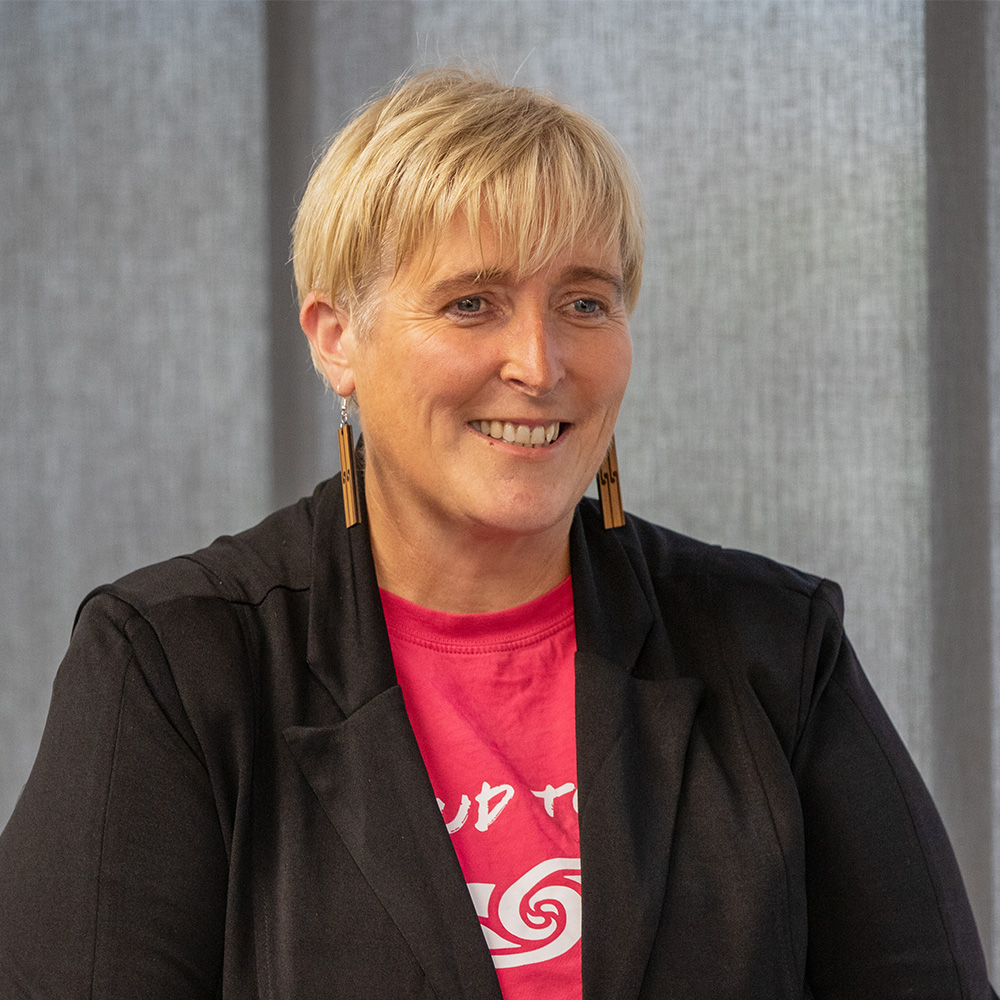
Sandra Grey
NZCTU President
Sandra began her working life as a radio journalist with Independent Radio News, a career she left at 25 to go to the University of Auckland. After gaining a PhD from the Australian National University she returned home to teach at Te Herenga Waka Victoria University of Wellington.
While lecturing in social policy and sociology, Sandra became the Women's Committee Chair of the AUS, then a vice president and president of the TEU. Sandra was appointed to the role of National Secretary of TEU in 2021.
Sandra's career includes being the President of ANU's Postgraduate And Research Student Association, the spokesperson for the Campaign for MMP, a board member of the Living Wage Movement Aotearoa, and includes appointment to a range of boards/councils in the tertiary education sector.


