
Key points
- The Living STEM program supports schools and communities to co-design learning that connects local cultural knowledge with the Australian school curriculum.
- Using a Two-way science approach, the program strengthens partnerships between schools, communities, Indigenous ranger groups and science educators.
- The Living STEM Community of Practice Conference showcased the impact of this approach and the sophisticated scientific inquiry processes embedded in Indigenous Knowledge.
Local schools and community groups from around the Pilbara recently gathered in Karratha and Derby to explore the power of Indigenous Knowledge and STEM education, at the 2026 Living STEM Community of Practice Conference.
Led by CSIRO in partnership with Chevron Australia, the Living STEM program supports schools and communities to co-design learning that connects local cultural knowledge with the Australian school curriculum. Using a Two-way science approach, the program strengthens partnerships between schools, communities, Indigenous ranger groups and science educators.
The conference showcased the impact of this approach—bringing people together to share ideas, build connections and support student learning grounded in Country and culture - and the sophisticated scientific inquiry processes embedded in Indigenous Knowledge.
Baynton West Primary School has been part of the Living STEM program for three years. Specialist music teacher and Aboriginal Education Project Coordinator, Harriet Morley, said her school was building on existing Aboriginal education initiatives and creating a sustainable, long-term program for students across all year levels.
This year for us is sort of like our exploration, our big dream stage. I think by the end of this year, we'll have a really solid plan of what our Two-way learning and on-Country program will look like, Harriet explained.

Learning on Country
The conference began with an immersive on Country experience led by Ngarluma and Yindjibarndi knowledge holder Clinton Walker along sections of the Yaburara Heritage Trail, learning directly from the landscape. From bush medicines and rock art to seasonal knowledge and Caring for Country practices, the experience offered educators a powerful example of local place-based learning in a living cultural landscape.
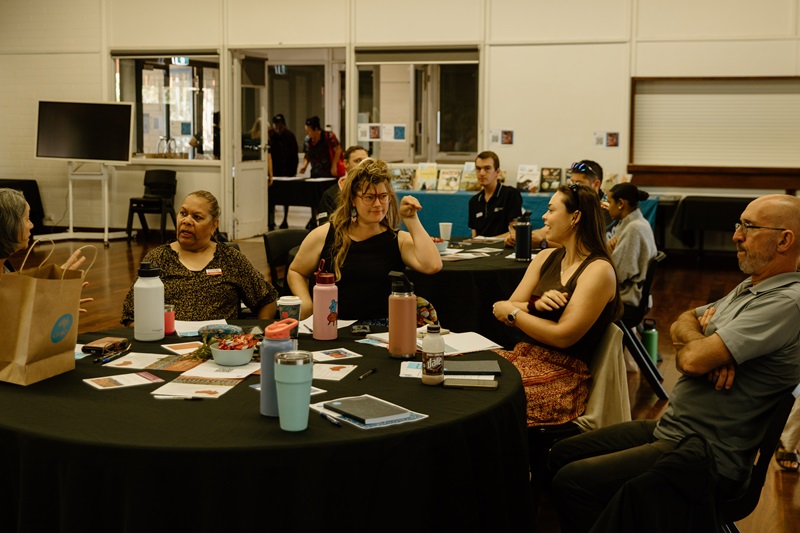
Educators from Baynton West Primary School said this year's on Country learning experience was invaluable.
"Having an outside organisation fund a local knowledge holder to engage with us is priceless. That's the best thing for some of us, to be able to experience it ourselves and understand what's out there. I'm really grateful that CSIRO supported us to have that experience," Harriet shared.
She highlighted the value of Living STEM's place-based approach and described how being on Country and learning about local histories and perspectives directly from Clinton had a much deeper impact than reading about it on a sign at the cultural site.
Sharing Indigenous-led STEM success stories
Day two focused on sharing lessons from across the Living STEM network. A highlight was the Mapurlarri Prawn Farm project based on Bathurst Island in the Northern Territory, presented by Noongar woman and CSIRO Indigenous Project Officer, Kelli Schmitt.

This project is supported by CSIRO and Indigenous groups across northern Australia and demonstrates how Traditional Ecological Knowledge and Western science can work together to create jobs, strengthen economic independence and support long-term community outcomes.
The remote Aboriginal community of Wurankuwu (also known as Ranku) is continuing to drive the prawn project forward and exploring broader opportunities including tourism and business development.
"It's very community based and the end product will be a fully Indigenous-run and owned prawn farm that's viable and bringing money into the community, as well as jobs," Kelli explained.
Following the prawn farm presentation, Kelli also led an aquaculture workshop, based on CSIRO's Aquariums in Schools pilot program . This program uses native fish and hands-on learning experiences to introduce students to STEM and potential career pathways. Conference participants had the opportunity to test water samples and explore practical ways to bring aquaculture into the classroom.
The program is having a positive impact on student engagement in remote Northern Territory schools. Kelli described how sharing Indigenous Knowledge in classrooms was creating a Two-way learning environment where students contributed their own expertise and experiences as well as building confidence.
"Kids might go fishing with mum and dad on the weekend or have some knowledge that has been passed down and then they can connect more easily to a lesson plan," Kelli explained.
Connecting STEM learning to local knowledge and lived experience has also helped build confidence and pride among students in remote Northern Territory schools.
"It's very important for the kids to be able to connect to the lesson. They're learning, without actually knowing they're learning. And because they've already got that knowledge, it makes them feel special. It gives them some pride in what they know," Kelli shared.
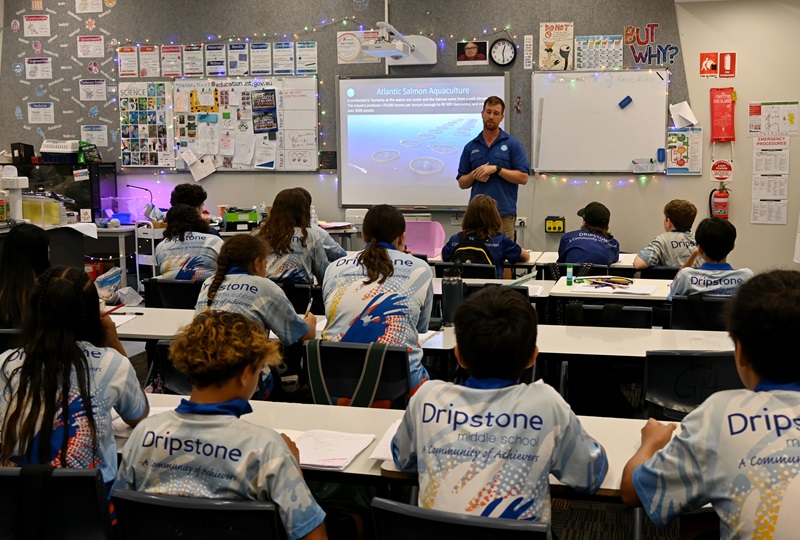
"It's very important for the kids to be able to connect to the lesson. They're learning, without actually knowing they're learning. And because they've already got that knowledge, it makes them feel special. It gives them some pride in what they know."
In her workshop, Kelli also encouraged educators to make use of local places and Indigenous cultural knowledge when teaching science concepts. She referred to CSIRO's free teaching resources , Indigenous seasonal calendars and access to community knowledge which all supports teachers to feel more confident incorporating Indigenous perspectives into their classrooms.
The sharing of Knowledge is inspiring both students and teachers, said Harriet.
"I loved the presentation about aquaculture. The example from the Tiwi Islands prawn farm was really inspiring and got me thinking about how aquaculture learning could be incorporated into our school," she explained.
Cultural tools and ideas for the classroom
In the other workshops, educators were introduced to innovative teaching tools, including Pannotator —a free digital platform using 360-degree imagery to explore biodiversity. Developed through Indigenous-led, co-designed research, the platform is being adapted into classroom resources to help students engage with Australia's unique plants and animals.
CSIRO Educator Destiny Paris explored fire as a tool in her workshop, connecting cool burning practices with STEM concepts such as energy transfer and regeneration, cool burning and its role in seed germination, along with traditional fire-starting methods and their links to energy transfer and transformation.
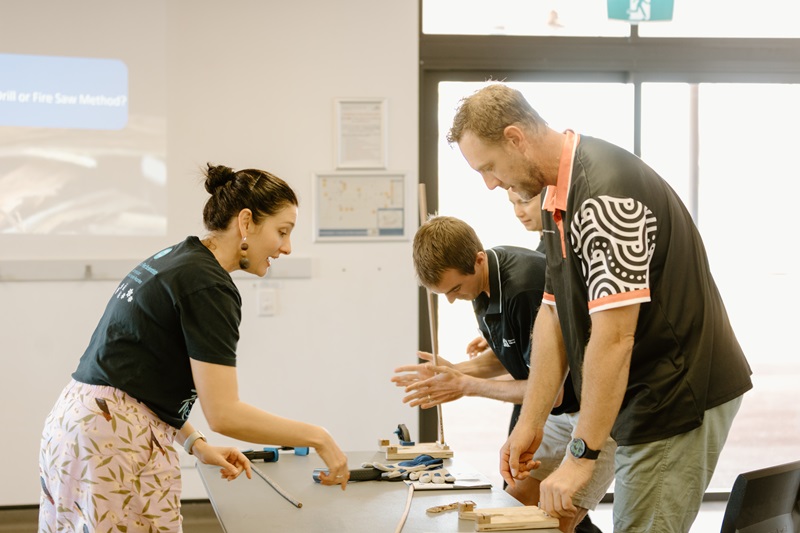
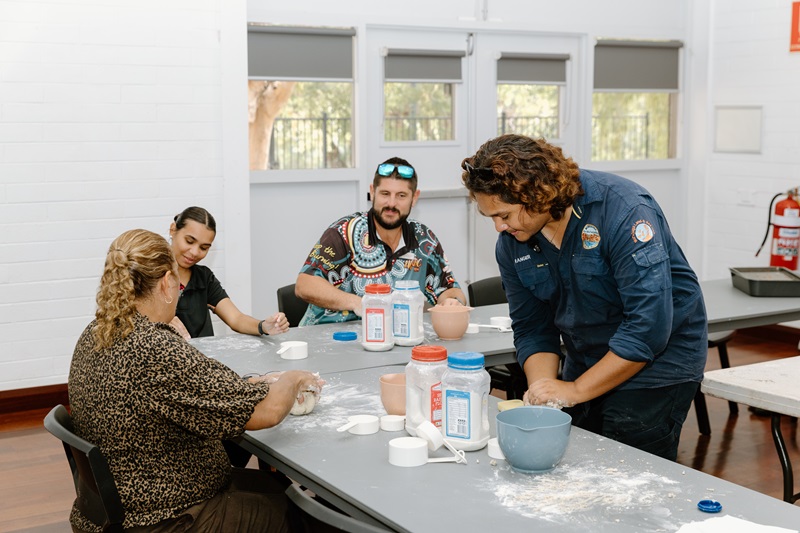
Ngarluma woman and Murujuga Aboriginal Corporation Senior Ranger Sarah Hicks led a weaving workshop, sharing techniques and the cultural significance of this practice. While Indigenous Ranger and Ngarluma custodian Jerome Churnside guided participants through damper making, highlighting the story and traditional preparation of this bush food.
"Damper making with Jerome consisted of teachers learning traditional methods of damper creation. We gained insight into traditional foraging and product creation methods, understanding of ingredients such as local fauna, wattle and spinifex and were given the opportunity to eat it with traditional stew," Harriet shared.
The Indigenous Rangers from Murujuga Aboriginal Corporation regularly visit schools in the Pilbara region, including Baynton West Primary School, to host workshops and share their local cultural knowledge.

Implementing the Two-way Science approach means that teachers are integrating learning programs connecting the cultural knowledge and language of the local community with western science and the Western Australian Curriculum.


