
Overlapping and worsening social, economic and environmental pressures are making Australian high school students more uncertain about their futures compared to a decade ago, according to new research from the University of Newcastle.
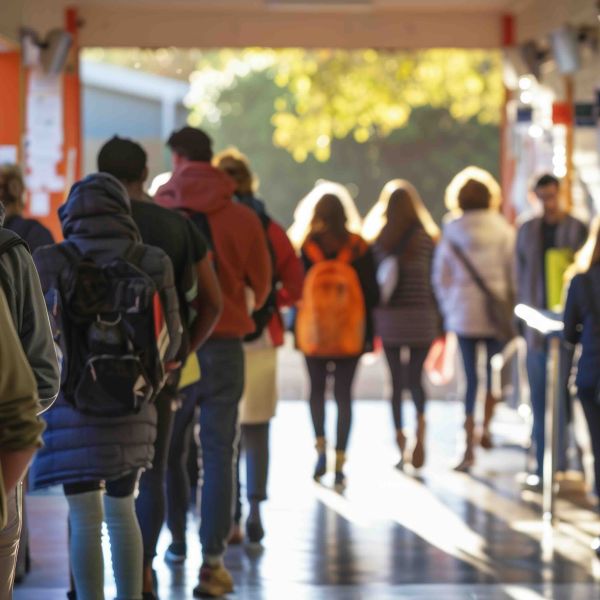
Marking ten years since the groundbreaking Aspirations Longitudinal Study (2012–2015), researchers from the University's Teachers and Teaching Research Centre have drawn upon more than a decade of data from NSW secondary students, parents, carers, teachers and communities.
While the findings highlight substantial challenges – ranging from cost‑of‑living strain to mental health pressures – the research also paints an encouraging picture of young people's optimism, adaptability, and strategic thinking.
University of Newcastle Senior Lecturer and lead author, Dr Leanne Fray, said that young people were expressing worries about the future in ways they hadn't in the past, regardless of geographic location or social economic status.
"A young Australian born in 2010 has already faced a pandemic, social isolation, cost-of living crises, and an array of additional pressures and global instabilities," Dr Fray said.
"We found students were not just worried about their own futures, but about society as a whole."
The researchers conducted new surveys, interviews, and focus groups with teachers, parents, and students in six high schools and one central school from the original study located in regional and metropolitan areas in NSW.
"10 years ago, when we visited these schools, students were mostly optimistic about the future. This time, instead, there was an overwhelming sense of uncertainty, which was concerning to hear," Dr Fray added.
Despite the trepidation, there were encouraging results signifying young people were still dreaming big.
"University remains the preferred pathway among students, with 43 per cent of surveyed young people aspiring to complete a university degree. This strong commitment to higher education persists even in the face of rising HECS debt concerns and cost‑of‑living pressures," Dr Fray said.
"Encouragingly, the study also revealed a growing appreciation for TAFE and vocational pathways across communities. This was as true in small rural lower SES schools as it was at academically selective schools in the city, marking a cultural shift and important development for meeting Australia's skills needs."
To help address the Universities Accord goal of achieving 80 per cent of the population attaining a qualification in higher education or vocational training by 2050, the new findings include key recommendations for schools, higher education providers, and policymakers to ensure students are equipped to deal with the rapidly evolving societal pressures.
These include:
- focusing on student wellbeing throughout their school and post-school lives by better integrating mental health programs into schooling and addressing mental health in tertiary education settings;
- bolstering career education through partnerships with local employers and tertiary education and vocational education providers;
- promoting and celebrating alternative pathways into university;
- addressing community infrastructure needs and fixing funding models across school, vocational, and higher education policy areas.
Dr Fray said adopting the report's recommendations would help realise the goals of the Universities Accord.
"One of our key recommendations is to better integrate vocational and university qualifications and pathways to simplify students' learning and life journeys," she said.
"What we see in this research is a generation working harder than ever to make sense of a rapidly changing world. Young people are ambitious, they are thoughtful, and they are doing the emotional and practical work required to plan for their futures. What they need now is a system that meets them halfway."


