According to a new study by the University of Würzburg, Bavarian meadows are the most monotonous insect habitats. Surprisingly, fields and settlements often offer more diversity than grassland.
Intensive land use by humans is considered a key driver of global insect mortality and the decline in biodiversity. A research team led by Julius-Maximilians-Universität Würzburg (JMU) has now analysed the Bavarian insect world in a comprehensive study. Using state-of-the-art DNA identification methods, the scientists have identified around 12,000 genetic units from 450 families on 179 plots spread across the state.
The surprising result: "Contrary to our expectation that settlements or fields would show the least diversity between two geographical locations, our study shows that meadows, of all places, exhibit the highest degree of homogenisation," explains Jörg Müller. The biologist heads the Chair of Conservation Biology and Forest Ecology at JMU and was responsible for the study; the first author is Orsi Decker, a postdoc at the Bavarian Forest National Park. The team has published its results in the latest issue of the scientific journal Nature Communications .
The analysis focused on "biotic homogenisation". This technical term describes the standardisation of biotic communities: different regions no longer harbour specialised, unique species communities. Instead, the same, often less demanding species are found everywhere. The insect world in the Allgäu is then almost identical to that in Lower Franconia - a sign of ecological monotony.
Diversity in gardens and fields, monotony in meadows
The results contradict common assumptions about habitat mosaics. While scientists had previously assumed that the most intensive land use in cities and fields was the most favourable for insects, the analysis shows a more differentiated picture. Fields and settlements proved to be spatially highly diverse habitats.
This finding is based on the small scale: "In Bavaria, arable land is comparatively small with an average of 1.6 hectares and is characterised by changing crops. This temporal and spatial variation creates a mosaic of unique conditions for insects," explains Orsi Decker. In settlements, on the other hand, diverse garden structures - from ornamental lawns to vegetable gardens - lead to a high degree of species heterogeneity despite low biomass. No two neighbourhoods are the same for insects.
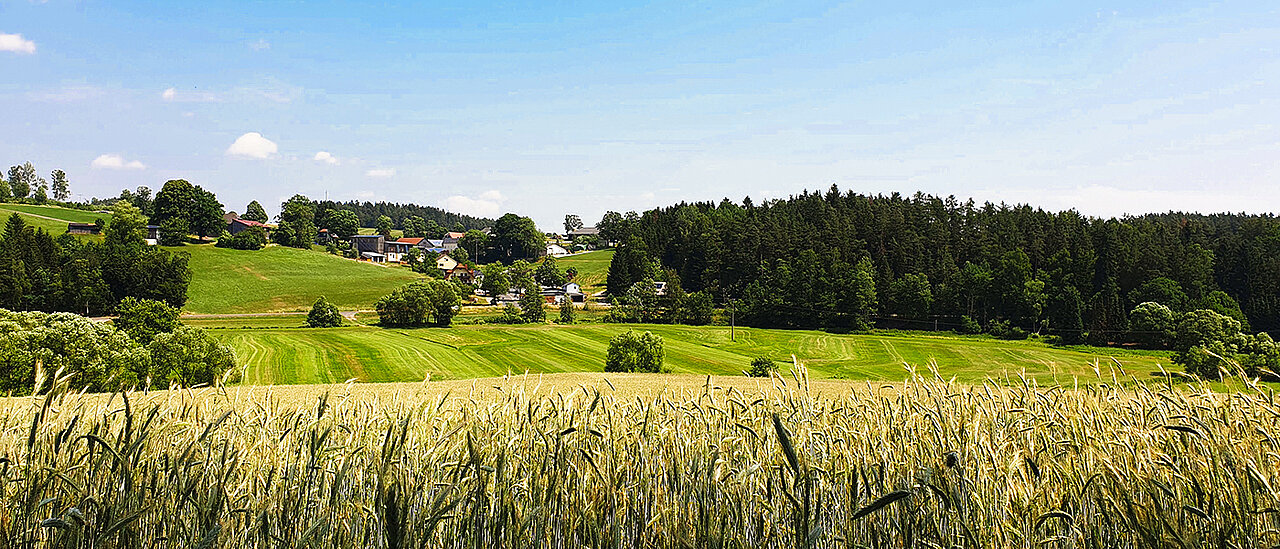
Bavarian meadows stand in sharp contrast to this. "Intensive cultivation through heavy fertilisation and frequent mowing has led to uniformity across the board," says Jörg Müller. Surprisingly, forests also showed a higher level of insect homogeneity than expected. This is due to even-aged stands and closed tree canopies in forestry, which create habitats with few niches. So while fields and villages promote spatial diversity, the uniform utilisation of grassland and forests results in widespread biological monotony.
Near-natural structures serve as refuges
According to the research team, the study underlines the importance of strategic landscape planning that goes beyond the local plot and proves the so-called "landscape-moderated insurance hypothesis": according to this hypothesis, near-natural landscapes such as forests act as a stable pool of species and a protective shield against local homogenisation.
"If intensively utilised areas are surrounded by near-natural structures, these serve as refuges. Insects can survive disturbances such as mowing or harvesting by moving to the surrounding areas and recolonising them later," says Orsi Decker. In purely agricultural regions, this buffer is missing, which massively increases the pressure on biodiversity.
According to the research team, insect protection should therefore not end at the property boundary. It requires intelligent networking of habitats in order to enable the spread of specialised species and counteract the trend towards homogenisation.
Conclusion and outlook: Ways out of monotony
The results provide a sound basis for future nature conservation strategies. The scientists call for a rethink, especially for grassland. In order to reverse homogenisation, more extensive practices are needed: a significant reduction in fertilisers and less frequent mowing, which leaves more ecological niches.
Original publication
Decker, O., Uhler, J., Redlich, S. et al. Distance-decay reveals contrasting effects of land-use types on arthropod community homogenisation. Nat Commun 17, 763 (2026). https://doi.org/10.1038/s41467-025-67612-9