
Antarctic scientists have trialed a DNA 'barcoding' technique that could improve biosecurity measures that help protect polar ecosystems from invasive marine species.
The research, led by Australian Antarctic Program* scientists, used environmental DNA (eDNA) in water samples, to detect species known to hitch-hike on ships' hulls.
The work was conducted during a voyage from Tasmania to sub-Antarctic Macquarie Island, on MPOV Aiviq in 2022.
Molecular biologist Dr Leonie Suter said the research showed that eDNA sampling could help ensure effective biosecurity practices (such as hull cleaning), and identify invasive species before they can establish.
"eDNA is DNA shed by all organisms into the environment," Dr Suter said.
"By collecting environmental samples, such as soil or water, we can analyse this DNA and identify what organisms are present.
"Our research showed that eDNA monitoring could validate and inform the ongoing effectiveness of biofouling management measures to protect sub-Antarctic and Antarctic marine environments."
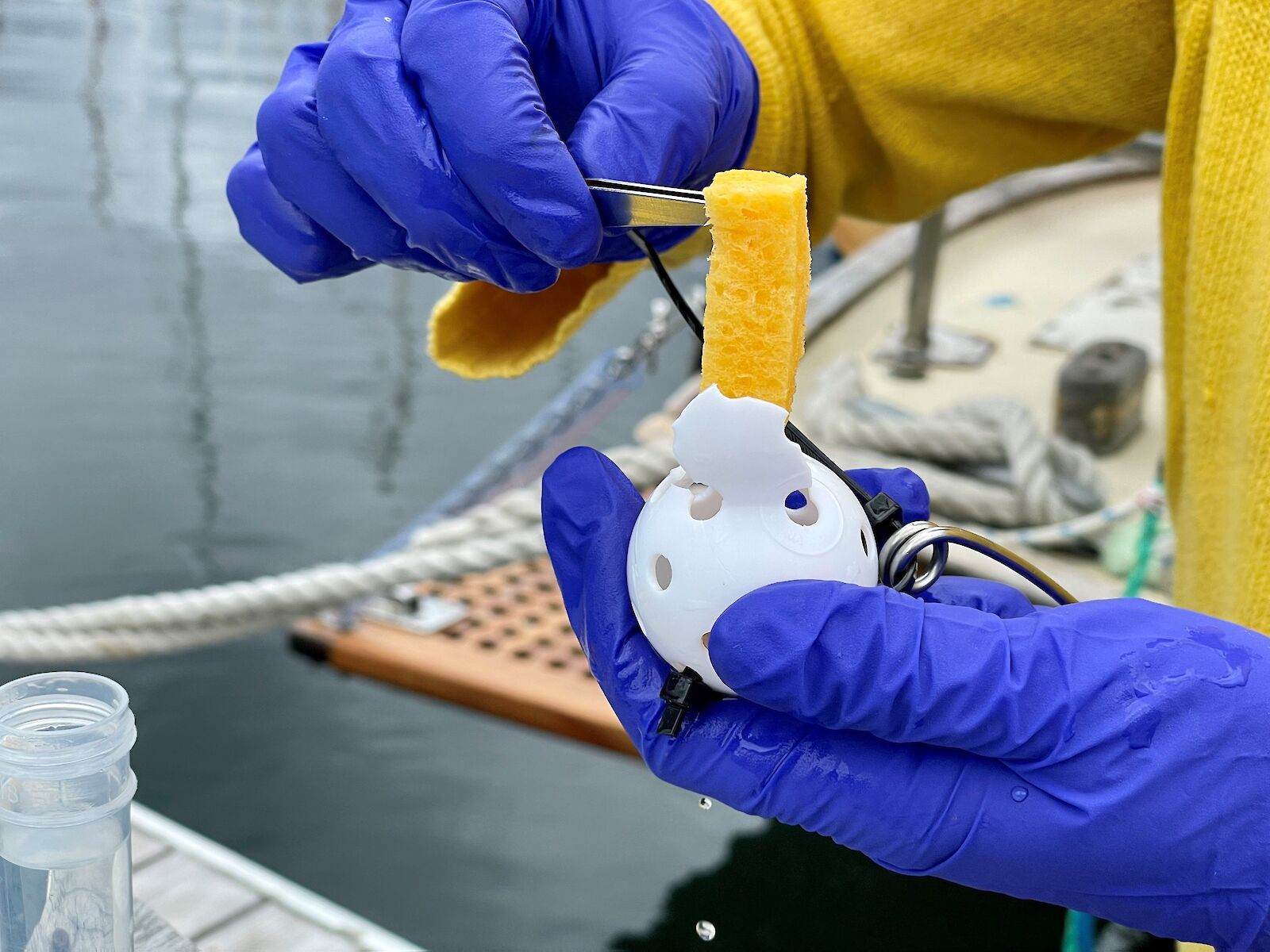
To collect the eDNA samples, the team used small sponges contained inside perforated plastic balls, to absorb seawater containing eDNA.
Prior to the voyage, eDNA samples were collected in seawater alongside the ship in the port of Hobart, before, during and after hull cleaning.
Divers also visually inspected the hull to identify biofouling species and compare with the eDNA results.
PhD student Frances Perry identified 24 species in the visual survey, and 41 through eDNA, including species of worms, sea stars, molluscs, sponges, algae, crabs and sea squirts.
When the eDNA sampling was conducted alongside the ship at Macquarie Island, 27 hull-associated species were detected, with 14 of these previously visually identified in Hobart.
"This is the first time we've use eDNA to monitor biofouling and we showed we can reliably detect hull-associated species," Dr Suter said.
"Positive eDNA detections do not automatically indicate living organisms, as dead organisms can still shed DNA into the environment.
"Additional assessments, such as visual surveys and further sampling, are needed to determine whether living organisms are transported on the ship's hull, and whether they could pose a risk to the environment."
Ms Perry said additional tools to monitor the effectiveness of biofouling management measures, and collect baseline information on marine environments, were important in the face of climate change and increasing human activity.
"The sub-Antarctic islands and Antarctica are considered to be among the few remaining regions without any known established populations of non-native marine species," she said.
"As the likelihood of species establishing in these environments increases with changing climate and rising vessel visitation, eDNA could be an effective way to monitor for invasive species in these vulnerable environments."
Ms Perry collected eDNA samples during RSV Nuyina's visit to the Denman Glacier in 2025 and Heard Island earlier this year, providing further data to inform future environmental monitoring and biofouling management.
*Read more about the research, co-led by the Australian Antarctic Division and Securing Antarctica's Environmental Future, in Science of the Total Environment.


