
Emily Bernhardt, Ph.D. '01, the James B. Duke Professor of Biogeochemistry at Duke University, will join Cornell as the Francis J. DiSalvo Director of the Cornell Atkinson Center for Sustainability on Sept. 1. David Lodge, current director of Cornell Atkinson, will retire in May after 10 years leading the center.
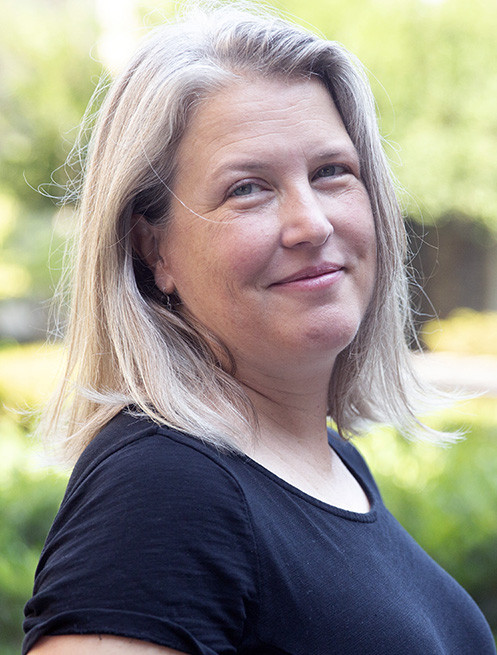
Emily Bernhardt
Bernhardt is a freshwater ecologist and biogeochemist - a scientist who studies how chemical elements and energy cycle through ecosystems. Her research aims to document the extent to which land use change, global change and chemical pollution are altering the structure and function of aquatic ecosystems, and examines the efficacy of efforts to protect and restore streams and wetlands.
"Emily Bernhardt will bring strong intellectual leadership to the Cornell Atkinson Center at the perfect time, translating Cornell's academic excellence into real-world impact," said Provost Kavita Bala.
Bernhardt will become the third director in Cornell Atkinson's 16-year history, following DiSalvo and Lodge. She will provide leadership for the center's nearly 800 faculty fellows, its 140 active grants and its partnerships with a host of external organizations, including Environmental Defense Fund, The Nature Conservancy and government agencies.
"I'm impressed that Cornell Atkinson leadership and the Atkinson family have focused on fueling great ideas that come from the faculty, rather than imposing their own views of what they think is most important," Bernhardt said. "The Atkinson Center is pretty magical. A lot of institutions are trying to start centers like this now. Cornell and the Atkinson family were remarkable in seeing the potential for this vision 16 years ago."
"Cornell Atkinson has become a keystone in our universitywide effort to promote research across disciplines," said Dr. Gary Koretzky '78, vice provost for research. "I have great confidence in Emily's ability to bring together the people, partnerships and research that enable new discoveries and innovative solutions to some of the world's most urgent environmental challenges."
Bernhardt earned a bachelor's degree in biology at University of North Carolina, Chapel Hill, then completed her doctorate at Cornell, where she became part of a growing cohort of graduate students trained in biogeochemistry - a field in which Cornell has been a leader for decades. She will hold an academic appointment in the Ashley School of Global Development and the Environment in the College of Agriculture and Life Sciences (CALS).
"I've known Emily for over 25 years, since we were graduate students, and I'm thrilled that we will be working so closely together now to forward innovative research and partnerships to improve climate, energy, food and health," said Benjamin Houlton, the Ronald P. Lynch Dean of CALS. "CALS and Cornell Atkinson have a vital partnership and share the vision that bold ideas and impactful research can ensure that people and the planet not only survive, but thrive."
Bernhardt is a member of the National Academy of Sciences and a fellow of the Ecological Society of America, the Society for Freshwater Science and the American Geophysical Union. Like Lodge, she was a Leopold Leadership Fellow, a program of the Aldo Leopold Foundation, which seeks to advance conservation and environmental stewardship. At Duke, she has chaired the Department of Biology for six years, and been a key contributor to Duke's Climate Commitment.
As director of Cornell Atkinson, Bernardt plans to connect the center more broadly and deeply across disciplines that aren't traditionally thought of as central to environmental sustainability, such as liberal arts, business, law and medicine.
"So often, whether or not a group of faculty become engaged in these high-level, transdisciplinary efforts depends on one person in those spaces being a real leader," she said. "I'm looking forward to identifying the folks who could be brought into these conversations to expand the scope of what Cornell Atkinson has done in the past, while honoring all the amazing work that this center has already done."
Krisy Gashler is a writer for the Cornell Atkinson Center for Sustainability.


