
'Do the exercises you like,' because any type will help control your blood pressure
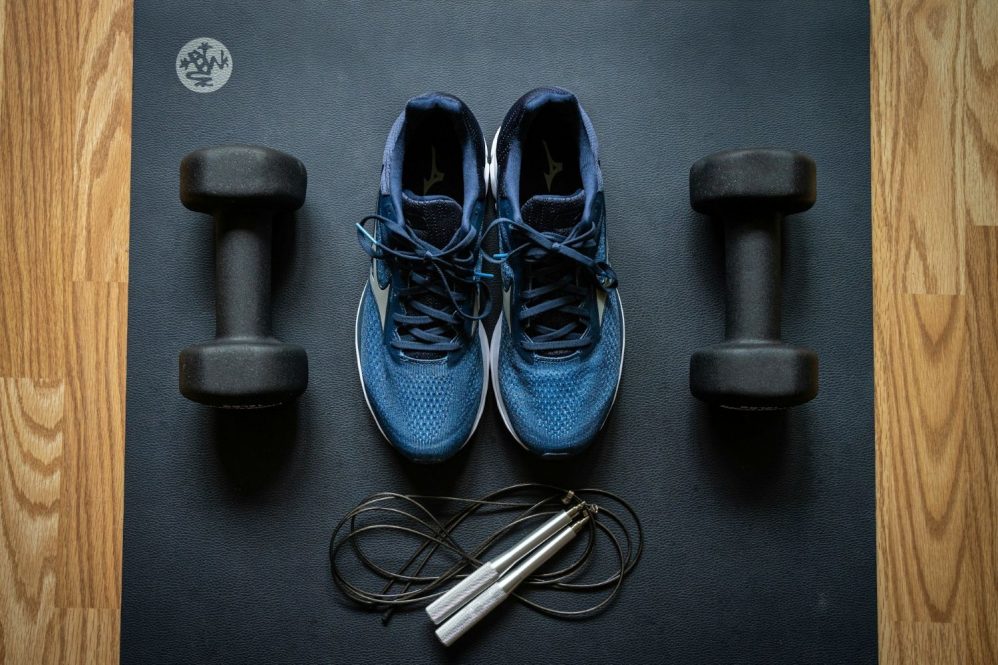
Alexandra Tran on Unsplash
Linda Pescatello, Board of Trustees Distinguished Professor in the Department of Kinesiology (CAHNR), has established herself as a leading figure in the study of exercise as medicine. One avenue of Pescatello's work has highlighted how exercise can help lower blood pressure. Pescatello recently published a spotlight on the topic in the Journal of the American College of Cardiology. This accompanies the release of the 2025 American College of Cardiology/American Heart Association Multisociety high blood pressure guidelines.
What are the benefits of exercising for people with high blood pressure?
High blood pressure is the most prevalent and modifiable risk factor for the development of cardiovascular disease (CVD). Physical activity has beneficial effects for many high blood pressure's comorbidities and other CVD risk factors. Today, if indicated, your doctor won't just prescribe you one medication to address high blood pressure - you're going to take different kinds of medication combined in one pill to enhance adherence to taking your high blood pressure medication. And that's exactly what physical activity is, a poly pill. Physical activity not only helps control high blood pressure, but also benefits other CVD risk factors that often coexist with hypertension - obesity, diabetes, dyslipidemia - because CVD risk factors cluster.
What has the research shown about the efficacy of exercise for blood pressure management?
Over 70% of adults with hypertension are overweight and obese. When people with high blood pressure undergo a weight loss program, each kilogram, or 2.2 pounds, of weight loss reduces blood pressure by one millimeter of mercury. So, there are synergistic effects of physical activity on many of the chronic diseases and CVD risk factors for hypertension.
My lab has found that, for up to 24 hours after you exercise, your blood pressure is lower. Your blood pressure is lower on the days you exercise than when you don't. That's an acute exercise effect. It's immediate. If you show someone, after you go for a walk your blood pressure is lower, that's been shown to be a successful behavioral strategy to increase exercise adherence.
For years, our lab continues to find that neuromotor exercises such as Tai Chi and yoga, are effective at lowering blood pressure and rival the magnitude of reductions seen with structured aerobic and resistance exercise. Even light intensity exercise has been shown to lower blood pressure.
What kinds of exercise are the most beneficial for people with hypertension?
A take home message of the spotlight is all types of movement work for blood pressure control. Aerobic, resistance, in particular dynamic resistance (e.g., lifting weights), neuromotor exercise, and there's growing evidence about isometric resistance exercise (e.g., hand grip exercises or wall sits). Engage in what type of exercise you like because all types do seem to work at some level. So do the exercises you like. Time is a major deterrent to get people to exercise. Exercises like Tai Chi and yoga are termed "multi component exercises" which means not only is it a neuromotor type of balance exercise, they also include flexibility exercise, and depending on the type you engage in, it could also involve aerobic and resistance exercise too. By engaging in an exercise that's multi-component, you're saving time, and thus, avoiding a major deterrent to why people don't exercise.
How have medical recommendations for exercise as a treatment for high blood pressure changed over time?
Typically, exercise is under appreciated. But increasingly, people are recommending lifestyle changes before medication. Lifestyle behavioral interventions would be diet, exercise, and stress management. Try that for three to six months for people that have a low risk, and if that doesn't work, then intervene with medication. That's clearly new. The new guidelines underscore the importance of structured aerobic and resistance exercise as essential first-line therapy to prevent and treat high blood pressure. Interestingly, mind body exercises such as yoga, also reduce stress which is one way these types of exercise may lower blood pressure.
What should health care practitioners know about prescribing exercise for patients with hypertension?
Our blood pressure is lower on days when we exercise than when we don't. So, the recommendation is to move, preferably, all days of the week. All intensities appear to work, but we emphasize moderate physical activity because of the risk benefit ratio. Especially in sedentary people, whether you have hypertension or not, sudden vigorous intensity for people you are not physically active can impose increased risk.
Exercise should be given higher priority as an essential component for the standard of care to prevent and treat high blood pressure because all types of movement lower blood pressure. Therefore, clinical exercise physiologists should be included as an essential component of care teams alongside doctors, pharmacists, and nurses.
This work relates to CAHNR's Strategic Vision area focused on Enhancing Health and Well-Being Locally, Nationally, and Globally.


