
Key Facts:
- Mathew Bellomia, who left school in year 11 and worked FIFO, built a property investment portfolio worth over $1 million in equity and able to take a gap year at 40, having chosen investment properties over a traditional owner-occupied home.
- OpenCorp CEO Cam McLellan argues that most Australians are held back not by lack of money, but by lack of access to basic financial education, particularly around the difference between good debt and bad debt.
- Statistics highlight a growing wealth gap, with the average 50-year-old Australian holding around $200,000 in superannuation against a recommended $370,000, and Australians under 35 holding just 7% of total household wealth.
- McLellan wrote *My Four-Year-Old The Property Investor*, which has sold more than 120,000 copies, and visits high schools and sporting clubs to teach financial literacy, aiming to make property investment accessible to ordinary Australians.
- Younger Australians are increasingly turning to YouTube, Instagram, and TikTok for financial guidance, with OpenCorp reporting a rise in enquiries from younger rent-vestors and families using existing home equity to help the next generation invest.
MELBOURNE, 24 July 2026 — Mathew Bellomia left school in year 11 and has spent his career working FIFO. Nobody sat him down and explained good debt from bad, or how property investing worked. He learned it the hard way, and once he did, he made one decision that changed everything and bucked the traditional Aussie dream: instead of buying a home to live in, he put everything into investment properties. That portfolio is now worth more than $1 million in equity, and earlier this year, at 40, it let him step away from work entirely this year, while his investments carried on without him.
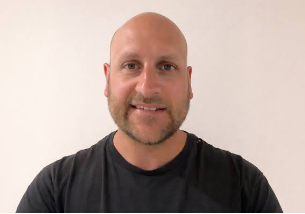
"I was never really academic," Mr Bellomia has said of his journey. "All I knew was I was good at working hard. I wish someone had sat me down and explained this stuff when I was younger. I spent years thinking property investing just wasn't for people like me, when really I just needed someone to break it down."
Thanks to his property investment journey, Mathew has taken a gap year in 2026, stepping away from his work as his investment properties are able to keep him afloat. A luxury that so many Australians are right now unable to do with the financial pressures of life.
OpenCorp CEO Cam McLellan says Mathew's story isn't really about property. It's about what happens when someone finally gets access to financial education most Australians never receive.
"Mathew didn't need a finance degree," Mr McLellan said. "He needed someone to explain the fundamentals once, clearly, and then the discipline to apply them. That's true for most people. You are probably closer to your first, or your next, property than you think. The gap usually isn't as wide as it feels, once someone actually walks you through it."
That gap is generational, not just a young person's problem, Mr McLellan says. The average 50-year-old Australian holds around $200,000 in superannuation, well short of the roughly $370,000 needed to stay on track for a comfortable retirement at 67. Nationally, Australians under 35 hold just 7% of the country's total household wealth, while the wealthiest 10% of households hold, on average, 25 times as much wealth as households in the bottom 60%.
Mr McLellan faced the same silence Mathew did, just without social media to fill the gap. He says young people are slightly more switched on than older generations thanks to social media, but there's still a huge way to go.
"I left school and started stacking shelves at a supermarket," Mr McLellan said. "Nobody sat me down and explained the difference between good debt and bad debt, or how an asset that costs you money on paper each week can still be building your wealth in the background. I had to learn it by doing it, mostly by accident, with a mate who was in the same boat. That's not a system that's failing people by chance. It's a system that was never designed to explain itself, and most people are left to work it out on their own, usually much later than they needed to."
He says the good debt versus bad debt distinction is one of the simplest, and most overlooked, lessons in personal finance.
"Most Australians are taught that all debt is dangerous, full stop," he said. "But debt used to buy a car that loses value every year is a very different thing to debt used to buy an asset that has historically grown in value over time. Nobody's born knowing that difference. It has to be taught, and for most people, it isn't."
It's why Mr McLellan wrote My Four-Year-Old The Property Investor, aimed at stripping out the jargon and sense of superiority that can come with property investment circles. The book has sold more than 120,000 copies. Cam also spends time touring high schools and sporting clubs teaching young Australians about financial literacy.
"I didn't come from money, and I didn't come from a family that talked about investing," Mr McLellan said. "I left home at sixteen. Everything I've built came from figuring this out myself, mostly the hard way. When I wrote the book, I wanted to strip out anything that made property investing sound like a members-only club, the jargon, the assumption that you need to already be wealthy or well-connected to start. As a Dad I wanted to create a simple step by step manual for my kids to use to cut out the BS, and have a clear plan to execute and build wealth. There's no excuse for an industry to keep dressing this up as complicated. It isn't. It was just never explained to people who didn't already have someone in their corner."
Younger Australians are increasingly refusing to wait for that explanation. ASIC's 2026 Moneysmart research found Gen Z's leading sources of financial information are now YouTube, Instagram and TikTok, ahead of banks, schools or financial advisors. Separate research shows two in five Gen Z Australians use social media for financial guidance, more than double the rate of Millennials.
OpenCorp is seeing that shift in its own client base, with enquiries from younger rent-vestors growing steadily over the past two years, alongside a rising number of families using lazy equity in a parent's home to help the next generation buy their first investment property.
"For years, the people who came to us were nervous, almost like they needed permission to be interested in money," Mr McLellan said. "The younger clients we're seeing now are different. They've often already done hours of research on socials before they've spoken to us. Nobody handed them that, they went and found it themselves because nobody else was going to."
Mr McLellan says the biggest shift he wants to see now isn't financial, it's a change in thinking.
"The old Australian Dream said work hard, save up, and buy your first home outright as your forever home. For a lot of people today, that model is dead on arrival, the numbers just don't work like that anymore. None of that requires wealth or privilege. It requires knowing the option exists, and being willing to do things differently to how your parents did."
About us:
OpenCorp is an Australian property investment company founded in 2006 by Cam McLellan, Matthew Lewison and Allister Lewison. For more than 20 years, OpenCorp has helped everyday Australians build wealth through property, combining independent research with full transparency, publishing the performance of its entire client portfolio against ASIC disclosure standards. OpenCorp has helped clients build more than $2 billion in property portfolio value and generate $691 million in client equity, with a track record of outperforming the capital city average by more than $254,000 per property since 2006.


