
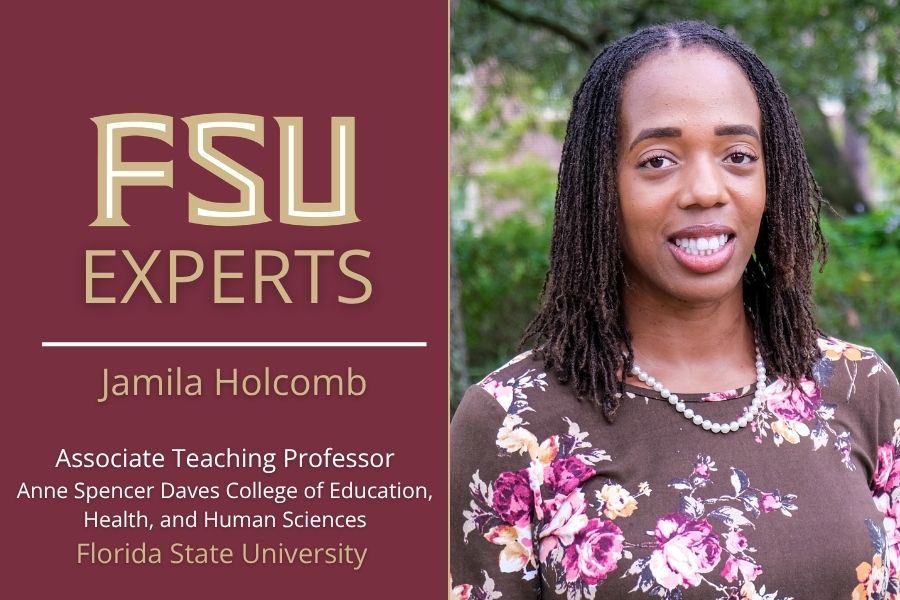
As Father's Day approaches on June 21, a Florida State University licensed marriage and family therapist is examining how cultural and societal changes have reshaped modern fatherhood.
Long viewed as the "helper" or "secondary parent" in raising children, fathers are increasingly taking on a more central role in family caregiving. According to a recent Pew Research Center study, most Americans (57%) say it's extremely or very acceptable for men to take care of the home and children while their wife works for pay.
Jamila Holcomb, an associate teaching professor at the FSU Anne Spencer Daves College of Education, Health, and Human Sciences, teaches students about the complexity of family life. As a therapist, she helps support individuals and families as they heal from trauma and navigate mental health and relationship challenges.
Holcomb says that fatherhood has evolved from a provider-focused role to a relationship-focused one.
"The definition of a 'good father' has transformed significantly over the last 25 years," Holcomb said. "We have moved away from viewing fatherhood primarily through the lens of financial provision or discipline and toward a broader understanding of fathers as active caregivers, co-parents and emotional supports within the family system. Today, fatherhood often includes being involved in daily childrearing, contributing to household responsibilities and creating secure, emotionally connected relationships with children."
Holcomb believes that research highlighting the benefits of involved fathers is helping drive this shift.
"One important shift is that research has increasingly demonstrated that fathers play a meaningful role in children's social, emotional and behavioral development," Holcomb added. "Studies examining father involvement have found that engaged fathering is associated with positive developmental outcomes, including improved social and psychological outcomes for children. Validating the importance of the fatherhood role has led to greater societal awareness and psychoeducation, and an increased interest in fathers adapting to this evolving role."


