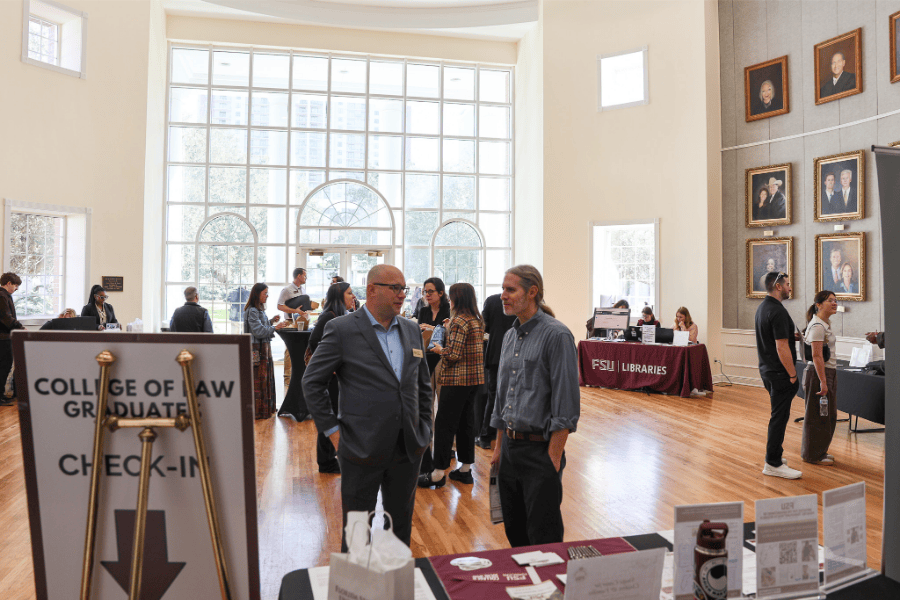
The Florida State University College of Law, along with the Stoops Center for Law and Business and the Institute of Law, Technology, and Innovation, hosted its first AI Day in the Capital last week, bringing together experts to discuss the future of artificial intelligence.
With College of Law Dean and Donald J. Weidner Chair Erin O'Hara O'Connor kicking off the event with a welcome message, the day was filled with discussions and presentations that included leaders in government, law, technology, and academia. The event examined the rapidly evolving landscape of AI and its implications for public institutions, civic infrastructure and ethical governance.
Executive Director of the Stoops Center for Law and Business Joshua Coco played a large role in planning the event. He believes several goals were met in providing the audience a thorough look at the multiple uses of AI.
"AI Day in the Capital helped demystify artificial intelligence by moving the conversation beyond theory and into real-world applications," Coco said. "Our goal was to give policymakers, practitioners and the public a clearer understanding of how AI is already being used across sectors and where thoughtful governance and collaboration are most needed."
"AI Day in the Capital helped demystify artificial intelligence by moving the conversation beyond theory and into real-world applications."
– Joshua Coco, Executive Director of the Stoops Center for Law and Business
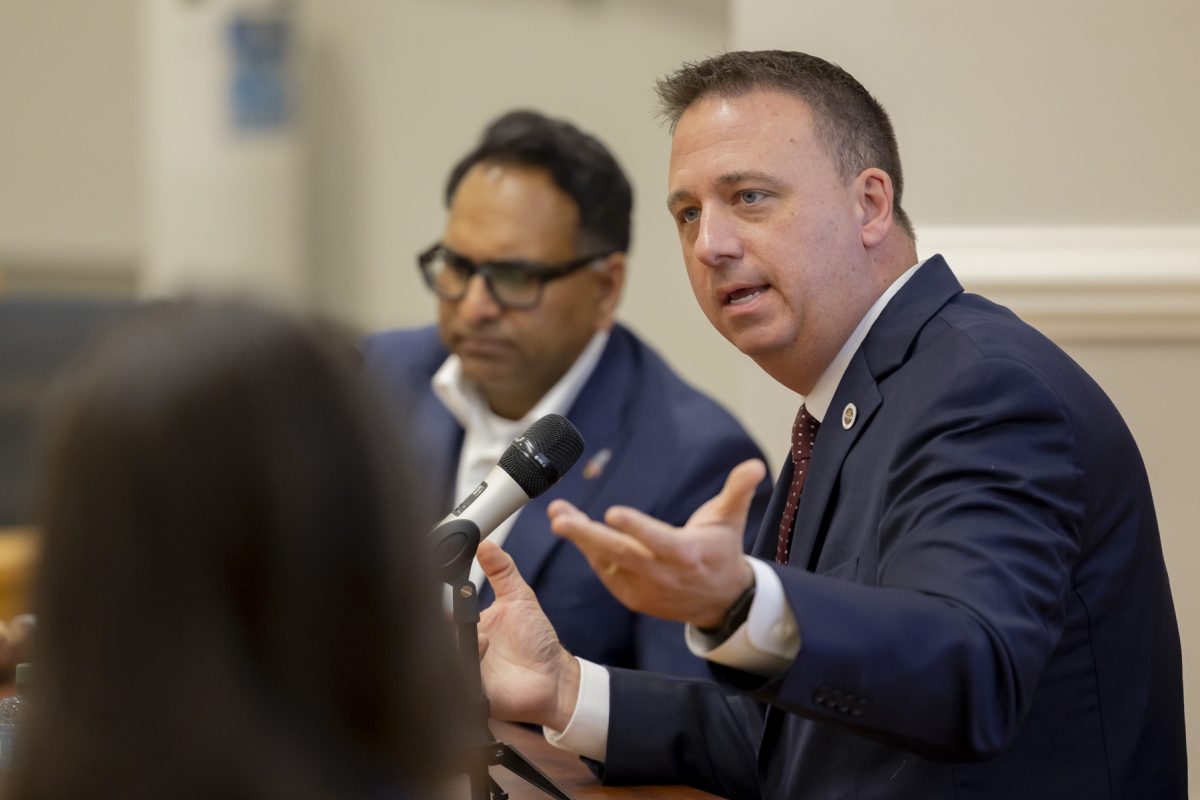
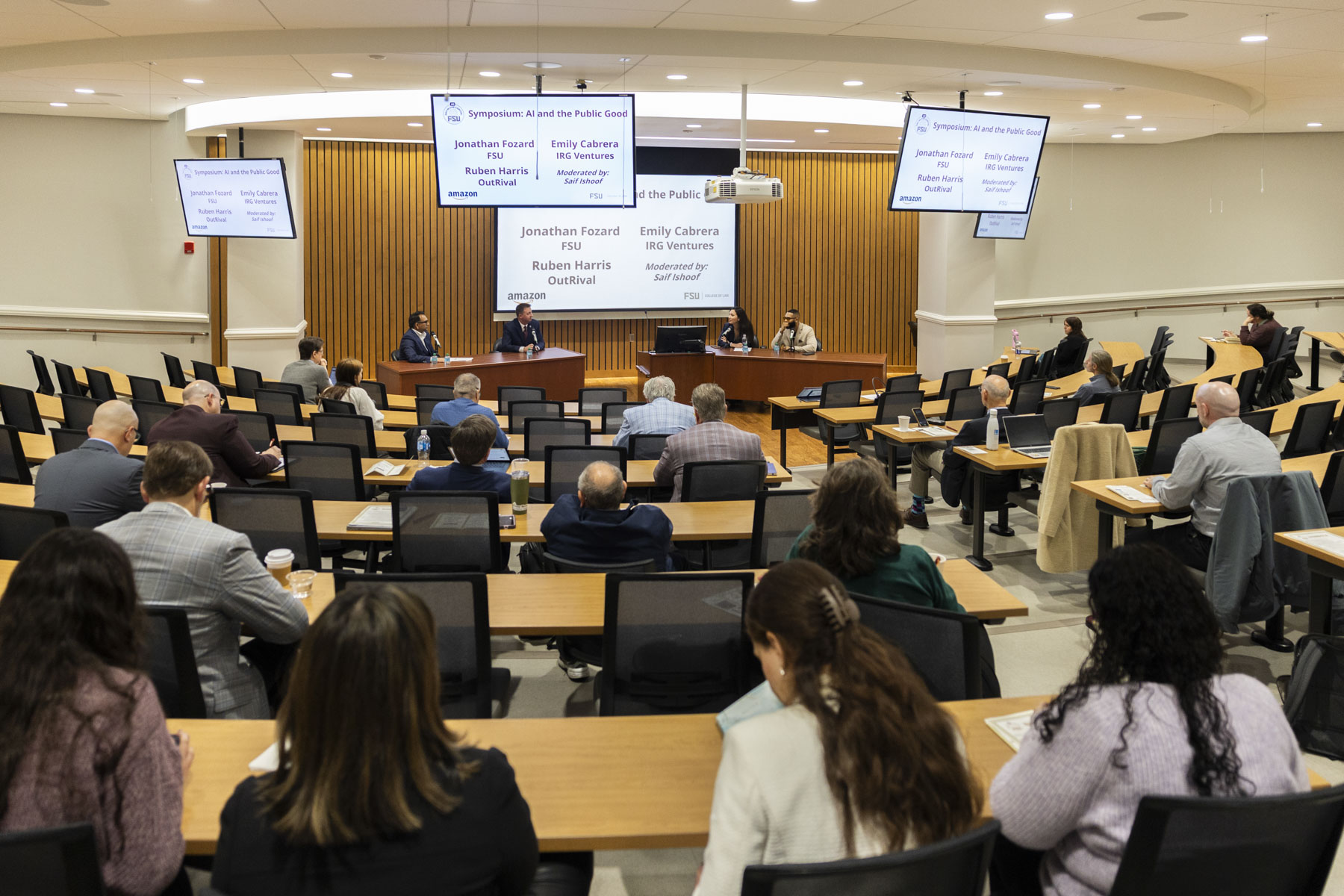
Key messages were shared during a symposium called "AI and the Public Good," a discussion on how AI is reshaping public services, education and justice. FSU Associate Vice President and Chief Information Officer Jonathan Fozard offered perspective alongside Ruben Harris, CEO of Outrival AI, and Emily Cabrera, Associate General Counsel at IRG Ventures. Moderator Saif Ishoof of Lab22c led the dialogue.
Fozard noted that at institutions like FSU, data security and safety take precedence over flashy technology.
"When we think about AI, we don't think about what's the flashy and cool thing," Fozard said. "It's how can we make sure that it's secure in what we're solving? One of the things you must think about at Florida State is it's not just college classes. We also have K-12 schools that are part of the FSU system. We have a wide variety of protection that we must do from minors to college students to adults."
For AI to operate at peak efficiency, Fozard noted the meticulous approach FSU takes in its data strategy and how that leverages AI. It's an approach that touches several facets of the university, including research and policymaking.
"What is AI without data? It's software," Fozard added. "The data is what makes that connection. It starts with a data strategy that we have. With the State of Florida, we're doing some research that was just announced in the last year with mental health data. It starts with that data platform first, and then how we leverage AI on top of it to help with some of the analysis."
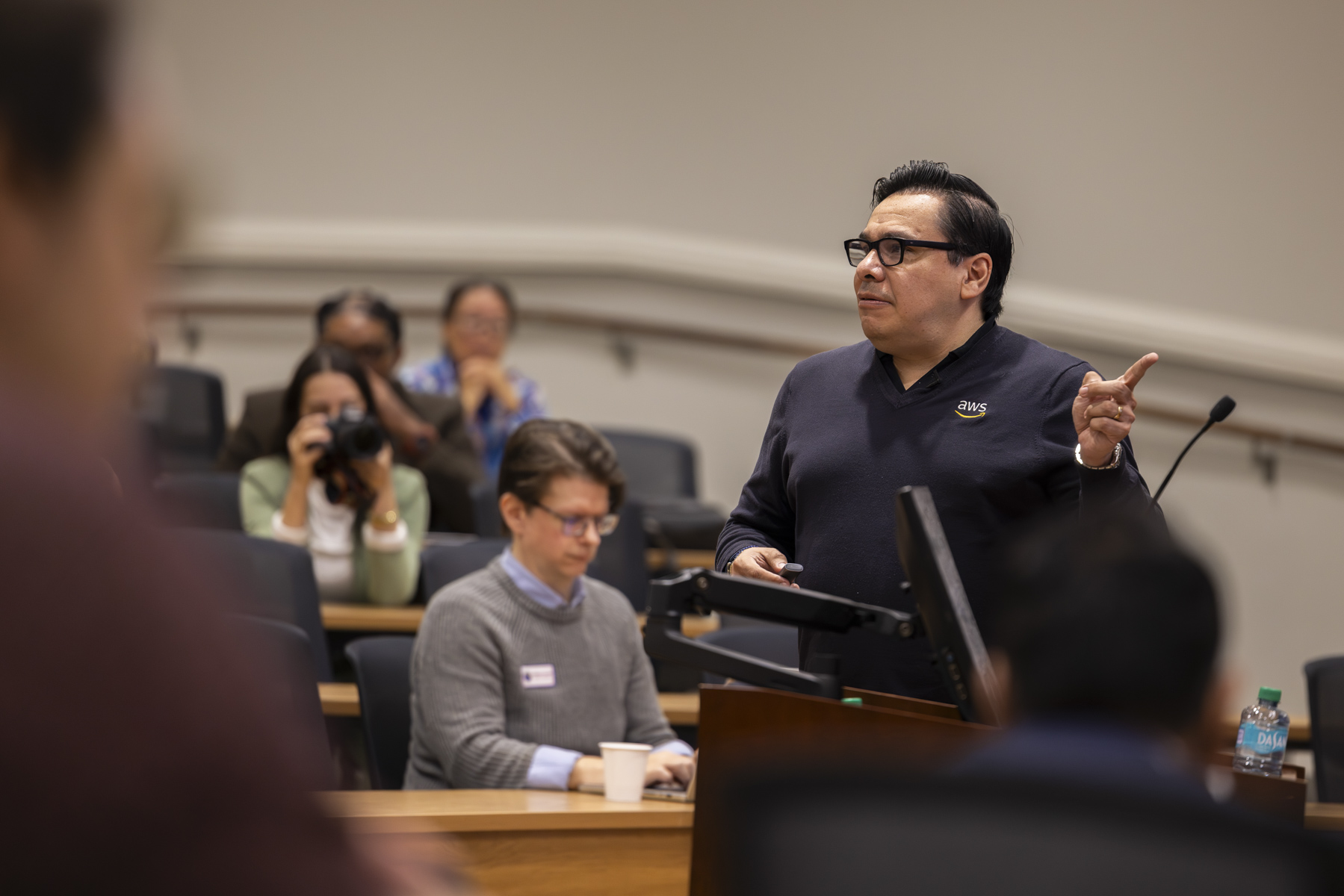
The breakfast keynote, "AI and the Future of Intelligence," was a fireside-style conversation on the evolution of generative AI. Sergio Ortega, the AI business development and sales lead at Amazon Web Services, offered pros and cons of the technology. He noted that its real-world use can improve efficiency and equity, but that data quality, bias and guardrails are critical for public-sector AI.
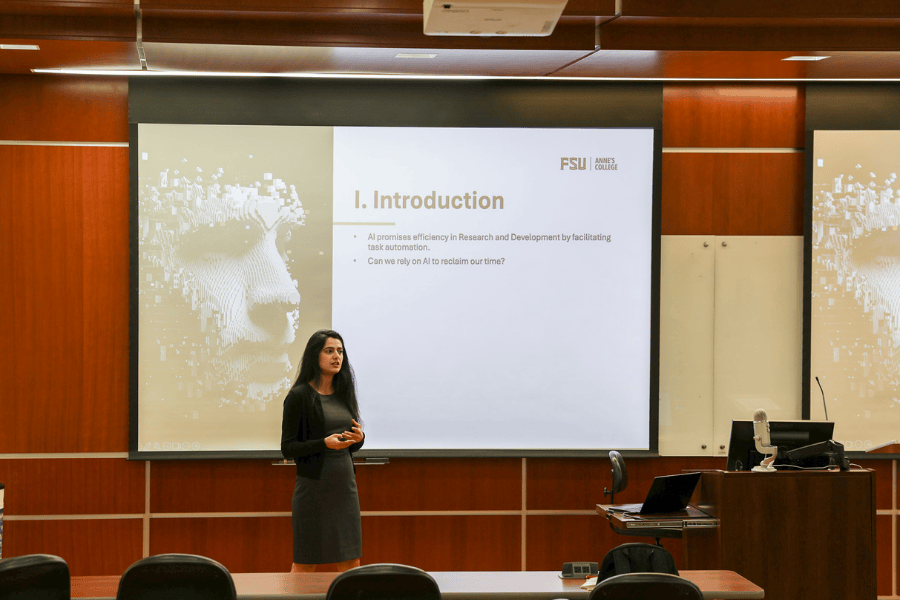
Many of the attendees split up into interactive breakout sessions to learn more about AI's impact in several fields. Included was a vibe coding hands-on session led by Yaacov Petscher, - a dual faculty member from the College of Social Work and the Florida Center for Reading Research. Wajeeha Hazoor Bajwa, an assistant in research and senior editor at the Anne Spencer Daves College of Education, Health, and Human Sciences, led an interactive session on AI tools for research development and grant writing.
The inaugural event finished with an afternoon keynote by Maria Gervais, the General Manager for SynthBee, - an aerospace defense government business unit. Four panelists, which included McConnaughhay and Rissman Professor Lauren Scholz, concluded with reflections on policy implications and pathways for statewide AI collaboration.
Coco said that the outcomes of AI Day in the Capital went beyond their expectations because the speakers were influential and the audience highly engaged.
"From the diversity of perspectives on the panels to the hands-on demonstrations, the event reflected exactly what we hoped to create: a practical, interdisciplinary conversation about AI that connects innovation, policy, and public impact," Coco said.