New satellite assessments show the destruction of buildings in Gaza has climbed by nearly 10 per cent since October's faltering ceasefire between Hamas and Israeli forces aim to end the two-year war, which reduced cities to rubble and displaced more than one million people, UN agencies said on Thursday.
Even with the guns largely silent, Palestinians in Gaza continue to face daily threats from unexploded ordnance left behind by the fighting.
Key points
- UN agencies are struggling with shortages of fuel and other essential items
- Teenager injured by unexploded ordnance
- Aid efforts underway include mine action, summer school and food package distribution
At least three Israeli airstrikes have been reported since Wednesday, including one near Al Amal Hospital in Khan Younis earlier on Thursday, UN Associate Spokesperson Daniela Gross told reporters.
"Airstrikes on populated areas in Gaza risk increasing harm to civilians," the UN aid coordination office ( OCHA ) warned.
Meanwhile, a 13-year-old was injured by explosive ordnance earlier this week in northern Gaza.
Explosive hazard threats
Against a landscape of rubble, the threat of explosive hazards is ever present in the shattered enclave.
More than 15,000 people participated in awareness-raising sessions related to explosive ordnance last week alone, and mine action partners have carried out 18 assessments to pave the way for rubble removal, the setting up of new shelters and the resumption of farming.
"While our partners still lack the permissions and equipment to remove explosive ordnance safely, they are also helping protect people by marking hazards and by educating civilians on how to beware of explosive items," Ms. Gross said.
More buildings destroyed
A new assessment by the UN Satellite Centre (UNOSAT) estimated that the number of destroyed structures across Gaza has increased by nine per cent since the declaration of a ceasefire in October 2025, according to the latest situation update the UN agency for Palestine refugees, UNWRA.
Since the ceasefire, UNRWA has received "reports of demolitions affecting schools and other UN facilities in areas under Israeli military control, however, these reports could not be independently verified due to ongoing access restrictions", the UN agency said.
Overall, about 82 per cent of the structures - about 200,000 buildings - in Gaza are damaged, with two thirds of them destroyed, UNRWA said.
Prolonged shortages
UN agencies and partners are facing mounting challenges that are affecting the delivery of essential services across Gaza, choking humanitarian movement and operational capacity.
"The prolonged shortage of lubricant oil and other critical supplies required to maintain generators, vehicles and operational equipment is placing additional strain on already overstretched service delivery systems," UNRWA said.
The situation risks of disruptions to health, education and other lifesaving interventions amid persistently high levels of need, the agency said.
Aid efforts continue
Finding safe shelter also continues to be a challenge.
Aid partners provided more than 3,300 households with emergency shelters and other items last week.
The provisions included nearly 500 new tents, a similar number of tarpaulins, thousands of bedding items and thousands of solar lanterns to keep people safer at night.
Despite robust efforts, more support is needed to serve the recovering population of Gaza, according to Ms. Gross, who said "more funding is needed as well as approvals to bring in longer-lasting shelter items".
Here's a snapshot of other ongoing efforts:
- From 1 to 9 August, UN partners provided monthly food assistance to nearly 60,000 households, each receiving three parcels and one 25-kg flour bag, which is enough to cover more than 100 per cent of people's minimum caloric needs.
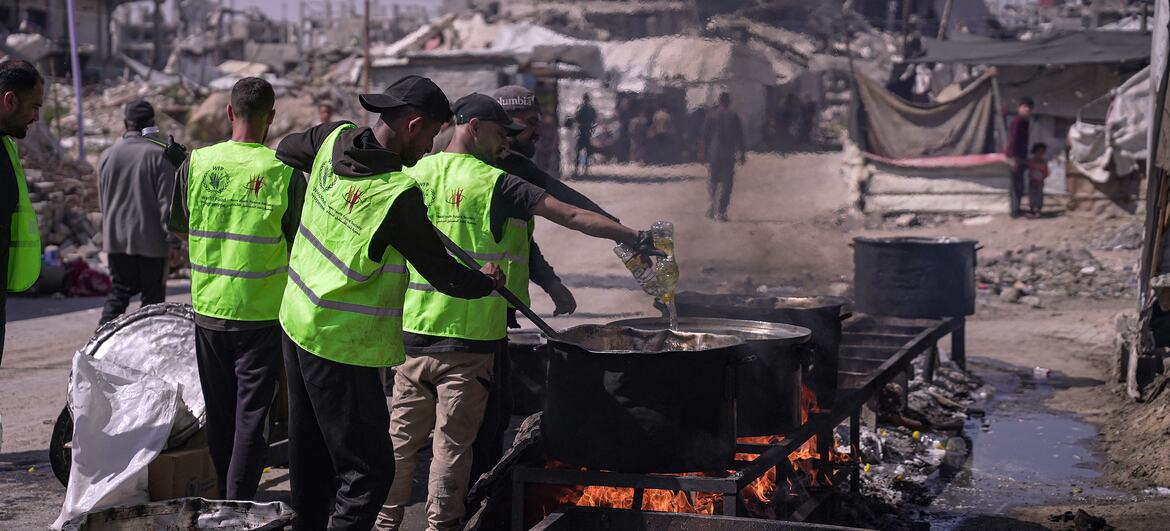
- With UN partner support, every day about 100 kitchens prepare 700,000 meals served at more than 1,000 locations, and over two dozen subsidised bakeries produce roughly 100,000 two-kg bread bundles for people in need
- A new UNRWA temporary learning space opened in Jabalia, northern Gaza, on 10 August, and its summer learning activities have reached 41,849 children between 3 and 9 August