
For women in Gaza who lost their husbands in the war, providing for a family no longer means just putting food on the table. Now it also means finding shelter, hauling water and keeping children in school - all from a tent.
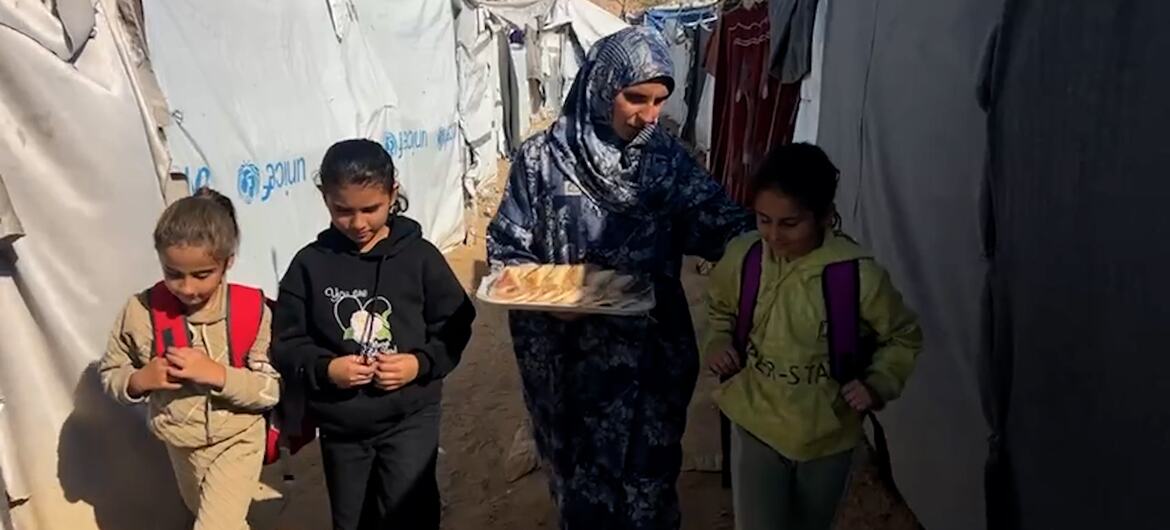
At the Flowers of Palestine camp, set up for widows in western Gaza City, the day begins with a walk to the water tankers. Women and their children fill buckets and plastic containers and carry them back to their canvas dwellings.
"We carry out our duties twice over - our own and the man's as well - but where are our rights?" said Kholoud Farajallah, a mother of three, speaking to our UN News correspondent in Gaza.
According to UN Women , more than 86,000 households in Gaza are now headed by women.
That is nearly one in four, compared with one in nine before the war. On the International Day for the Elimination of Violence against Women , marked on 25 November, their struggle shows how the war's harm to women goes far beyond death and injury.
From a master's, to a pastry stall
Ms. Farajallah lost her husband early in the war. With no money coming in, she had to give up her master's degree in mathematics and teaching methods.
She started out by baking pastries and sending her son to sell them around the displacement camps. Later she built a small shop out of timber and plastic sheeting near the camp, which now covers her children's basic needs.
Her day doesn't end at the counter. She also runs the household, looks after the children and keeps on top of their schooling.
One household in four
In another tent in the camp, Umm Mohammed Abu Rayala is raising seven children. She alone has to feed them, look after them and see that they keep learning.
Losing their husbands has left women with burdens they never carried before the war, she told UN News. They now fill the roles of both father and mother, in a daily life with nothing stable in it.
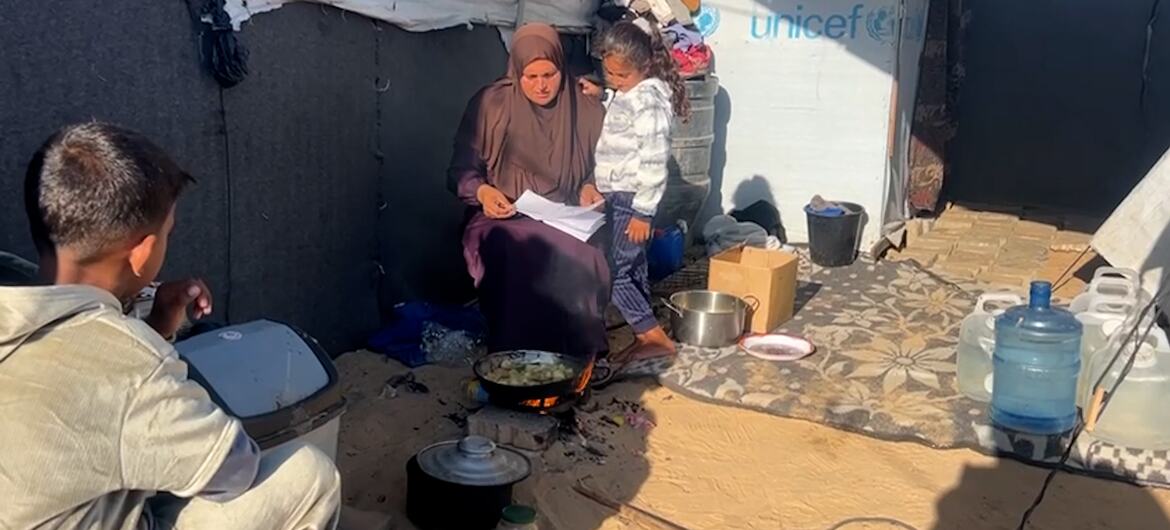
UN Women says 68 per cent of households headed by women do not have adequate shelter, and 67 per cent urgently need cash assistance just to get through each day. On average, these families have been forced to move eight times since October 2023.
A camp for widows
The Flowers of Palestine initiative is trying to meet some of those needs. Nidaa Matar, one of its organizers, said it began as a personal effort in response to the growing number of widows and orphans the war was leaving behind.
"We reached out to different organizations and associations to make this idea a reality. Thank God, we managed to build this camp, which shelters 82 widowed families," she said. "We were able to give a home to families who didn't know where to live, because they had no breadwinner and no income."
Winter brings new dangers
UN Women has warned that conditions will get worse as winter rains and floods sweep through displacement camps. Households headed by women are at greater risk because their shelters are flimsy and they are displaced again and again.
Nearly 50,000 women and girls in Gaza have been killed or seriously injured since the war began, according to UN Women. More than 38,000 of them were killed, and around 11,700 have been left with permanent disabilities.
Between the tents, the water queues and the daily hunt for a living, women like Ms. Farajallah and Ms. Abu Rayala keep their families going. How much longer they can do it is another question.
"As a woman, I have received none of my rights at all," Ms. Farajallah said. "I gave up my education, I gave up my life, and I devote everything - all my time - to raising my children. But until when?"


