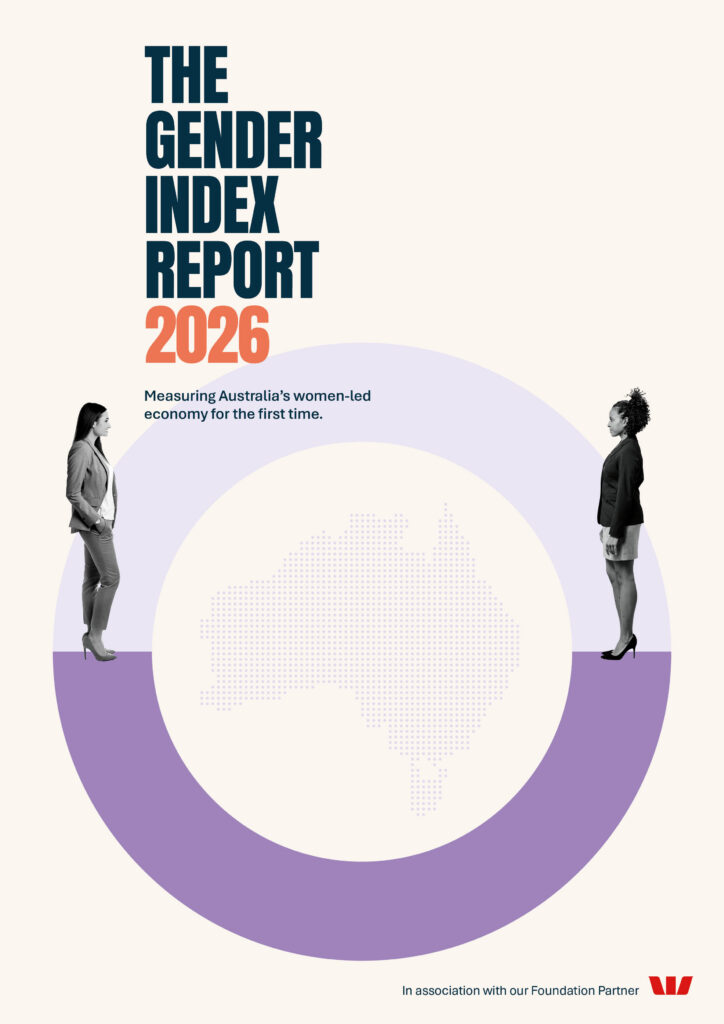
A new national report authored by Griffith University's Professor Naomi Birdthistle has revealed a significant opportunity to strengthen Australia's economy by supporting more women-led businesses to scale.
Professor Birdthistle, Griffith Business School's MBA Director, joined industry and business leaders at the launch of The Gender Index Australia 2026 in Sydney on 3 September, where she also contributed to a panel discussion examining the report's findings and implications for women entrepreneurs.
The Gender Index Australia is the first comprehensive, data-led study of female business leadership in Australia. It brings together business structure, leadership composition and commercial performance to provide a national benchmark for understanding women's participation and progression through the Australian business economy.
The report draws on 3,355,459 Australian business records, including Australian Business Number (ABN) sole traders and Australian Company Number (ACN) registered companies, covering every state and territory.
A 'scaling cliff' for women in business
One of the report's most significant findings is the sharp decline in women's representation as businesses grow.
Women lead 42.2 per cent of sole trader businesses nationally, but just 15.2 per cent of incorporated companies. Representation falls further as businesses increase in size, with women leading 15.8 per cent of micro companies, 13.3 per cent of small companies, 8.1 per cent of medium companies and just 7 per cent of large companies.
The report describes this as a 'scaling cliff' - highlighting that Australia has a strong pipeline of women entering entrepreneurship, but too few women-led businesses progress into larger, more economically significant organisations.
The gap is particularly pronounced in the transition from small to medium-sized business. Male-led businesses progress from small to medium at a rate of 13.68 per cent a year, compared with 6.71 per cent for women-led businesses. Closing this progression gap could support approximately 29,000 additional women-led growth businesses.
Importantly, the research challenges the idea that business performance or capability is the primary explanation for the gap.
Women-led businesses that reach scale demonstrate productivity outcomes comparable with, and in some cases stronger than, their peers. Instead, the report identifies access to capital, customers, markets, networks and institutional support as key structural factors affecting the ability of women-led businesses to grow.
"The Gender Index Australia highlights a critical reality: women are participating in business more than ever before, but participation alone is not enough. The next challenge is ensuring women have equal opportunities to scale, lead and influence Australia's economic future."
Professor Naomi Birdthistle
A significant opportunity for Australia
The findings point to a substantial economic opportunity.
Modelling in the report estimates that closing the gender gap in business scaling could support approximately 745,000 additional jobs and generate more than $100 billion a year in combined additional wages and government tax revenue.
This includes an estimated $79.4 billion in additional annual wages and $24.4 billion in additional government tax revenue.
Most of the opportunity lies earlier in the growth journey. The report estimates that 86.3 per cent of the potential additional women-led growth businesses would come from closing the gap between micro and small businesses, highlighting the importance of supporting established businesses through their first meaningful stage of scale.
Queensland leads the nation
The report also provides a detailed picture of women-led businesses across Australia's states and territories.
Queensland records the highest proportion of women-led sole traders nationally, at 45.1 per cent, as well as the highest proportion of women-led incorporated companies, at 16.3 per cent.
However, Queensland also reflects the broader national challenge: strong participation at the entry point does not necessarily translate into progression to larger businesses.
The report identifies opportunities to improve access to growth capital, procurement, governance pathways and leadership networks to help build a stronger pipeline of women-led medium, large and listed companies.
From evidence to action
The Gender Index Australia aims to provide a consistent evidence base that can be used by government, financial institutions, industry and business-support organisations to understand where women-led businesses are progressing - and where barriers remain.
The report argues that closing the scaling gap requires a shift in focus from supporting women to enter business to supporting them to grow.
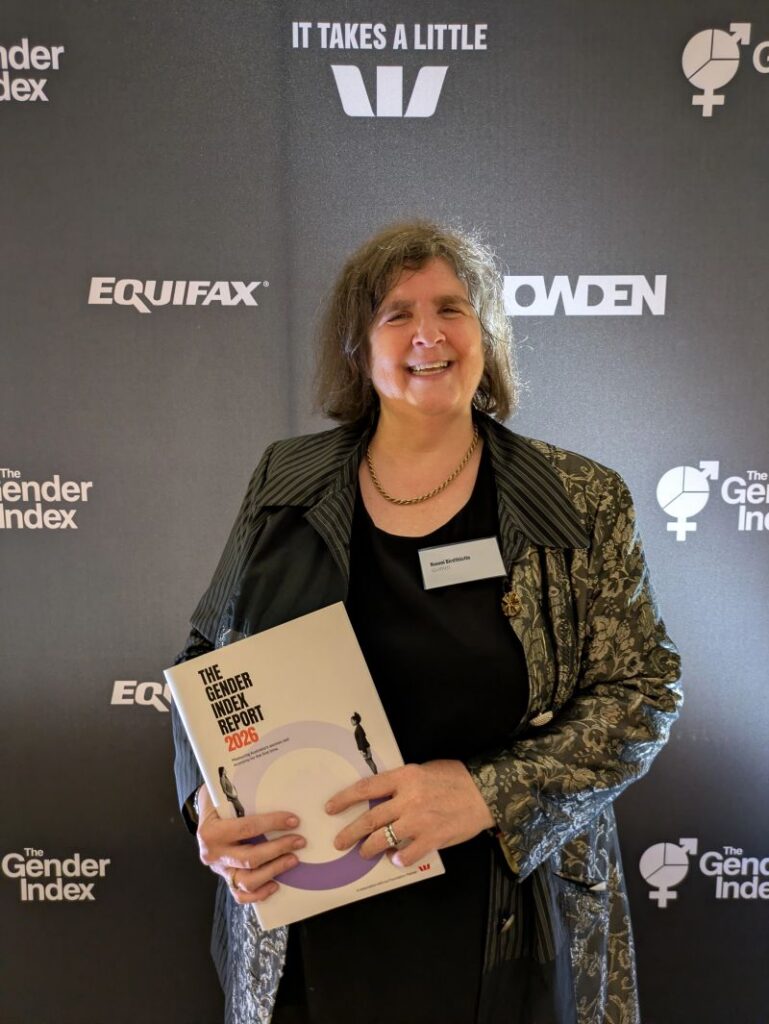
"We need to stop asking why women aren't progressing faster in business and start asking whether our systems are designed to help them succeed. Women are not the problem. The problem is a lack of support, investment, and structural opportunities. Change the system, and you'll change the outcomes. The landscape for women-led businesses in Australia could be transformed." Professor Birdthistle.
Future areas of focus identified by The Gender Index include improving the evidence around access to finance and growth capital, examining the critical transitions between business sizes, and developing consistent measures to assess the impact of investment, programs and business outcomes over time.
For Professor Birdthistle, the report represents an important contribution to understanding Australia's women-led economy and the conditions that enable businesses to move from start-up to scale-up.
As Australia looks to strengthen productivity, employment and economic resilience, the findings suggest that enabling more women-led businesses to reach their full potential is not only a matter of gender equity - it is an economic opportunity.