Almost one-third of physicians who are enrolled in Medicaid don't actually care for a single patient covered by Medicaid insurance, according to new research led by Oregon Health & Science University.
The study, published today in the journal Health Affairs, sheds new light on a program that covers nearly 80 million Americans.
Researchers also found that another third of health care providers enrolled in Medicaid see a high volume of patients — more than 150 annually — and may be overburdened. Combined, the findings paint a picture of a situation in which enrollment data alone may obscure the reality that a relatively small number of health care professionals provide care through Medicaid, one of the largest health insurance payors in the country and one that predominantly covers low-income, disabled and young Americans.

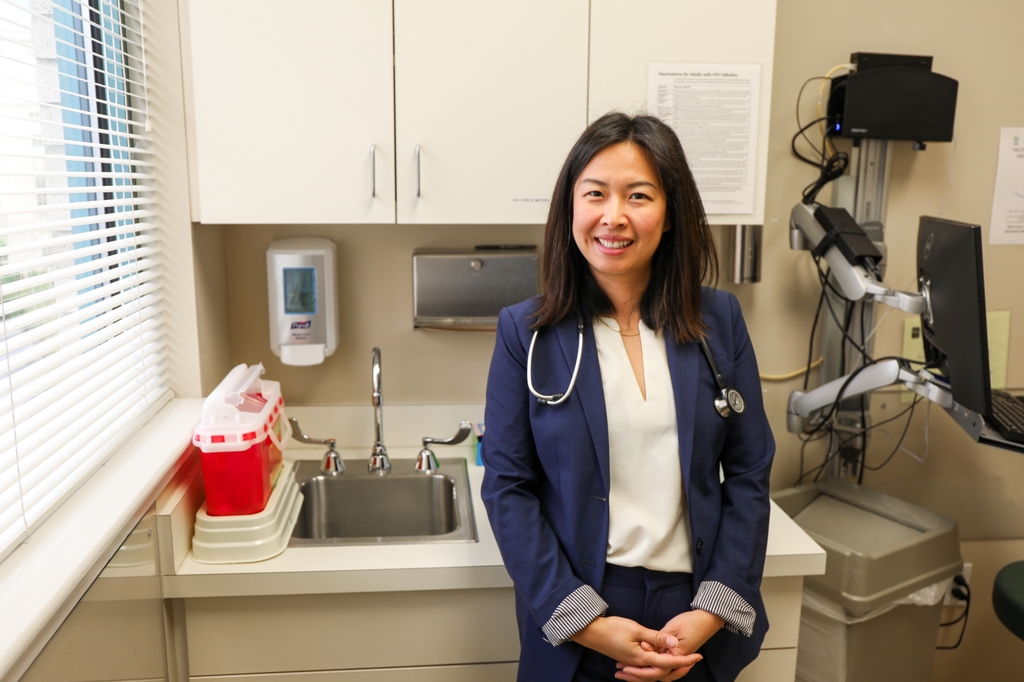
This lack of access raises the risk of poor health outcomes that ultimately drive up costs, said lead author Jane Zhu, M.D., associate professor of medicine (general internal medicine and geriatrics) in the OHSU School of Medicine.
"Low physician participation in Medicaid is a commonly cited reason for access gaps and unmet need in Medicaid," she said. "If patients aren't able to access the care they need, they may delay or forego care altogether, which is not only bad for patient outcomes, but also bad for the health system overall."
Over the long term, she said, delaying or foregoing care can leave people sicker with more complex conditions that ultimately drive up costs.
Researchers examined administrative claims data and provider enrollment participation in five physician specialties: primary care, psychiatry, cardiology, dermatology and ophthalmology.
They found actual participation in providing care for Medicaid patients lagged well behind the number of physicians administratively enrolled in Medicaid. The discrepancy was especially egregious in psychiatry, with more than 40% of psychiatrists technically enrolled in Medicaid who saw no Medicaid patients at all during the year.
Researchers termed these "ghost" physicians.
The findings mirror those from a previous study published in Health Affairs that found high levels of ghost providers in Oregon's Medicaid program, signaling a national issue.
"Patients may call providers who say they are enrolled in Medicaid, but those calls go nowhere," Zhu said. "People give up because those providers aren't actually available to see them."
In some cases, Zhu said providers may be technically enrolled in Medicaid as part of their health system's contracting or employment requirements. Or they have enrolled despite their clinical schedule being at capacity with patients covered by commercial insurance.
Either way, she said it's important for policymakers to assess the actual experience of patients who can't get access to a health care provider — rather than relying on enrollment figures that may not reflect reality.
"Maintaining access to care is a really big problem with increasing demand for services and workforce shortages," Zhu said. "A clearer picture would help policymakers better spend public dollars on levers that meaningfully impact provider participation."
Researchers conducted the study using a set of Medicaid claims data known as the Transformed Medicaid Statistical Information System Analytic Fils. The data covers the years 2019 through 2021, the latest years available at the time of the analysis.
In addition to Zhu, co-authors included Kirbee Johnston, M.P.H., Kyle Hart, M.S., and John McConnell, Ph.D., of the OHSU Center for Health Systems Effectiveness; and Daniel Polsky of Johns Hopkins University.
The research was supported by the National Institute of Mental Health of the National Institutes of Health, awards R01MH133556 and R01MH135985. The research reported in this publication used computational infrastructure supported by the Office of Research Infrastructure Programs, Office of the Director, National Institutes of Health (NIH), under award S10OD034224. The content is solely the responsibility of the authors and does not necessarily represent the official views of the NIH.