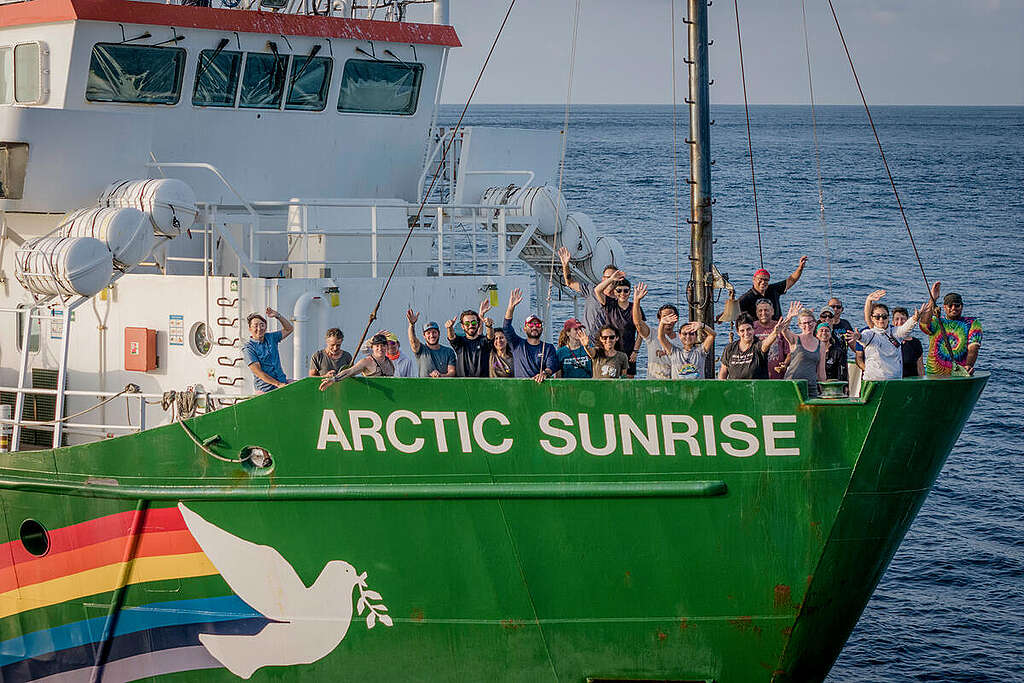
Greenpeace's Arctic Sunrise is joining the Global Sumud Flotilla to support a peaceful civilian mission challenging the blockade on Gaza and demanding safe, unhindered humanitarian access.
The ship's role is clear: to provide technical and operational maritime support to the people-led flotilla and assist the vessels safely transiting across the Mediterranean before they complete the last 200 nautical miles onto Gaza's shores.
This is an act of solidarity, practical support and non-violent resistance, rooted in the belief that when governments fail to protect life and uphold international law, people will still come together to act.
This mission builds on earlier flotilla efforts to break the silence around Gaza. In 2024 and 2025, previous flotillas challenged the blockade and drew international attention to the humanitarian crisis. In September 2025, the Sumud Flotilla sailed with 42 boats and 462 people before Israeli forces intercepted and forcibly boarded the vessels about 70 nautical miles off the Gaza coast, cutting communications and jamming signals.
The 2026 flotilla continues that same spirit of civilian resistance, but on a larger scale and with renewed determination to demand humanitarian access and justice.
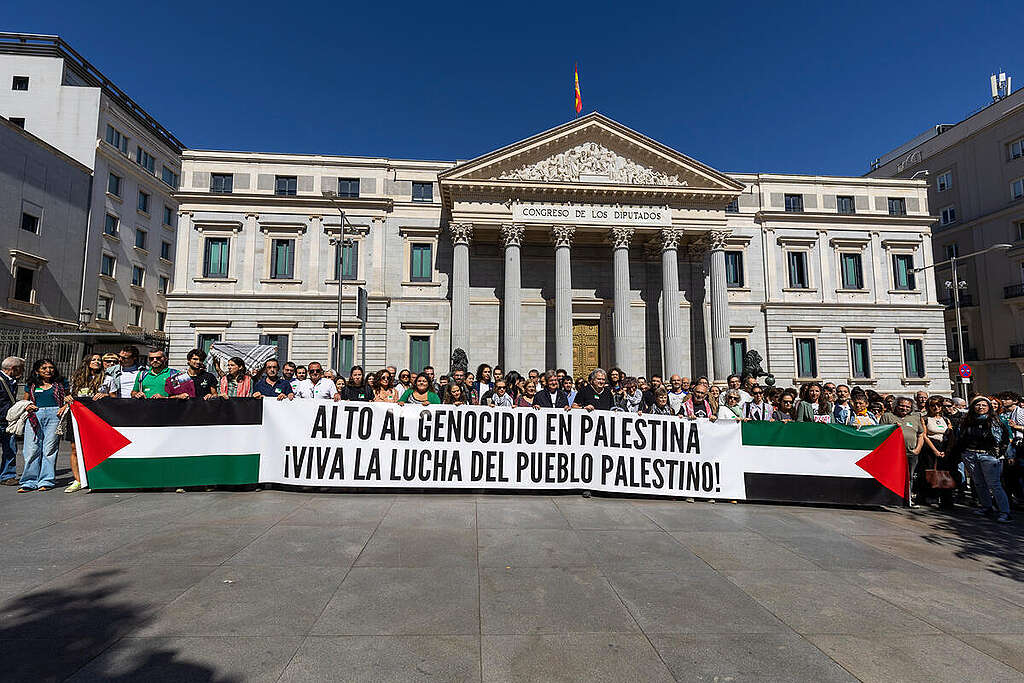
Why this matters now - children, medics, journalists, aid workers, humanity
Gaza has been subjected to a scale of death and destruction that is almost impossible to absorb. Between 7 October 2023 and 14 January 2026, 71,439 Palestinians were killed in Gaza and 171,324 injured, according to Gaza health ministry figures reported by the United Nations Office for the Coordination of Humanitarian Affairs (OCHA).
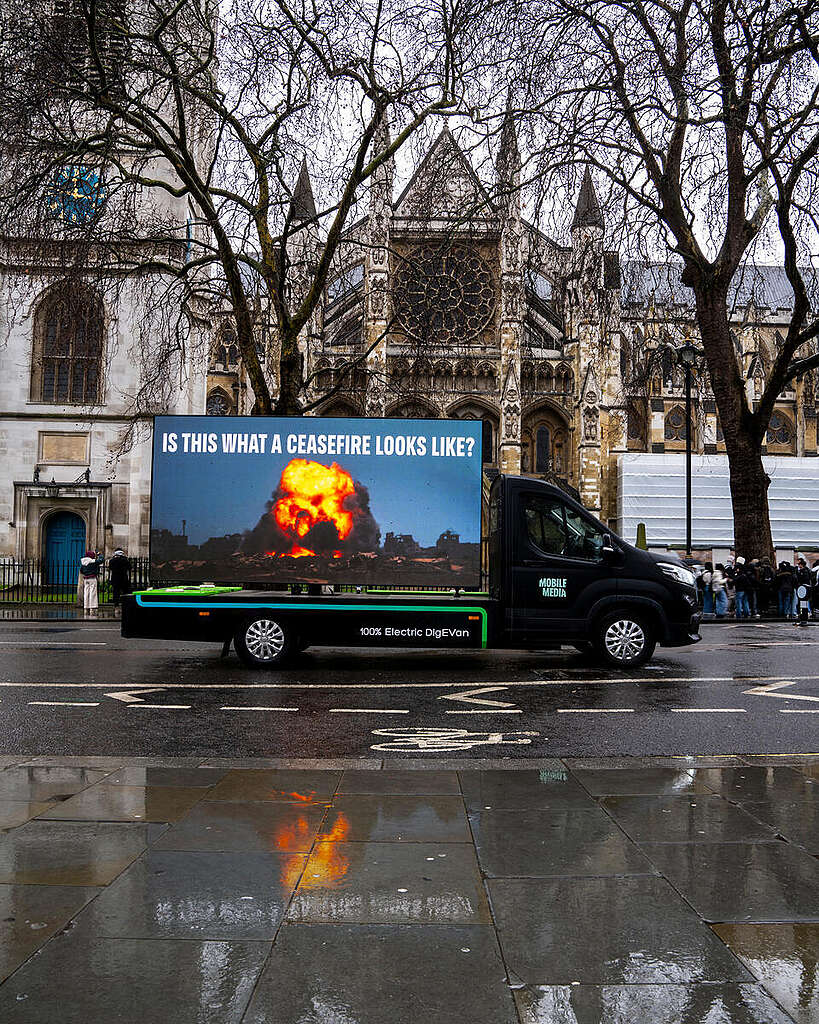
As of mid-February 2026, around 1.4 million of Gaza's 2.1 million people were displaced, with many living in roughly 1,000 makeshift sites. Even after the October 2025 "ceasefire" announcement, OCHA said hundreds more Palestinians were killed, with the reported toll since that announcement rising to 689 by late March 2026.
The genocide in Gaza has also been marked by the killing of the very people trying to save lives and tell the world what is happening - aid workers and journalists.
Amnesty International said at least 408 aid workers had been killed in Gaza since 7 October 2023, including at least 280 UNRWA staff and 34 Palestine Red Crescent Society staff. The New Humanitarian described Gaza's aid worker death toll as unprecedented, noting that in just three months the number of humanitarians killed there exceeded the deadliest year ever recorded globally for aid workers.
Press freedom groups have described this as the deadliest conflict for journalists since CPJ began recording such data in 1992, and a June 2025 public appeal said nearly 200 journalists had been killed by the Israeli military over 20 months.
In a small, enclosed territory, that concentration of civilian killing, displacement, hunger and attacks on medics, aid workers and reporters has become a defining feature of the war. And it's spreading.
As Ghiwa Nakat, executive director of Greenpeace Middle East and North Africa says, "The devastation inflicted on Gaza has become a dangerous doctrine of impunity, now spreading to Lebanon through massacres, relentless destruction, and deepening human suffering. The Greenpeace ship is joining this people-led mission to demand safe, unhindered humanitarian access to Gaza and to challenge the illegal blockade that continues to devastate civilian life. We stand firmly against war crimes, deliberate starvation, ethnic cleansing, genocide, and ecocide. This flotilla is a call to governments around the world to end their silence, protect humanitarian action, and act with urgency and principle to uphold international law, human dignity, and justice."
War is scarring lives, ecosystems and the region for decades
War does not only destroy homes and families. It poisons land and water, wrecks food systems, leaves mountains of toxic rubble and turns recovery into a struggle that can last for generations.
Analysis estimated that the first 120 days of the war generated a mean 536,410 tonnes of carbon dioxide equivalent, with 90% linked to Israel's bombardment and ground invasion of Gaza. The same analysis highlighted heavy metal contamination and severe damage to air, water and land, and found that by May 2024 around 57% of Gaza's cropland had been damaged.
Across the region, war and militarisation are tearing through ecosystems, livelihoods and public health, from Gaza to Lebanon, Iran, and beyond. That is why peace, justice and environmental protection cannot be separated: a liveable future depends on all three.