
By Joey Garcia, University Communications and Marketing
Among thousands of fish species found in the Gulf, two have captured the attention of USF Assistant Professor Lucas Griffin - cobia and tripletail. Both species can weigh up to 40 pounds and are known for their culinary value. Through federal and state funding, Griffin and his collaborators in Florida are tracking and tagging the species to answer longstanding questions about their migration patterns and populations.
The findings could help fisheries managers make more informed decisions, support recreational fishing opportunities and sustain coastal communities that rely on healthy fish populations. Researchers also hope the work will help explain the decline of cobia in parts of northwest Florida while providing new information about tripletail, a species that continues to grow in popularity among fishermen.
Our ultimate goal is to have sustainable fisheries that support coastal communities. Florida is recognized as the sport fishing capital of the world, but it's difficult to manage fisheries effectively if we don't understand where these animals move, how they live and how their populations function.
Lucas Griffin
USF Assistant Professor
USF is participating in the initiative thanks to an $800,000 grant from the Gulf States Marine Fisheries Commission-a government organization that represents Florida, Mississippi, Alabama, Louisiana and Texas. The funding is part of a larger $5 million Gulf-wide research effort focused on species such as cobia and tripletail.
"Often in science, data are collected over relatively small spatial and temporal scales," said Margaret Lamont, a research biologist with the U.S. Geological Survey. "By combining datasets across the Gulf, we can create a more complete picture and address management needs that may be too complex for a single study."
THE MYSTERY OF COBIA AND TRIPLETAIL
Interest in exploring both species starts with cobia's population decline. The iconic fish was once sought after in major fishing tournaments throughout northwest Florida, with substantial cash prizes. Then, in the late 1990s and early 2000s, populations suddenly declined.
Tracking where cobia move throughout the Gulf could help researchers determine why. Scientists are particularly interested in the species' spring migration through the Florida Panhandle as the fish move from overwintering grounds in south Florida to spawning areas in the north-central Gulf.
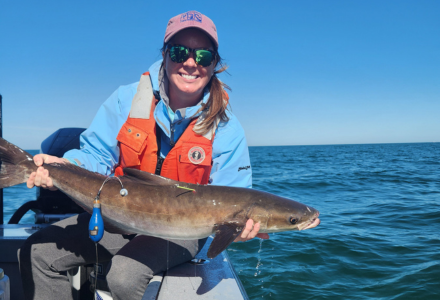
U.S. Geological Survey biologist Carson Adley holds a cobia equipped with a satellite tag before its release
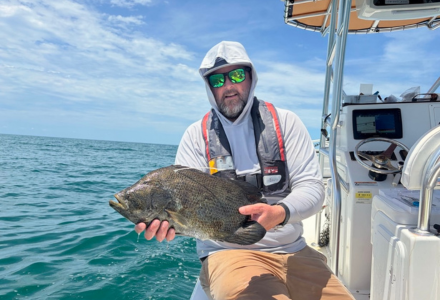
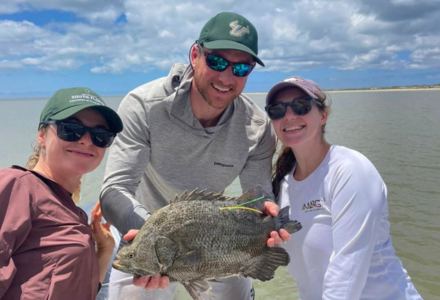
Robert Ellis of the Florida Fish and Wildlife Research Institute holds a tripletail
Tripletail presents its own challenges. Unlike cobia, which has extensive historical information, tripletail remains largely understudied. The fishery is growing in popularity, but researchers don't yet have enough data to manage it effectively.
"Social media and changing fishing opportunities drive part of that growth," Griffin said. "If fishermen and charter captains are no longer finding cobia in areas where they once were abundant, they'll target another species, such as tripletail."
Researchers hope project's scale will provide a clearer picture of tripletail movements, including when migrations occur and whether they are tied to water temperatures or other environmental factors.
TRACKING FISH ACROSS THE GULF
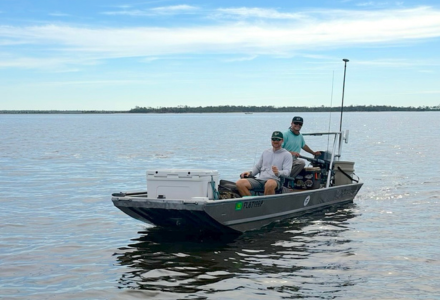
With the grant, Griffin and his lab conducted fieldwork in the waters off Apalachicola, a major hotspot in the Panhandle for both species. There, the research team began catching and tagging cobia and tripletail.
Traditional tagging methods rely on simple dart tags attached to a fish. Researchers only learn where tagged fish travel if they are later caught and the tags are reported. For this initiative, Griffin and his team used a modern method led by his preferred system, acoustic telemetry tagging. The fish are surgically implanted with a small electronic tag that can last up to five years and communicate with underwater receivers stationed throughout the Gulf. Satellite tags also monitor offshore movements that acoustic receivers may not capture.
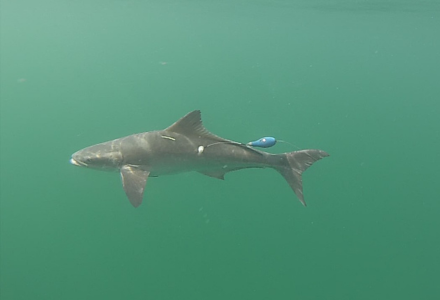
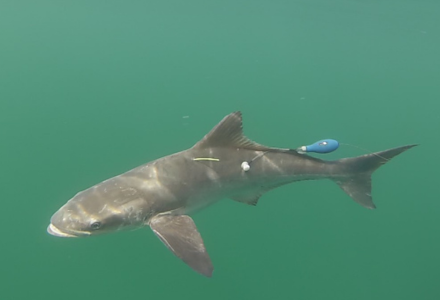
A cobia carries a mini-PAT (pop-up archival transmitting) satellite tag used to track movements throughout the Gulf
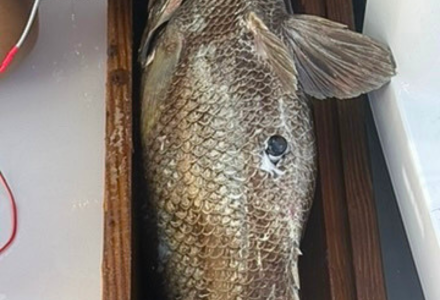
An acoustic transmitter tag is surgically implanted into a cobia before the fish is released
"The real advantage comes from combining both technologies," Griffin said. "Acoustic telemetry has become increasingly powerful in marine research because it allows broad collaboration. We have receiver coverage from the Florida Keys to Texas, which is one of the biggest strengths of this technology."
If a tagged fish swims past a receiver, the system automatically records its transmitter ID, allowing researchers to reconstruct migration patterns. That extensive receiver network is one of the project's biggest strengths, according to Robert Ellis of the Florida Fish and Wildlife Research Institute.
Fish don't pay much attention to state borders. Understanding how they move throughout the Gulf is critical for management, which is why partnerships among agencies and universities are so important. By working together across the region, we can collect and share information on a scale that no single organization could accomplish alone.
Robert Ellis
Florida Fish and Wildlife Research Institute
ENCOURAGING PUBLIC PARTICIPATION IN FISH RESEARCH
While tagging drives much of Griffin's research, the project also aims to determine what happens to the fish afterward. Specifically, researchers want to understand how many cobia and tripletail recreational fishermen harvest.
To answer that question, the lab is offering $250 rewards to those who catch a fish carrying a tag. Fishermen can call the number on the tag, report their catch and receive the reward. The reports will provide researchers with important information about harvest rates and fishing pressure across the species' ranges.
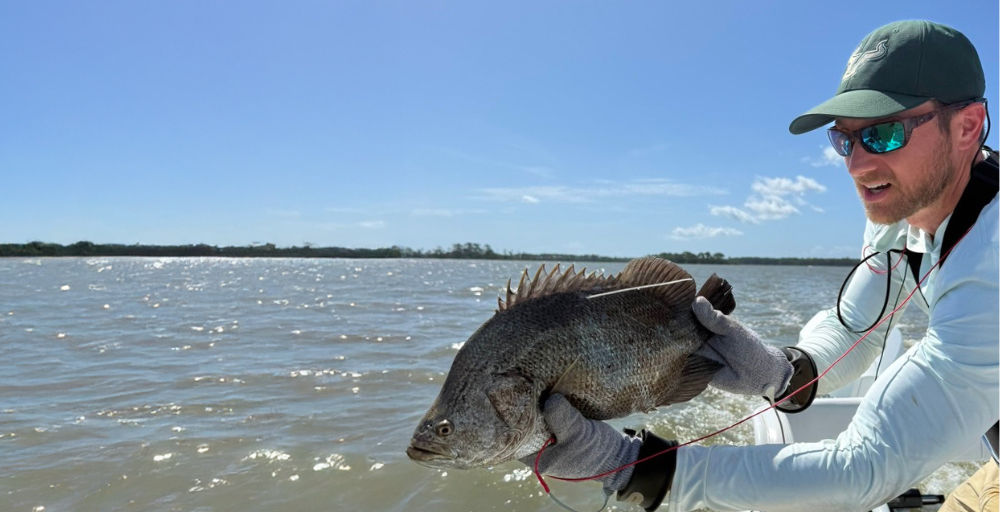
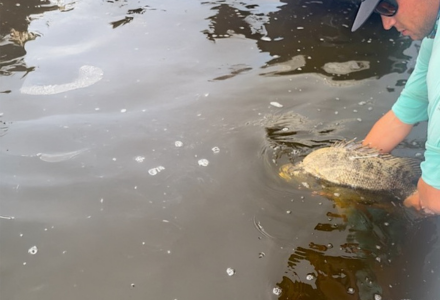
USF Assistant Professor Lucas Griffin releases a cobia carrying a white reward tag
"It's a fun part of the project because it turns into a treasure hunt, while also providing us with valuable scientific data," Griffin said. "If we don't know those basic biological and ecological questions, we can't manage them properly. Ultimately, this project is about building the knowledge needed to support sustainable and prosperous fisheries."


