
International students face a range of health challenges in their daily lives due to language barriers, different cultural values, and unfamiliar healthcare systems. Even something as basic as a dentist's appointment can be incredibly daunting when it's in another language and the price feels like a complete mystery.
A recent study from Tohoku University found that international students in Japan were less likely to report good health than their Japanese peers. Based on an online survey of 1,366 students across six regions, the research explored the relationship between nationality, health status, and health literacy among university students in Japan.
The finding of overall poorer health status in international students seemed concerning at first. However, further analysis revealed that the difference was not driven by nationality itself, but by lower health literacy - the ability to access, understand, and use health-related information. When health literacy was considered, the gap in health status disappeared. What's more, among students with higher levels of health literacy, international students reported an overall better health status than their Japanese counterparts. This suggests that the health of international students depends not only on access to medical care, but also on their ability to understand health-related information and navigate healthcare systems. In other words, for both domestic and international students in Japan, self-reported health status appears dependent on how well they can use and interpret health information.
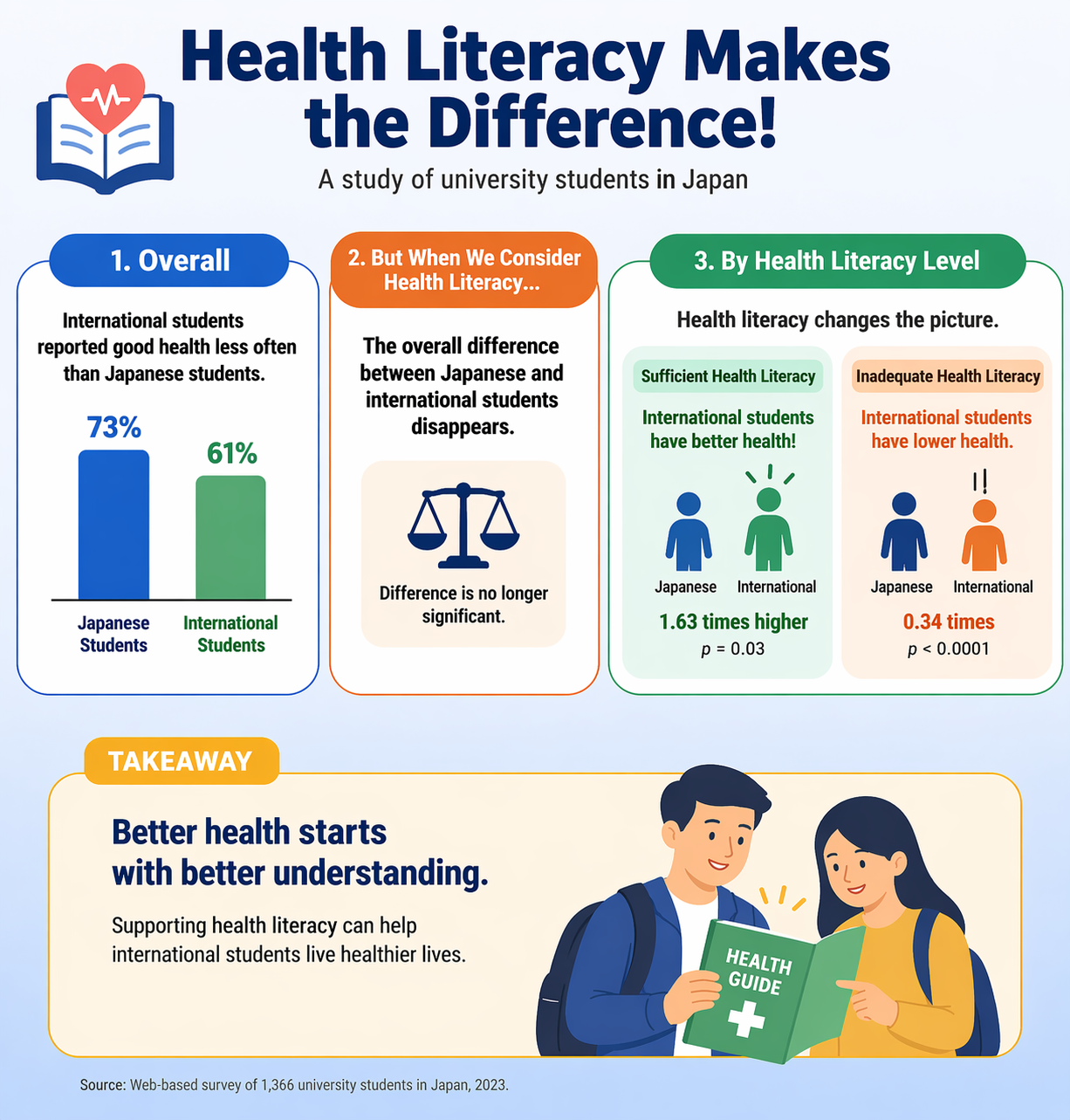
Based on these findings, the researchers emphasize the importance of helping international students develop the skills needed to confidently access and use healthcare information.
"We believe that reducing this gap starts with improving health literacy - by making health information clearer, adapting communication to suit different student backgrounds, and helping students better navigate healthcare services," said Specially Appointed Professor at Tohoku University, Ryoichi Nagatomi.
These efforts may help reduce health inequalities and support the well-being of all students. Afterall, improving health literacy in students - whether they are domestic or international - will help lead to healthier, happier futures all around.
The findings were published in Annals of Medicine on March 26, 2026.
- Publication Details:
Title: The role of health literacy in the association between nationality and health status among university students: a cross-sectional study
Authors: Adeoya, A. A., Momma, H. Nagatomi, R., Yamada, Y.
Journal: Annals of Medicine


