
Yahoo! Finance highlighted a University of Cincinnati research collaboration that uses car sensors and cameras to identify potholes and other road hazards to help prioritize repairs.
Honda this week shared the results of its pilot project with DriveOhio and UC College of Engineering and Applied Science Professor Munir Nazzal to see how its Proactive Roadway Maintenance System works in real-world conditions in Ohio.
Working with Parsons Corp. and i-Probe Inc., the research team tested more than 3,000 miles of Ohio roads, providing valuable sensor data about road roughness and maintenance needs. Honda said the system demonstrated 99% accuracy for detecting damaged or obstructed signs; 93% accuracy in detecting damaged guardrails and 89% accurate in identifying potholes, including their severity and location.
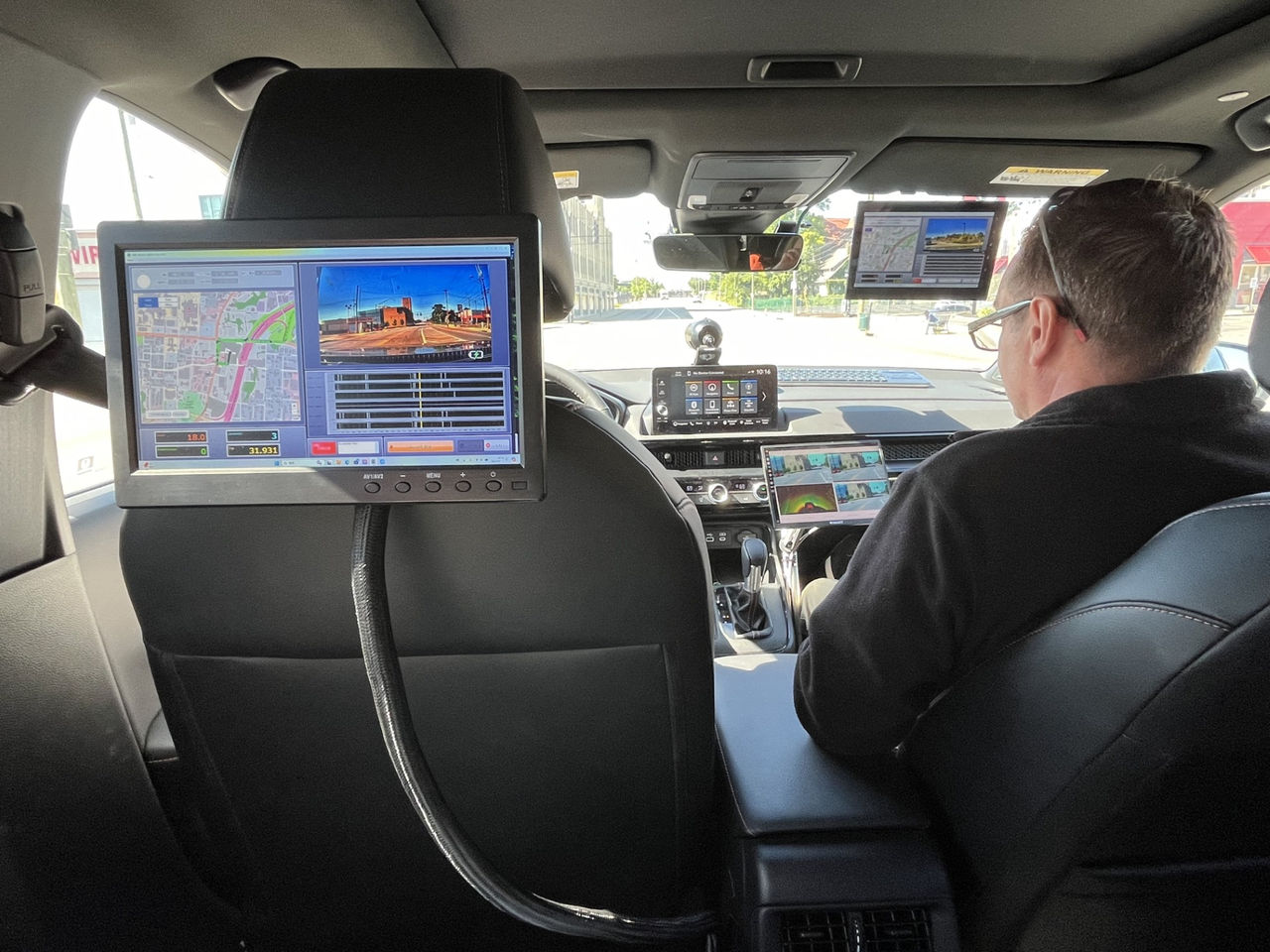
A Honda vehicle equipped with cameras and LIDAR sensors detected potholes, missing or damaged signs and guardrails, missing or faded road lines and low shoulders with as high as 99% accuracy. Photo/Honda
"This pilot of the Honda Proactive Roadway Maintenance System empowers drivers to play an active role in creating safer roadways and communities while helping agencies like ODOT improve maintenance operations," said Sue Bai, chief engineer, Sustainability and Business Development at American Honda Motor Co., Inc.
"By using real-time vehicle data to detect road hazards and infrastructure issues, Honda, ODOT and our project partners are demonstrating how smarter, adaptive solutions can enhance safety, reduce costs and enhance safety for everyone sharing the road."
By reducing the need for manual inspections, the system enhances safety for maintenance crews and minimizes their exposure to traffic hazards. The project team estimates that automated road condition detection could save Ohio taxpayers $4.5 million annually.
"We are introducing cutting-edge technologies for evaluating and maintaining transportation infrastructure, enabling agencies to make more timely and informed decisions," said Nazzal, director of UC's Center for Smart, Sustainable & Resilient Infrastructure.
"This project represents a first-of-its-kind collaboration among an automotive OEM, a state Department of Transportation, a university and industry partners to leverage vehicle sensor data for assessing roadway conditions, enhancing safety and reducing infrastructure maintenance costs."
During the pilot, ODOT team members drove Honda test vehicles equipped with advanced vision and sensors to monitor approximately 3,000 miles of roads in central and southeastern Ohio. The vehicles operated under a wide range of real-world conditions, including multiple road types in rural and urban environments, varied weather, and different times of the day. The Proactive Roadway Maintenance System detected road conditions and infrastructure deficiencies, providing ODOT with actionable insights by identifying:
- Worn or obstructed road signs.
- Damage to guardrails and cable road barriers.
- Pothole development, including size and location.
- Condition of shoulder drops.
- Insufficient roadway striping.
- Rough road.
"At the heart of this technology is our shared goal to keep our roadways safe for all users," ODOT Director Pam Boratyn said. "This Proactive Roadway Maintenance System also creates a safer environment for our workers while they gather the critical information and data needed to ensure Ohio's highways are maintained."
Read the Yahoo! Finance story.
Featured image at top: UC Professor Munir Nazzal stands outside UC's Digital Futures with the vehicle used in a pilot project to test Honda's Proactive Roadway Maintenance System. Photo/Connor Boyle/UC Marketing + Brand

Professor Munir Nazzal is director of UC's Center for Smart, Sustainable & Resilient Infrastructure in the College of Engineering and Applied Science. Photo/Connor Boyle/UC Marketing + Brand


