
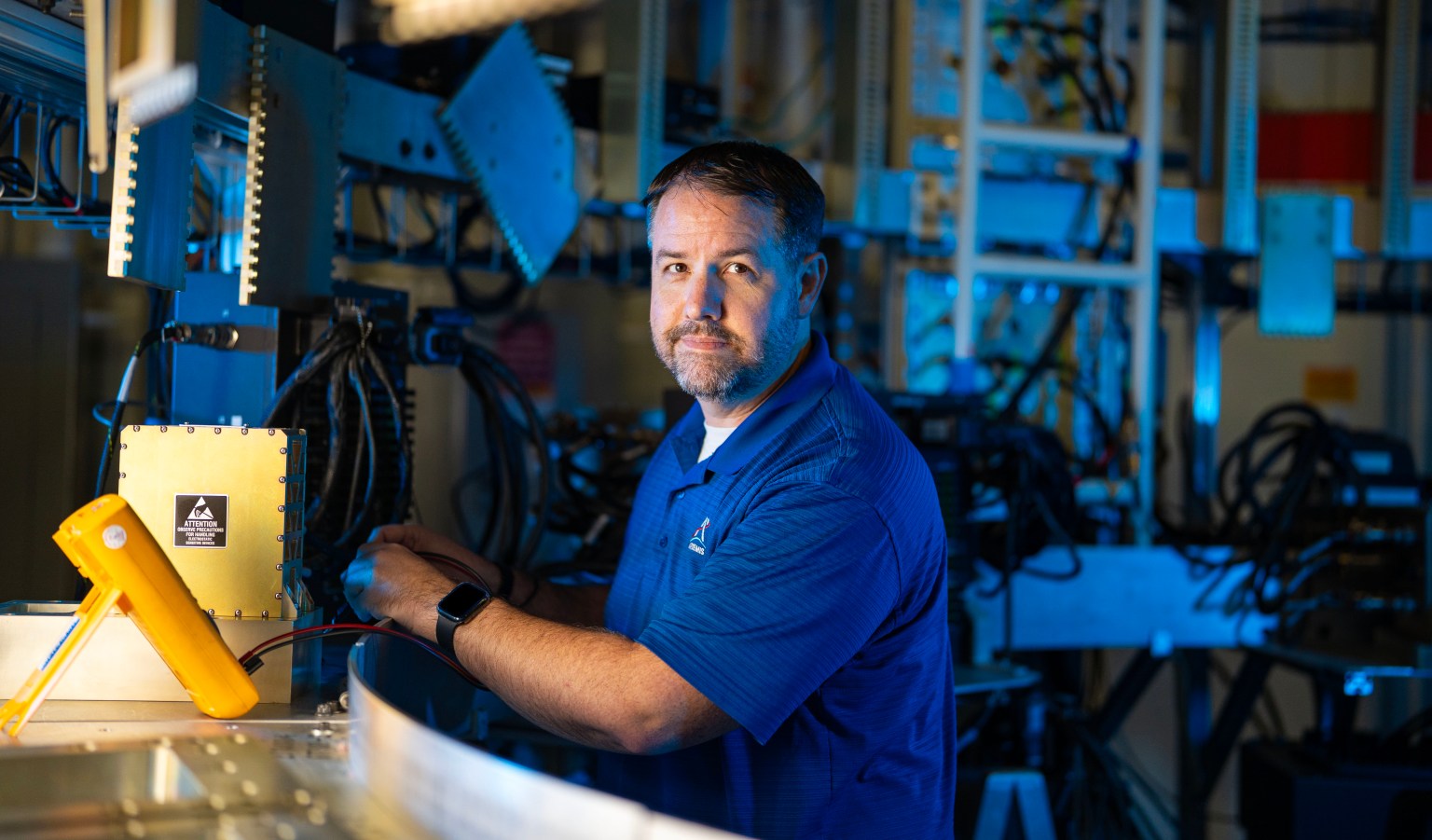
As booster manager for NASA's SLS (Space Launch System), Dave Reynolds' path to NASA is embodied by his childhood poster of the space shuttle's Return to Flight initiative, which hangs in his office, serving as a constant reminder that his journey to the agency began decades ago.
Growing up in Roy, Utah, Reynolds remembers standing outside to watch the billowing smoke rise from booster tests at Northrop Grumman's Promontory facility. Rockets were the backdrop of his childhood, and growing up during the shuttle missions sparked his fascination for space exploration.
As the booster manager for the SLS, Dave is responsible for the design, development, and flight of the boosters-work that echoes the sense of significance that inspired him as a child to study spaceflight.
"I couldn't quite verbalize what I felt then, but as I've matured over time, I now realize I want to be a part of the team sending astronauts to the Moon, and I have a personal desire to ensure the safety of those individuals," Reynolds said.
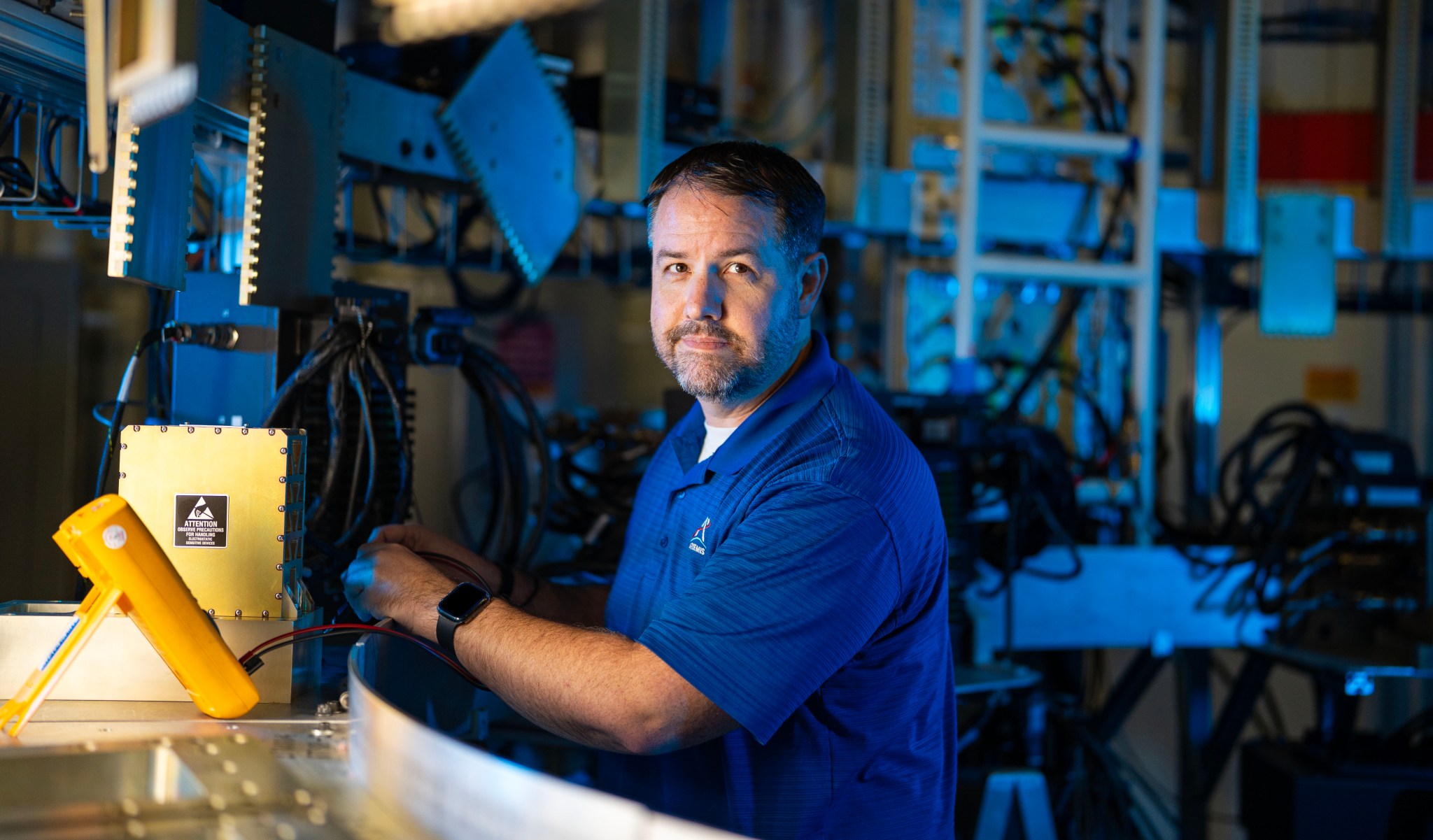
Early in his career at NASA's Marshall Space Flight Center in Huntsville, Alabama, Reynolds worked on the J-2X - a liquid-cryogenic engine that was once slated as a candidate to power the SLS upper stage. In 2012, he made a jump to solid rocket motors when he became the subsystem manager for the SLS boosters office. Reynolds spent his days managing and testing motor cases, seals, igniters, and separation motors.
He was promoted to deputy manager for the SLS office where he helped oversee development of the solid rocket boosters. He also was given the task of developing and managing the evolved composite boosters that would be used for future Artemis missions.
With the launch of Artemis II on the horizon, Reynolds is thrilled to be part of the team preparing to send a crew of four astronauts around the Moon.


