
More than 9 million people now have improved access to social protection measures developed with support from the Multi-donor project in support of the second phase of the Global Flagship Programme on Building Social Protection Floors for All (2021-25), funded by the Governments of Belgium and Luxembourg. At a tripartite webinar on 23 September, over 50 representatives of participating countries and development partners took stock of results and lessons learned in extending social protection coverage, including for workers in the informal economy.
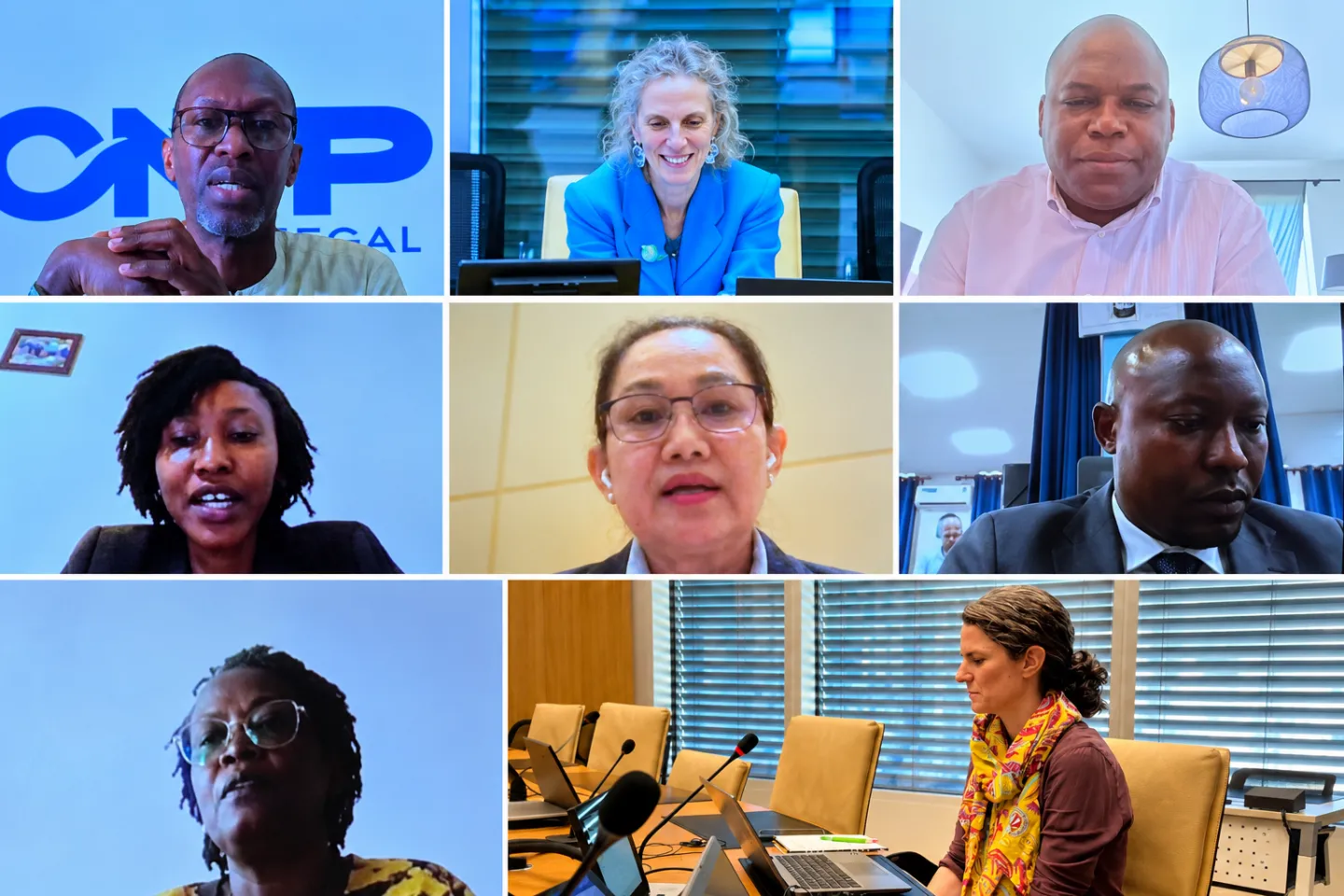
In her opening remarks, Valérie Schmitt, Chief of the ILO's Universal Social Protection Branch, reflected on the project's impact: "Behind every law adopted, every actuarial study approved, every information and management system put in place, there are concrete results: women and men who can finally access social protection in the event of illness, unemployment, maternity, workplace accidents or old age. Unfortunately, as you all know, for millions of workers in the informal economy, the right to social security is still not a reality. That is precisely the challenge this project addressed."
The project worked across six countries across Southeast Asia, West and Central Africa to strengthen and build inclusive, sustainable and rights-based social protection systems. Alongside country-level support, the project fostered regional cooperation, knowledge exchange and learning across countries.
In Burundi, the project supported the adoption of a new National Social Protection Policy and a roadmap to extend coverage to informal economy workers; in the Democratic Republic of the Congo, it contributed to operationalizing the universal health coverage scheme improving access to free maternity and newborn care for over 2 million persons; and in Rwanda, it supported new mechanisms to extend social security to workers in the informal economy.
Arcade Nimubona, Permanent Executive Secretary of Burundi's National Social Protection Commission, said: "The support of the ILO has allowed us to lay important foundations in terms of data, coordination and monitoring of the social protection coverage in Burundi."
Lea Rukumbage, Second Deputy at STECOMA, a trade union of workers in construction, wood and craft in Rwanda, shared results of the trade union's partnership with the ILO. "STECOMA membership increased from 78,000 to 80,100 members. We also improved employer engagement. 90 per cent of the companies we visited showed a willingness to collaborate with STECOMA and extend social protection to construction workers."
In Burkina Faso, the project supported the operationalization of the universal health insurance scheme which now provides access to health services for over 400,000 persons, while in Senegal, 60,000 artisans now have access to health insurance.
The project spearheaded innovative approaches to automatic enrolment and seamless contribution payments being implemented in Senegal, Burkina Faso and the Democratic Republic of the Congo. These approaches can help accelerate the extension of social protection coverage while ensuring a sustainable financing base.
In Lao PDR, it strengthened the management and financing of national health insurance and social security inspections leading to better coverage for the over 6 million members of the scheme, while across Asia and the Pacific, the CONNECT network for social health protection expanded to 18 member institutions.
According to Thomas Barbancey, Deputy Director for Development Cooperation and Humanitarian Affairs, Luxembourg Development Cooperation, "The results presented today speak for themselves. Over 9 million people who are more resilient to crises and societies are more just. All this translates into the simple conviction that brought Luxembourg to support this project alongside Belgium and the ILO: social protection is not an expense; it is above all an investment."
The event fostered peer learning among countries, with representatives exchanging experiences and identifying successful approaches from other countries that could be adapted and applied in their own contexts."One important lesson from Senegal's experience is that extending coverage cannot be the responsibility of the social security institutions alone. It requires cooperation between government institutions and better use of the information they already have. In Lao PDR, our cooperation with the ILO has already provided a useful starting point." Tiantong Keogwa, Director of the Planning and Cooperation Unit of the Lao Social Security Organization, said.
The multi-donor programme enabled more strategic and efficient use of resources. It increased the reach, impact and visibility of the Belgium and Luxembourg's contributions, while creating opportunities to leverage complementary funding, expertise and partnerships. As the project comes to a close, the ILO will continue to work alongside governments and social partners to sustain these advances in the third phase of the Flagship Programme (2026-30).


