How does art represent the world and influence the people who observe it? Artists and philosophers have thought about these questions for millennia, coming up with various metaphors: a shadow, a copy, an imitation.
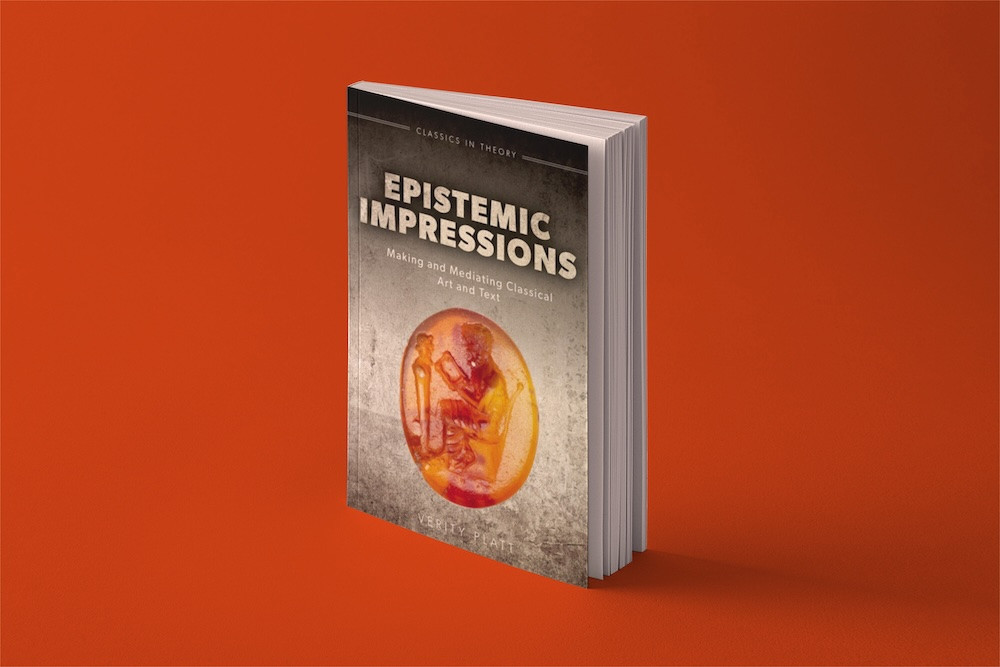
But what about a stamp?
For the ancient Greeks, an image could be understood as a seal pressed on a material to leave a mark, as opposed to an inferior imitation (mimēsis), scholar Verity Platt argues in "Epistemic Impressions: Making and Mediating Classical Art and Text." The book advances a new history of image-making and art-text relations in classical antiquity.
"I have always been fascinated by theories of the image, especially the ways in which ancient Greek ideas about representation have inspired concepts that continue to inform our thinking about images today," said Platt, professor of classics and history of art in the College of Arts and Sciences and director of the Humanities Scholars Program. "Traditionally, the most dominant of these has been Plato's concept of 'mimēsis,' whereby images are mere 'copies' of the things they represent, as in the allegory of the cave in Plato's 'Republic.' But my book explores quite a different way of thinking about image-making in ancient Greece - that of indexical transmission through stamping (typōsis)."
In the book, Platt connects the material processes of engraving and stamping - as well as sculptural molding and casting - to the way Greek thinkers modeled sense perception and knowledge transmission. She goes on to explore how typōsis was used in ancient writing about art, offering new readings of poems by the third-century BCE poet Posidippus, who drew on precious gems and bronze statuary in his work.
The College of Arts and Sciences spoke with Platt about the book. Read the full interview on the College of Arts and Sciences website.