
The terrorist group ISIL continues to adapt and demonstrate resilience despite sustained counter-terrorism efforts, a senior UN official told the Security Council on Wednesday.
Alexandre Zouev, Acting Under-Secretary-General at the UN Office of Counter-Terrorism (UNOCT), presented its latest report which highlights the group's intensifying presence in Africa, the Middle East and beyond.
He said the threat posed by ISIL, also known by its Arabic acronym, Da'esh, has "increased steadily" since the previous report issued in August, "remaining multipolar and increasingly complex."
Instability in West Africa
ISIL and its affiliates have continued to recruit foreign fighters, enhance their use of new and emerging technologies, and maintain access to funding - including through measures such as unlawful taxation and kidnapping for ransom.
The terrorists have also continued to expand their presence in parts of Africa.
"Their efforts and demonstrated capacity to control territory are deepening regional instability and further weakening the capacity of national authorities to address interconnected security, human rights, and development challenges," he said.
The situation in West Africa and the Sahel remains especially urgent, where the ISIL affiliate in the Lake Chad Basin region "has further expanded its prominence."
Attacks in Iraq and Syria
Da'esh also remains active in Iraq and Syria "with continued attacks and renewed efforts to destabilise local authorities."
Syria is undergoing political transition following the overthrow of the Assad regime in December 2024. "The security situation remains fragile, with Da'esh continuing to exploit governance vacuums and incite sectarian tensions," he said.
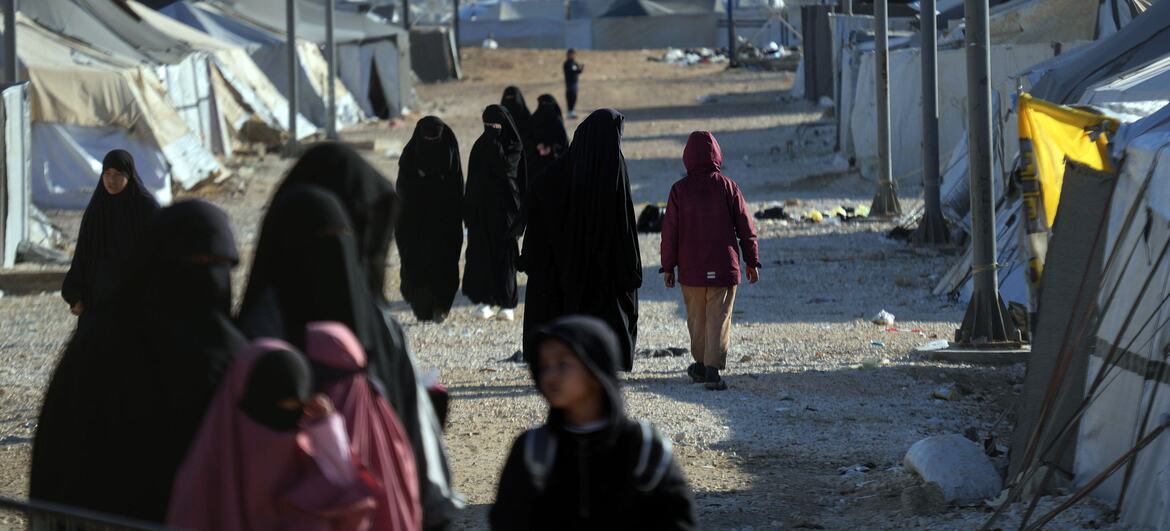
Mr. Zouev also highlighted the situation in the country's northeast, where tens of thousands of people with alleged ties to the group - mainly women and children - remain in camps in dire conditions.
The withdrawal of the Kurdish-led Syrian Democratic Forces from notorious Al Hol last month "has also introduced new operational and humanitarian challenges," he added.
Meanwhile, ISIL-Khorasan in Afghanistan "continues to pose one of the most serious threats to the region and beyond."
The group was behind the "heinous terrorist attack" in the capital, Kabul, on 19 January which killed seven people and injured several others, including a child.
Use of AI in recruitment
Mr. Zouev said progress in countering terrorism financing has led Da'esh and other groups to further exploit digital platforms and new technologies, with expanded use of crypto-currencies, drones and other tools.
"Artificial Intelligence is increasingly used by terrorist groups particularly for the radicalisation and recruitment of people, with youth and children among those deliberately targeted," he said.
In the face of the intensifying threat posed by Da'esh, the counter-terrorism chief underlined three central calls made by the UN SecretaryGeneral in the report.
Areas for action
He urged countries to step up efforts to repatriate people from the camps and detention facilities in northeast Syria.
As the situation in parts of Africa - particularly the Sahel, West Africa and the Lake Chad Basin - remains deeply concerning, "Member States must exercise political ownership and forge unified, coherent, and joint responses."
Mr. Zouev stressed that lasting progress requires comprehensive approaches by both the government and society that are firmly rooted in the rule of law and in full accordance with international human rights norms,
Therefore, "nationally owned and inclusive prevention" must remain at the heart of international counter-terrorism efforts.
"The intensification of the threat posed by Da'esh and its affiliates, despite significant national and international efforts, underscores how imperative it is to sustain global cooperation on counter-terrorism," he said.
Technical assistance to countries
Nathalia Gherman, Executive Director of the Counter-Terrorism Committee Executive Directorate (CTED) - the secretariat for the Council's own Counter-Terrorism Committee ( CTC ) - also briefed ambassadors.
She said the last six months have demonstrated that "Da'esh continues to perpetrate and inspire terrorist attacks globally," with devastating impacts.
CTED has conducted assessment visits to Austria, Cameroon, Chad, Hungary, Malta, Norway and Somalia over the past year,
"We work closely with each Member State that we visit to provide tailored recommendations and identify technical assistance needs," she explained.
UN counter-terrorism efforts 'critical'
Ms. Gherman gave the example of CTED's support for a project to address the use of the internet, social media and video games by Da'esh and Al Shabaab in Somalia and the broader region.
The initiative brought together 70 representatives from national authorities in Somalia, Djibouti, Ethiopia, Kenya, and Uganda, as well as participants from civil society, academia and the private sector.
"The efforts of the United Nations to address the Da'esh threat are critical," she said,
"These efforts require adequate resources and the cooperation of all Member States to achieve our shared goal: a world free from terrorism."


