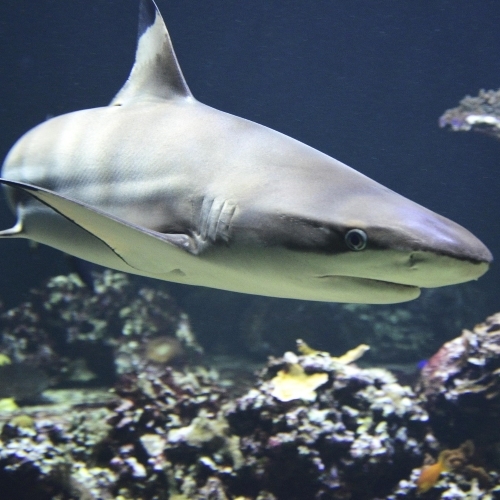
Teeth. Ocean. Predator. These are the three most common words used to describe sharks, according to a new global survey published in Wildlife Research, eliciting 1000 different text responses.
Despite fear driving the responses behind two of the three most popular words, almost 66% of the descriptors were neutral, suggesting that public attitudes towards sharks are softer than the media portrays.
The international study, led by the University of South Australia, polled 371 people mainly from the US, Australia and the UK, asking them to describe sharks in just three words.
The research assessed more than 1000 words, using a combination of methods, including word clouds and sentiment analysis.
Lead author, UniSA environmental scientist Dr Brianna Le Busque, says fear was the most prevalent emotional response, followed by joy at around 17%. Two thirds of responses were classified as neutral, reflecting basic biological knowledge rather than strong emotions.
"The findings highlight that public perceptions of sharks are more nuanced than the stereotypical 'menacing predator' narrative often seen in the media," Dr Le Busque says.
"While fear was a common theme, we also saw a substantial number of positive words, like 'majestic,' 'beautiful' and 'fascinating'. This mix suggests that while fear persists, many people also recognise sharks as ecologically important and awe-inspiring animals."

The study found that people's word choices aligned with their perception of sharks.
Participants who viewed sharks as high-risk were more likely to use descriptors such as 'killer', 'ferocious' and 'danger,' echoing the language frequently used in media reports.
Those who viewed sharks as low-risk used comparatively softer words including 'cute' and 'misunderstood'.
Researchers say the short text responses provide a fast, cost-effective way to understand how communities perceive wildlife, compared to other qualitative methods , which is time consuming.
According to the latest statistics from the International Shark Attack File, fewer than 90 shark attacks occurred worldwide in 2024. This compares with 32,707 road deaths in the same year, according to the International Transport Forum.
'Describe sharks in three words: investigating the usefulness of automated statistical packages, and manual approaches, to analyse short descriptions of sharks' is published in Wildlife Research and authored by Dr Brianna Le Busque and Associate Professor Carla Litchfield. DOI: 10.1071/WR25068