
TL;DR: JBS – the global meat empire linked to widespread Amazon deforestation – is planning a massive US $5 billion expansion into Southeast Asia, which could threaten the climate, fragile ecosystems and Indigenous lands in Indonesia. Greenpeace Netherlands is taking JBS to court to block the company's nature destroying expansion – and we need your support to stop them.
When you think of global warming, you probably picture smoke billowing from coal power plants or tailpipes of gas-guzzling cars. But behind closed doors, one of the biggest drivers of the climate crisis isn't an oil company – it's a global meat dynasty.
You might not know its name, but JBS is the largest meat processor on Earth. JBS has capacity to slaughter tens of thousands of cattle and pigs, and millions of chickens every single day. In doing so, Greenpeace Nordic estimates it pumps out more superheating methane gas than fossil fuel giants ExxonMobil and Shell combined.
For years, investigative reports have linked JBS's supply chain to massive deforestation in the Amazon rainforest, Indigenous rights violations, and brutal labour conditions. Now, evidence suggests the company is planning the biggest meat sector expansion we know of, setting its sights on new frontiers in Southeast Asia and sub-Saharan Africa.
To understand where JBS is headed, we have to look at the trail it has already left behind.
JBS's legacy of forest destruction from the Amazon to Australia
JBS isn't just a dominant force in the Americas – it is also Australia's largest beef processing company.
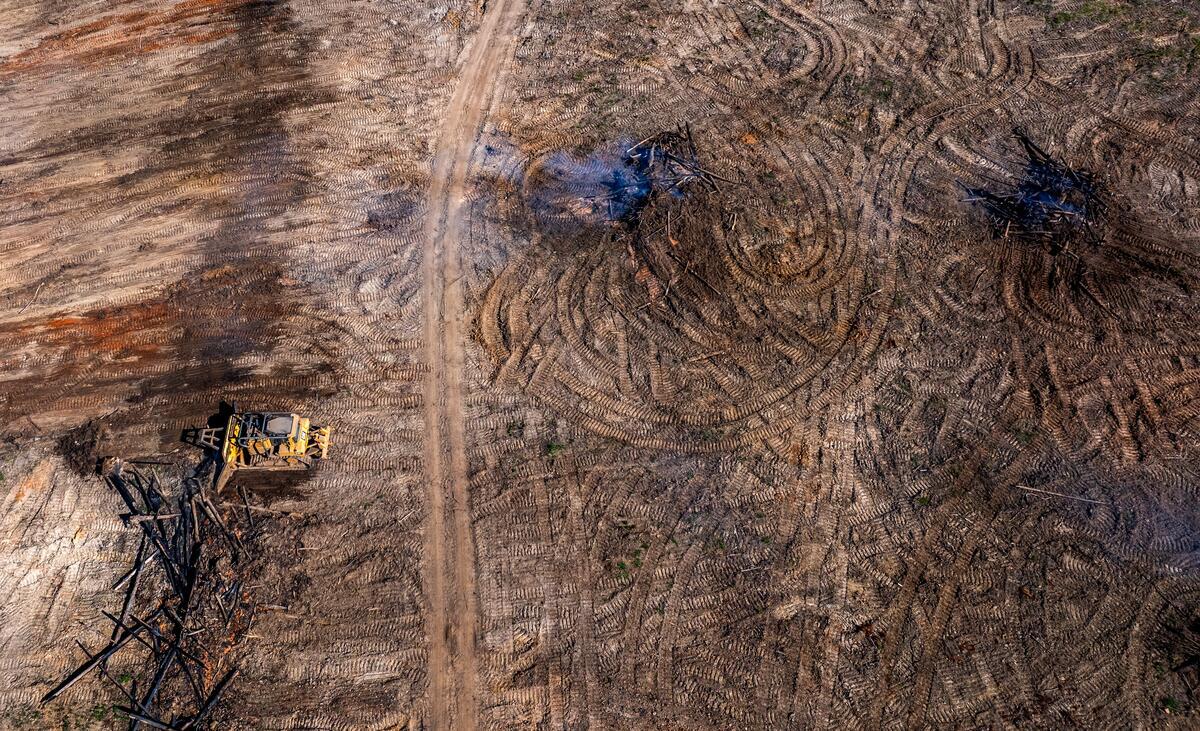
A recent investigation by the Australian Conservation Foundation (ACF) reports a startling fact: agriculture in Australia now drives more land clearing than palm oil in Indonesia in recent years. Bulldozers routinely flatten native Australian forests to create cattle pastures, the report finds, destroying critical habitats for native wildlife like koalas and washing sediment onto the fragile Great Barrier Reef.
Australia is the world's second largest beef and bovine meat exporter, after Brazil – and the top one when looking at fresh or chilled beef. About two thirds of Australian beef and veal are exported. If you buy a beef burger at a fast-food chain in Japan, South Korea, or anywhere across East Asia, there is a chance that meal is connected to lost koala habitat in Australia.

Over three quarters of Australian live cattle are exported to Indonesia. Now, JBS wants to take its model even further into Southeast Asia.
Inside JBS's Asian joint venture worth US $5 billion
JBS plans to combine its entire Australian and New Zealand operations into a new joint-venture with Danantara, Indonesia's newly formed sovereign wealth fund. Together, they aim to supersize industrial meat production across Southeast Asia.
The proposed joint venture would establish a holding company registered in the Netherlands – a country frequently used as a tax haven and JBS's corporate headquarters since 2025. The venture aims to raise US $5 billion for further JBS expansion. This almost doubles JBS's previous known expansion plans, which was already the largest identified industrial meat expansion in the world.
Why would a national wealth fund choose this moment to pour billions into industrial livestock?
The answer may be connected to Indonesia's deeply controversial Food and Energy Estate program.
In regions like South Papua, the Indonesian government has reportedly been using state pressure and even its military to terrorise and intimidate Papuans, as it advanced a project to clear millions of hectares of Indigenous land. Officially launched under the banner of "national food security," the project sparked resistance from Indigenous communities whose ancestral forests, wetlands, and savannahs are threatened by mega-farms for sugarcane, rice, palm oil, and cattle ranching. This was documented by the powerful new documentary 'Pig Feast', co-produced by Greenpeace Indonesia, which was widely viewed across the country despite reported efforts by Indonesian authorities to prevent it being screened.
A 2025 Greenpeace Indonesia report calculated that clearing just 560,000 hectares for planned sugarcane plantations in South Papua would release 221 million tonnes of CO₂ – the equivalent of driving 48 million cars for a full year. Rapid industrial land clearing also increases the risk of severe droughts, forest fires, water pollution, and widespread flooding.
While official documents have not explicitly named JBS as a direct partner in the Papua project, the timing raises serious questions. Danantara oversees key state enterprises involved in the Food and Energy state program, and JBS's new joint venture aims to fund and expand multi-protein production through acquisitions and greenfield investments across the region, reportedly initially focused in Indonesia and likely to involve beef, poultry and possibly aquaculture. While Indonesian officials have indicated that the government will stop clearing forests for rice fields - a testament to the courageous resistance of local people - officials have clarified that they are not confirming that all projects in the food estate will be stopped.
Reacting to this, my colleague Kiki Taufik, Global Head of the Indonesian Forest Campaign, stated that "Papua is not a wasteland or a new land bank for industrial expansion; its forests are home to Indigenous Peoples, a source of food and water, a stronghold of biodiversity, and the foundation of Papua's future." Kiki went on to call for the government to "halt projects that threaten natural forests, critical ecosystems, and customary territories" and restore so-called "degraded lands", centering local communities in decision making, instead of imposing extractive activities on these lands, affirming that "there is no path to food sovereignty and sustainable development at the expense of forests, Indigenous Peoples' rights, and Papua's future."
Connecting all these dots reveals a troubling picture: a global meat giant linked to rampant rainforest destruction and Indigenous and labour rights violations partnering with a state fund that is reportedly connected to tropical forest clearance on Indigenous lands with military backing.
Corporate monopolies vs. real community resilience
Big agricultural corporations often claim that massive industrial farms are necessary to feed growing populations – and that is, predictably, the headline in JBS's PR about the deal.
However, independent research from groups like IPES-Food and the Alliance for Food Sovereignty in Africa shows that global corporate farming actually threatens food security rather than protecting it.
Why global conglomerates create vulnerability:
- Systemic fragility: A food system controlled by just a small handful of global corporations is easily disrupted by trade conflicts, fertiliser shortages, climate disasters, and market speculation. We're seeing this play out in real time with Trump's tariff wars, extreme heatwaves and the US-Israel war on Iran causing sharp price spikes and leaving nations vulnerable to sudden shortages.
- Profit-driven priorities: Large agribusinesses are required to maximise profit for shareholders in the short-term. They do not exist to promote human nutrition, equitable distribution, or sustainable land management. They have a perverse incentive to bulldoze precious ecosystems to produce meat, animal feed, ultraprocessed foods and even fuel, putting corporate profits above the health of people and planet. What's even worse, the industry actually profits from the scarcity and disruption mentioned above.
Protecting food sovereignty is the path forward
Rebuilding our food systems gives us a practical, real-world toolkit for survival in times of increasing instability. True food security and nature resilience do not come from building massive industrial factory farms or handing control of local land and ecosystems to foreign corporations.
When we invest in traditional and nature-friendly farming methods, we can massively cut methane emissions and actively heal the land to protect our communities:
- Space for nature: A planet-friendly approach uses less land, making space to heal and restore ecosystems, itself a form of defence and resilience in the face of climate change and other instability.
- Natural cooling: Planting native trees and cover crops creates natural shade canopy, shielding livestock, crops, and farmers from severe heatwaves.
- Flood protection: Restoring deep root systems anchors topsoil during heavy downpours, preventing destructive landslides and soil erosion.
- Drought and fire resilience: Building organic matter in the soil turns farmland into a natural sponge – holding onto vital moisture during dry spells and absorbing excess water during floods; equally, returning damaged or dried out peatlands to a healthy waterlogged state reduces fire risks and keeps carbon stored, including by blocking dams and shifting industrial plantations off the land.
- Ecological balance: Diversity on farms brings back pollinators and natural predators, keeping agricultural pests in check without relying on chemical pesticides.
- Healthier diets: Traditional, diverse foods and seed varieties are highly adapted to local circumstances so are often more resilient and healthier.
Farmers, Indigenous leaders, and local communities around the world are already doing this critical work on the ground, with direct benefits for farmers and rural people. However, these sustainable practices are being undermined by the rapid expansion of industrial agribusiness. Governments should be supporting farmers practicing nature-friendly farming, not sinking millions into industrial factory farms.
We want a future built on resilient community led food systems. Take action today
We are standing at a critical turning point. Will the future of Southeast Asia, Nigeria and other frontiers for agricultural expansion be built on resilient, community-led food systems, or – like other regions – handed over to the billionaires running the world's most destructive meat empire?
The choices we make today will shape food systems for decades. While mega-corporations have deep pockets, organised communities have the power to stop them in their tracks. And Indigenous communities in Papua are already resisting, with Greenpeace Indonesia supporting them on the ground.
But we can also take action at the source. Greenpeace Netherlands is taking JBS to court in their Netherlands base to challenge their aggressive expansion plans – which would result in more deforestation, emissions and human rights abuses – before the bulldozers can reach the forest floor. Sign the petition and support our legal action today.
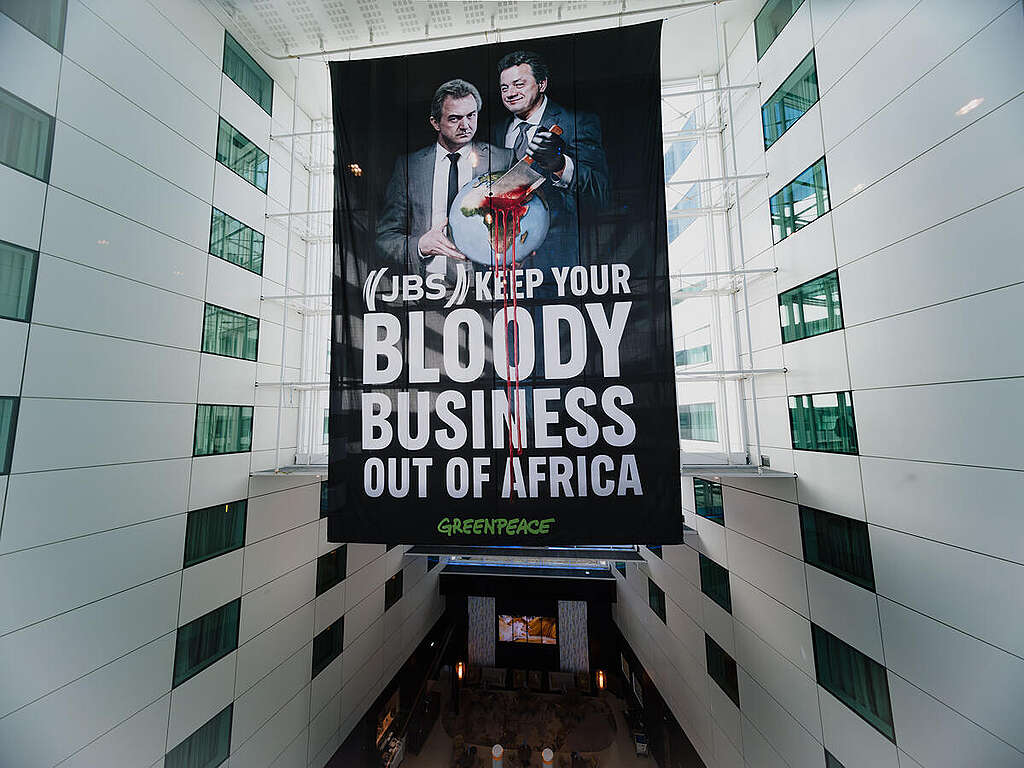
We need to stop the expansion of the world's largest meat company. Join the People vs. Big Ag.
Amanda Larsson is the Global Project Lead for Big Ag at Greenpeace Aotearoa


