
Every day in Kharkiv begins with uncertainty: air raid sirens interrupt sleep; missiles strike residential neighbourhoods, industrial sites, and roads. Anxious citizens rush into metro stations during bombardments and children study underground.
Yet amid the destruction, Ukraine's second-largest city is doing something that may seem almost impossible during wartime: preparing for a better future.
"We need to rebuild regardless of the war," says Ihor Terekhov, the city's mayor, "because if there is no reconstruction there will be only ruins, and those who left will not return."
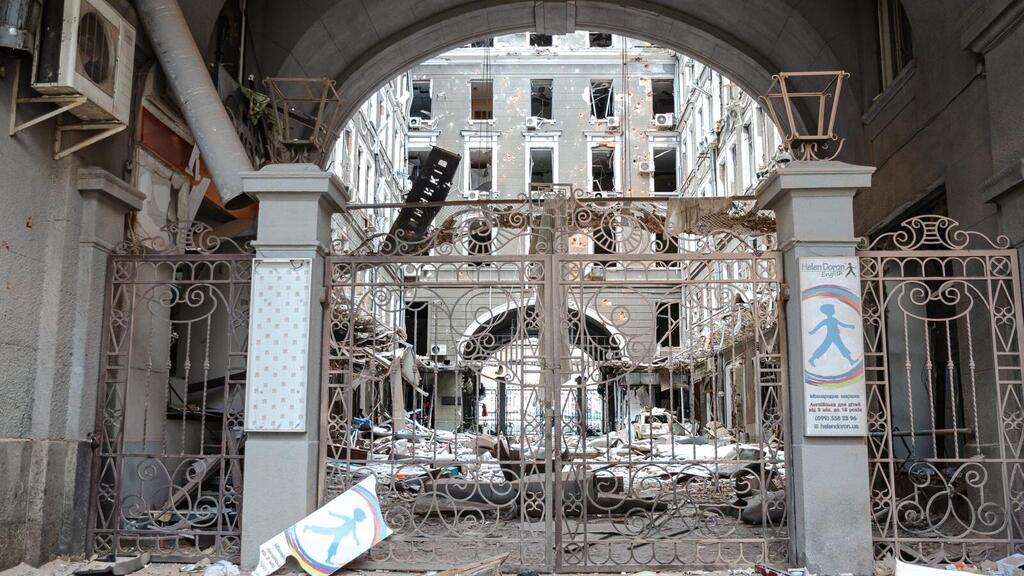
Kharkiv, once a thriving centre of industry, science, education and culture near Ukraine's northeastern border, has become one of the country's most heavily damaged cities since Russia's full-scale invasion began.
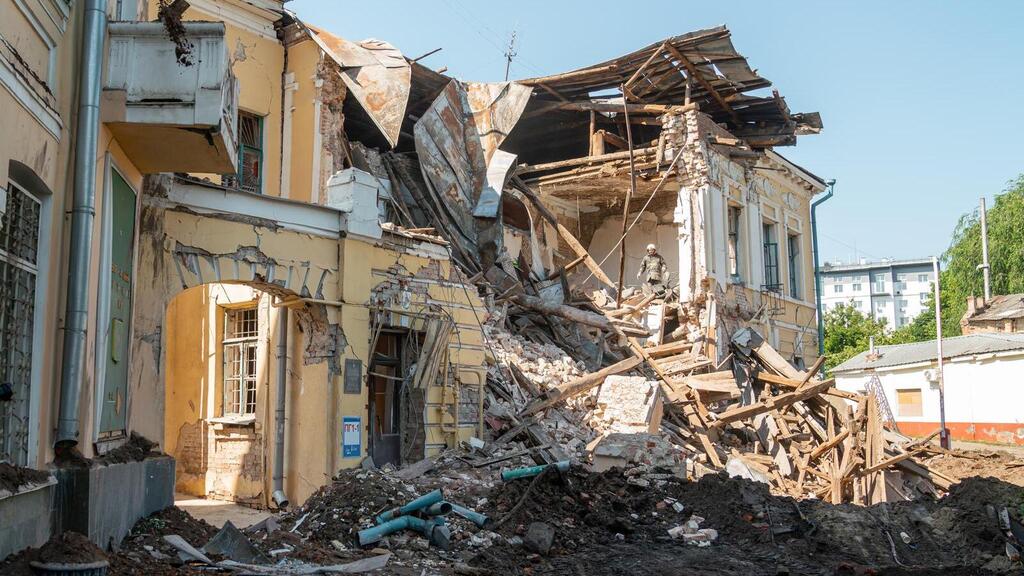
According to Mr. Terekhov, around 13,000 buildings have been damaged or destroyed, including approximately 10,000 residential buildings. About 160,000 people have lost their homes. "Every day there is shelling, and it is terrible," he says. "Just staying alive is exhausting."
Amid the daily attacks, urban planners, architects, engineers and international organisations are working alongside Ukrainian officials to imagine what the city could become after the war.
Waiting is not an option
At the centre of this effort is the UN4UkrainianCities initiative led by the United Nations Economic Commission for Europe (UNECE), which supports the revitalisation and modernisation of Kharkiv and the southern city of Mykolaiv. The project aims not only to respond to emergency needs, but also to help cities rebuild in a smarter, greener and more resilient way.
For many outsiders, long-term urban planning during an ongoing war may seem premature. But for those working on the ground, waiting is not an option.
"The country is still under attack, and emergency work is still very much needed," says Thâmara Fortes, an architect and programme manager for the project. "But recovery and reconstruction have to happen in parallel."
The idea, she explains, is that today's emergency repairs also support tomorrow's development. "If you construct something now without thinking long-term, in ten years it may no longer serve the city," she says.
"So, we are helping the cities think not only about the emergency, but about how those interventions fit into the future."
A new master plan
That future is being shaped through a new master plan for Kharkiv focused on sustainable infrastructure, affordable housing, innovative public spaces and economic renewal. The project combines strategic planning with pilot projects that test ideas in real neighbourhoods.
One of the most ambitious efforts focuses on North Saltivka, a heavily damaged residential district.
What began as an architectural competition has now moved into the technical implementation stage. Five residential blocks and a kindergarten are being redesigned with energy-efficient insulation, modular expansions and structural reinforcements.
The goal is practical: create detailed technical documentation that city authorities can immediately present to donors, investors or development banks when funding becomes available.
"We are moving from concepts to implementation," Ms. Fortes says. "Not only analysing and assessing but also giving cities something they can actually build."
Bold initiatives
The broader vision for Kharkiv includes five major pilot initiatives blending preservation, sustainability and innovation.
One project focuses on restoring the war-damaged historical centre while adapting old interiors for modern civic and cultural use. Another aims to transform industrial riverbanks into green public corridors along the city's 25-kilometre riverfront system.
A science and technology district near major universities is intended to help retain young talent and diversify the economy, and industrial zones dependent on coal are being reimagined as clean manufacturing hubs powered by renewable energy.
The effort also extends beyond infrastructure. UNECE and Ukrainian partners are working on housing policy reforms at the national level, including legislation on social rental housing and housing stock management.
'Constantly under threat'
Meanwhile, local officials continue dealing with the brutal realities of war. "It is impossible to get used to this," Mr. Terekhov says quietly. "People are constantly under threat."
Still, he believes that now is the time to think about how to restore the city and imagine the future. "People live today with the hope that we will rebuild everything."
That hope is especially important in a city known for its architectural heritage. Kharkiv's museums, libraries and historic mansions have all suffered damage. Mr. Terekhov recalls strikes on the famed Korolenko State Scientific Library and historic buildings near the city's art museum.
"These are pearls of Ukraine," he says. "Some buildings cannot be restored exactly as they were because they were hit by several ballistic missiles. But we are trying to preserve this architecture."
The reconstruction effort itself has evolved over the course of the war. According to Ms. Fortes, one of the key lessons has been flexibility. "Sometimes there is no electricity. Sometimes no internet. Sometimes people are in underground shelters," she says. "So, we learned that the project needs to constantly adapt to the realities of the cities."
'Cities need to be prepared'
Ukraine is forcing architects and planners to rethink the very design of urban space. New housing projects in Kharkiv now incorporate dual-use underground areas that can function as everyday public infrastructure in peacetime and become shelters during attacks.
"In peacetime, it can be a parking lot. In wartime, it becomes a shelter," Ms. Fortes explains. The same thinking is being applied to kindergartens and schools, some of which are being designed with underground learning spaces.
Fortes says the approach draws partly on lessons from Finland, where many cities have long integrated civil defence infrastructure into daily urban life. Underground facilities used for sports, parking or recreation during normal times can quickly transform into emergency shelters if needed.
She believes such ideas may become increasingly relevant far beyond Ukraine as cities worldwide confront not only war, but also climate disasters and other crises requiring greater urban resilience. "The crisis happens at the local level - on your street, in your house," she says. "Cities need to be prepared."
New vision dawns
In Kharkiv, preparedness now means more than shelters and emergency repairs. It means preserving communities, protecting identity and creating reasons for people to stay - or someday return.
"Our cities will no longer be the same as before the war," Mr. Terekhov says. "We need a new vision."
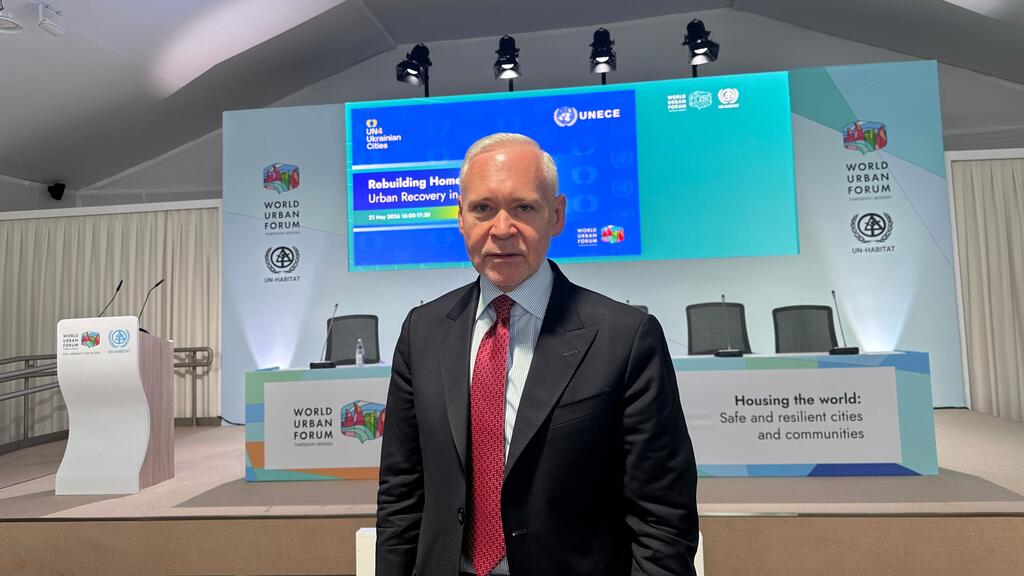
These interviews were conducted on the sidelines of the 2026 World Urban Forum in Baku, Azerbaijan, held between 17 and 22 May.


