
The University of Liverpool's MicroAge experiment, which could help people live longer, healthier lives, was successfully launched to the International Space Station today.
Supported by the UK Space Agency, the project is using space to understand what happens to human muscles as we age, and why.
When astronauts spend time in space, without the effects of gravity, their muscles get weaker, just as they do in older age, before recovering when they return to Earth. By studying what happens to muscle tissue in space, the team can compare the findings to what happens on Earth. This will help the solve the puzzle of why muscles get weaker as we age and look at ways to prevent it.
MicroAge has taken human muscle cells, the size of a grain of rice, that are grown in a lab and carefully put them into small 3D-printed holders the size of a pencil sharpener. Once on board the International Space Station these will be electrically stimulated to induce contractions in the muscle tissue, and the scientists will look closely to see what happens.
Liftoff! pic.twitter.com/z9NvqaTz73
— SpaceX (@SpaceX) December 21, 2021
The MicroAge experiment was launched in a SpaceX Falcon 9 rocket from the Kennedy Space Center, Florida, at 10am (GMT) today (21 December) and will return to Earth in January 2022 for further analysis.
Many of the Liverpool team have been out in Florida preparing for the launch and were able to watch it take place live from Space View Park.

Project lead, Professor Malcom Jackson, said: "The team has worked hard on this project for over 3 years. Support from the University, UK and European Space Agencies and Kayser Space Ltd has been fantastic and our outstanding University science team has really driven the project forward through all of the unanticipated problems associated with lock-down and COVID.
"We will not be able to evaluate the results of the scientific study until we receive the muscle samples back from the ISS, but seeing this University of Liverpool experiment launch to the ISS on top of a Falcon 9 rocket is already a fantastic, exciting tribute to the MicroAge team."
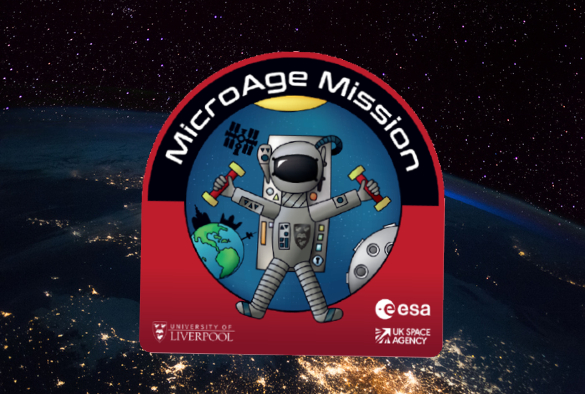
As part of the mission, the 24 muscle cell containers being sent to the International Space Station are carrying 'mission badges' designed by children as part of a competition run by the MicroAge team. The overall winner was nine-year-old Jessica Barry, from Wiltshire. Jessica's badge is the official patch used on the clothing and documents for the mission. One of the badges was also designed by local children through Liverpool children's charity KIND.
Our good friend @ShahShigdar from @MicroAgeUoL at @NASAKennedy watching our KIND children's mission badge design for their muscle project getting ready to blast off to the @Space_Station on the @SpaceX Falcon 9 today! pic.twitter.com/BCk7w7IzVd
— KindLiverpool (@KINDLiverpool) December 21, 2021
KIND is a University of Liverpool supported charity for 2021-22. You can support their annual Christmas Appeal here: https://kind.org.uk/our-work/christmas-appeal
Download the official MicroAge Mission app (Apple and android) to keep up to date with the progress of the study with timely updates and links to helpful information, podcasts, activity packs and information on healthy ageing, exercise and more.


