
Key points
- The Tiwi Islands prawn farm project has moved from feasibility and pilot testing into a delivery phase for aquaculture development at Wurankuwu on Bathurst Island.
- Indigenous leadership remains central, with Tiwi Resources, Portaminni Trust and CSIRO working in partnership to guide project governance and design.
- The project is creating long-term opportunities for employment, training and economic opportunities for Tiwi People on Country, benefiting future generations.
From pilot to progress
From dream to development: a prawn farm project is aiming to bringing aquaculture to the Tiwi Islands. 

Eighty kilometres north of Darwin with warm tropical waters, winding rivers and extensive coastlines, the Tiwi Islands are an ideal location for growing prawns – but could it support a commercial industry?
Backed by CSIRO and Indigenous groups across northern Australia exploring new opportunities in aquaculture development on Country, a feasibility study was conducted in 2021.
With the benefit of insights from the already-established CSIRO demonstration prawn farm on Larrakia Country in Darwin, the Tiwi Islands prawn farm project has progressed through collaboration between Tiwi Resources, Tiwi Land Council, Portaminni Trust, CSIRO and project stakeholders, with Indigenous leadership central to its development.
The demonstration farm in Darwin started operations in 2022 as a pilot site, where CSIRO Agriculture and Food researchers carried out extensive testing in northern Australia conditions to understand whether prawn farming could be successfully established on the Tiwi Islands.
Plans are now in place for the prawn farm to be established at Wurankuwu in the Tiwi Islands, surrounded by winding rivers and extensive coastline. The site will be known as Mapurlarri Prawn Farm.
For Tiwi community members involved in the project, the journey has also been deeply personal.
"I had a dream - given to me by my father and his two brothers. They showed me this prawn and told me to go to the swamp and I would see them there. I went and saw lots of prawns," said Ron Poantimilui, Wurankuwu leader and Director of Tiwi Resources.
"That became my vision from that dream they had.
"Wurankuwu is my home – from my ancestors to me. It's time for me to look after Country and support my people by creating jobs."
Through site visits and ongoing discussions, community members have helped shape how aquaculture could operate on Country, ensuring development is grounded in community priorities and knowledge.
Indigenous leadership and partnership
Indigenous leadership remains central to the project, with Tiwi representatives guiding governance, decision-making and long-term direction of the enterprise. 
Cultural knowledge and environmental understanding have guided project development, alongside western scientific expertise.
The project continues to be shaped through collaboration with Tiwi partners, with a focus on land use, environmental management and ensuring benefits return to community. It is grounded in cultural values and community aspirations and aims to create opportunities for generations to come.
"The situation out at Wurankuwu now is that the shops are closed, houses empty, the place empty – there's only five families living out there," said Charlotte Portaminni, a Wurankuwu leader helping co-design the project.
"What I'd like to see for Wurankuwu is that the community is running and we have all our families back home. Everyone gets jobs out there, help each other out, make it like it used to be 30 years ago and make it feel like home again."
Tiwi community members are now taking part in hands-on aquaculture training, delivered by CSIRO researchers. The training provides practical experience in key aspects of prawn farming operations, including feed management, water quality monitoring and system performance.
Building sustainable aquaculture on Country
Prawn aquaculture is one of the fastest-growing aquaculture industries in Australia, supported by strong global demand and favourable production conditions in northern regions. 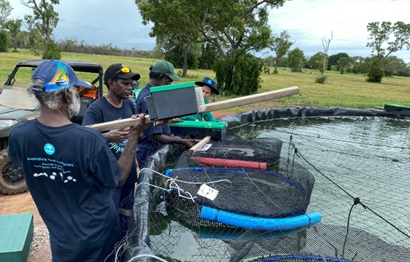
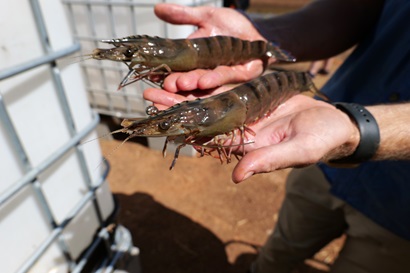
The warm tropical waters and coastal environments at Wurankuwu are well suited to sustainable prawn farming. CSIRO Senior Environmental Scientist Simon Irvin reflected on the scientific challenges and opportunities of the project.
"I didn't fully appreciate how extreme the wet and dry seasons are in the north – rainfall, temperature and oxygen levels all change significantly," said Simon.
"There's a lot of exciting science involved and working with the Tiwi community has been a career highlight. It's a privilege to do the science and work alongside community."
At full operation, the farm could produce approximately 40–70 tonnes of prawns each year, with potential to develop a locally-led aquaculture industry.
Planning is underway for site development and operational design, with a focus on environmental sustainability, water management and biosecurity.
The project team is also engaging with government representatives and stakeholders on the infrastructure and investment needed for the next stage.
The path forward
This next stage will build on long-term collaboration between the Tiwi community, CSIRO and project partners, with a focus on practical outcomes in employment, capability and local business development.
The Mapurlarri Prawn Farm reflects what is possible when Indigenous leadership, community priorities and science are combined to deliver lasting outcomes for Country and community.


